Report

Author(s):
- Colin Högkvist
- Florian Haack
- Jurjen de Vries
- Magdalena Durnwalder
- Mats Geirnaert
- Selma Cordier
Acknowledgement
The team thanks the Instituto Superior de Engenharia do Porto (ISEP) for offering us access to their facilities throughout this semester. Additionally, we express our gratitude to the organizers and supervisors of ISEP and the European Projects Semester (EPS) for sharing their expertise to us during this period. The opportunity to participate in this project, expand knowledge, and gain new experiences is appreciated.
Glossary
| Abbreviation | Description |
|---|---|
| EPS | European Project Semester |
| ISEP | Instituto Superior de Engenharia do Porto |
| EU | European Union |
| NFC | Near Field Communication |
| SI | International System of Units |
| EMCD | Electromagnetic Compatibility Directive |
| LVD | Low Voltage Directive |
| MD | Machinery Directive |
| RED | Radio Equipment Directive |
| ROHS | Restriction of Hazardous Substances in Electrical and Electronic Equipment Directive |
| PMBOK | Project Management Body of Knowledge |
| LED | Light Emitting Diode |
| USB | Universal Serial Bus |
| Wi-Fi | wireless fidelity |
| EV | Electric Vehicle |
| AI | artificial intelligence |
| iTLIs | intelligent Traffic Light Installations |
| UV | UltraViolet |
| WBS | Work Breakdown Structure |
| PBI | Prioritised Backlog Items |
| GDP | Gross domestic product |
| ICP | ideal customer profile |
| CCTV | closed-circuit television |
| PDCA | Plan-Do-Check-Act |
| SDG | Sustainable Development Goals |
| LCA | Life cycle analysis |
| HDPE | High Density Polyethylene |
| NSPE | National Society of Professional Engineers |
| EUIPO | European Union Intellectual Property Office |
| LCD | Liquid Crystal Display |
| PEFC | Programme for the Endorsement of Forest Certification |
| FSC | Forest Stewardship Council |
| CO2 | Carbon dioxide |
| FoS | Factor of Safety |
| AMI2030 | Advanced Materials Initiative 2030 |
| JSON | JavaScript Object Notation |
| NDEF | NFC Data Exchange Format |
1. Introduction
The European Project Semester (EPS) initiative offers students from diverse European backgrounds a unique opportunity to collaborate on a real project over one semester. Teams, including students from engineering and related fields, come together to work on a specific project theme. The main objectives of the program are to improve communication skills, promote teamwork, enhance English language proficiency, and leverage the rich cultural diversity within the teams.
Team 5 has focused on enhancing public equipment with ergonomic features through smart technology. The aim is to improve the functionality and user experience of common public amenities, such as benches, bicycle racks, or crossroads.
This document details the various stages of development and the necessary components to achieve the ultimate solution.
1.1 Presentation
The “Stempe Safety” team consists of six students from various European countries, each pursuing different academic disciplines. Interaction with public spaces is inevitable in daily routines, ranging from transportation to leisure areas, which makes this project topic more relatable. Table 1 displays the names of team members, along with their respective home countries and fields of study.
| Name | Country | Study | |
|---|---|---|---|
| Colin Högkvist | Finland | Industrial Management | |
| Florian Haack | Germany | Mechanical Engineering | |
| Jurjen de Vries | Netherlands | Mechatronics | |
| Magdalena Durnwalder | Austria | Media Technology | |
| Mats Geirnaert | Belgium | Civil Engineering | |
| Selma Cordier | Spain | Mechanical Engineering |
1.2 Motivation
EPS Motivation
Participating in the EPS program at ISEP was a thrilling opportunity for our team, driven by the chance to explore Porto and collaborate with diverse peers. We were motivated to enhance our English communication skills and tackle projects outside our usual expertise, viewing it as a pathway to personal growth. Our primary drive stems from a collective passion to innovate and improve daily experiences, such as public interactions. We're committed to leveraging our diverse expertise to deliver impactful solutions while embracing the chance to learn and grow alongside our international peers.
Topic Motivation
After the projects were proposed, the smart ergonomic multipurpose public equipment project stood out. Its broad scope allowed creativity and original ideas. Each member brought a unique set of skills, perspectives, and expertise to the table. This project served as a platform to not only apply existing knowledge but also to acquire new skills and refine teamwork capabilities. It was seen as a chance to stretch intellectual boundaries and grow both individually and collectively. As individuals who interact with different kinds of public environments all the time, ranging from parks and squares to transportation hubs and urban streetscapes, there was a strong connection to the project's theme. This familiarity with public spaces provided insights and perspectives, approaching the design process with a sense of empathy and understanding. It allowed the team to envision the end-users' needs, preferences, and challenges more clearly, this helped to create solutions that fit the needs of different situations better.
In essence, the motivation for selecting the smart ergonomic multipurpose public equipment project stemmed from a combination of factors: the project's inherent potential for creativity and innovation, the opportunity it presented for personal and professional growth, and the collective affinity for the thematic focus on public spaces and safety issues. Starting this journey was exciting, knowing it would not only be a challenge but that it would also make a positive impact on the community.
1.3 Problem
The primary aim of this project is to address the pressing challenge of enhancing the safety and ergonomics of public infrastructure, particularly around pedestrian crossings. To tackle this issue, this project endeavours to develop a multifunctional module designed to improve safety measures and ergonomic design principles at crosswalks.
Central to the team's approach is a meticulous analysis of accident statistics to identify key factors contributing to the high rate of pedestrian fatalities. There are an estimated 12 million pedestrian road traffic injuries each year [Moien A. B. Khan, et al., 2020], for instance, in the south of the European Union (EU), Portugal and Greece show above-average figures in terms of pedestrian mortality rates as stated by the [European Road Safety Observatory, 2021]. Whenever these accidents occur, the tendency is to think about infringements committed by drivers, not by pedestrians. The latter, however, are also to blame, particularly those who practice jaywalking.
Jaywalking is the term used to describe a careless way of crossing a roadway or doing so other than at a suitable crossing point that is even dangerous for pedestrians instead of doing so on a crosswalk designed for such use. People jaywalk for various reasons, including convenience, time constraints and sometimes even social pressure, often observed when other pedestrians cross the street at a red light. Throughout the totality of this report, the term jaywalking will specifically be narrowed down to pedestrians crossing the street at a red light since the module is designed to avoid this particular behaviour.
1.4 Objectives
To tackle this issue, the project focuses on the development of a multifunctional module designed to improve safety in public spaces, specifically crossroads, following sustainable and ergonomic design principles.
By examining these road statistics and understanding the motivations behind jaywalking, the team aims to pinpoint areas where accidents occur most frequently and develop targeted interventions to address these issues.
This interdisciplinary team will leverage technological innovations and ergonomic design principles to develop a comprehensive solution aimed at improving safety and ergonomics at pedestrian crossings. By defining and refining the multifunctional module, the aim is to make significant strides in minimizing accidents and enhancing the overall pedestrian experience in urban areas.
The proposed solution includes two main features, the “Smashing Button” game and a screen to display information such as temperature, Ultra Violet (UV) index, or the number of infractions committed that day. The primary goal of the project is to educate children on how to respect traffic lights and raise awareness in adults on pedestrian safety. Since children are not yet accustomed to breaking road rules, it is an easy way to educate them on how to wait for the green light and implement it in their behaviour, so the future generation doesn't even think about crossing the road when the light is red. On the other hand, it is challenging to change the established behavior of adults since it was implemented years ago. Therefore, Stempe Safety decided to switch the focus and instead of educating them, aims to raise awareness and plant a thought whenever they consider crossing on a red light or when they actually cross.
In fact, implementing the game as the solution will make sure people wait at the crossroads because by playing the game, the users will not be aware of the time waiting for the red light to turn green, this being the main reason why people jaywalk. In addition, they are being challenged on their agility, both physically, by moving fast, and mentally, because they have to be focused on the game.
A mobile application is also available to use in association with the game. The main goal of the app is to be able to track the high scores of the player. It will be able to make the game change as the player progresses, different levels of speed and agility will be available when achieving a high score. Also, rewards will be available within the app when reaching a high score to ensure engagement.
The multipurpose facet of the module, the screen on its back, is designed to keep both, drivers and pedestrians informed and aware of their surroundings. Moreover, the SMASHY module will be coated with a special UV paint that changes colour based on the intensity of the UV rays absorbed. This allows nearby pedestrians and drivers to know, with just a glance, the approximate temperature and level of exposure to UV rays following the safety theme in other aspects, like skin protection.
Through collaboration with stakeholders such as urban planners, transportation authorities, and community members, the group seeks to ensure that the proposed solution aligns with the diverse needs and preferences of the local community. This inclusive approach will not only foster support but also provide valuable insights into the specific challenges faced in different urban environments.
1.5 Requirements
The general requirements exposed by the EPS board following the EU directives:
- Use low cost hardware solutions;
- Use open source software;
- Adopt the International System of Units (SI) ([A. Thompson, B. Taylor, 2008]) ;
- Comply with:
- Electromagnetic Compatibility Directive (EMCD) ([European Commission, 2014]);
- Low Voltage Directive (LVD) ([European Commission, 2014]);
- Machinery Directive (MD) ([European Commission, 2014]);
- Radio Equipment Directive (RED) ([European Commission, 2014]);
- Restriction of Hazardous Substances in Electrical and Electronic Equipment Directive (ROHS) ([European Commission, 2014]);
As per the team's point of view, the main requirement this project aims to cover is safety. Since it is located in a public space, the target audience is very large and the product has to be adaptable to all sorts of users while ensuring their safety on and off the road, with this also comes user-friendliness. Ergonomics also plays an important role in the design of this module, because of the broad scope it covers, it needs to be adjusted to everyone's needs and comfortable to use without causing any damage. SMASHY should also be made sustainably, by going over all the pros and cons of the materials and the way of producing. It is implicitly understood that adherence to all pertinent laws and regulations governing vehicular traffic is imperative for the project's execution.
1.6 Functional Tests
In order to ensure the prototype's final proper functioning, the team needs to conduct tests on various aspects such as software, hardware, system connections, sensors, and other elements relevant to the goals. The scheduled functional tests will focus on the physical product, software, and hardware components. The planned test can be seen in Table 2.
| Functional Tests | ||
|---|---|---|
| Hardware | ||
| Item | Purpose | Validation |
| Buttons | Using the buttons to play the game by smashing them when the light lights up. | When a button is smashed the light should go out and another light has to light up and then that button has to be smashed. |
| LED light | When a button has to be smashed it has to light up. | If a button has to be smashed the LED should turn on, when it's smashed the light goes out and another one turns on. |
| Light reading sensor | Read the color of the traffic light | The game starts when pedestrian light turns red and stops when green. |
| Display | Accuracy, brightness, readable | The display should be easy readable from the other side of the street. |
| Near Field Communication (NFC) tag | People can scan it if they want their game information in the app, in that way they can evolve through levels. | If the tag is scanned, the game info appears in the app. |
| Module | Strong, smashproof, vandal proof | The module should be strong enough to endure the smashing and to endure eventual vandalism. |
| Software | ||
|---|---|---|
| User Story | Description | |
| 1 | The user is able to scan the NFC tag. | |
| 2 | The user is able to hit the buttons and play the game. | |
| 3 | When the user hits a button, another light turns on. | |
| 4 | The user is able to start the game when the light turns red. | |
| 5 | The game should stop when the light turns green. | |
| 6 | The user is able to read information on the display. | |
| 7 | The user can see his progress on the app. | |
1.7 Project Planning
When it comes to project planning, it is important to choose a methodology that suits the needs of the project. The team decided to use the Project Management Body of Knowledge (PMBOK) principles combined with the scrum methodology as shown in Figure 1.
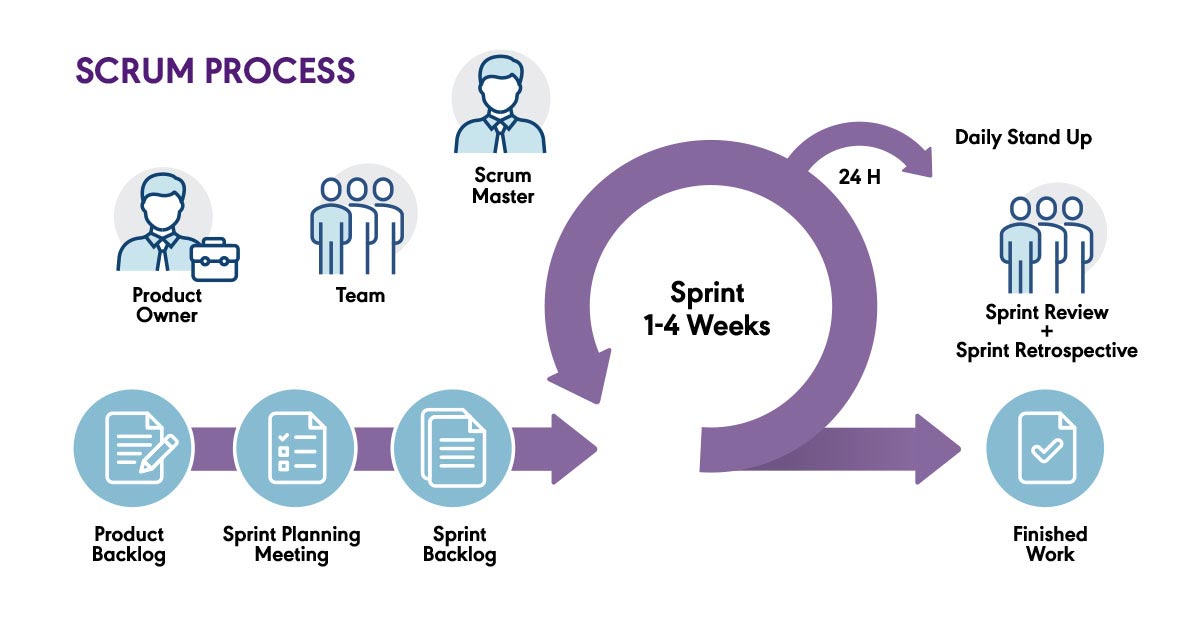
Scrum is an agile framework that emphasizes teamwork, communication, and rapid iteration. It involves breaking down a project into smaller, more manageable tasks called sprints, which typically last between one and four weeks. At the end of each sprint, the team conducts a review to assess their progress and adjust their approach for the next sprint.
1.8 Report Structure
The report encompasses all efforts dedicated to this project, organized into multiple sections covering various research and development fields that are important to the team's specific objectives. Table 3 clarifies the structure of the report, outlining the various aspects covered in different sections.
| number | Task | Description |
|---|---|---|
| 1 | Introduction | The project will be introduced by a brief summary of the problem and the approach used to find a solution. |
| 2 | State of Art | An analysis of the latest and most advanced solutions for the field, taking into account the latest available data, research,… |
| 3 | Project Management | It's an approach concerning the planning and it'll be used to oversee al the different tasks. |
| 4 | Marketing plan | It will contain an identification of the primary target audience, an analysis and research of the existing market and defined market strategy. |
| 5 | Eco-efficiency measures for sustainability | Definition of the sustainable aspects of the project in terms of its social, economic, and environmental implications. During the whole project different specifications will be made concerning the materials and construction process of the product focusing on the most sustainable approach. |
| 6 | Ethical and Deontological concerns | Analysis of the existing Code of Ethics and specific benefits and concerns regarding the project. |
| 7 | Project Development | The development of the product is carried out from each section, in order to be able to carry out a viable solution and end up with a prototype that is as realistic as possible. |
| 8 | Conclusions | Summary of all that has been achieved, stating what can be improved in the future. |
| 9 | Bibliography | Detailed list of sources that have been consulted in order to acknowledge and give credit to the original authors while also facilitating readers in locating and verifying or exploring additional references. |
2. State of the Art
Once all the proposed projects were considered, the team chose to go in the direction of the development of a smart, ergonomic multipurpose public equipment, as it seemed the most interesting and gave a broad field of problems to try to solve. In the design thinking workshop the group started collecting the first existing problems and needs observed in their everyday public life, specifically those that occurred here in Porto. Those ideas were mostly related to making public life, especially public transportation, more comfortable or, in the chosen scenario, safer. To get an overview of what already exists on the market, what kind of research has already been conducted and what products or strategies are used to solve those problems and satisfy the needs, research about the current State of the art had to be performed.
By brainstorming, the team came up with multiple ideas which fitted the description of the product to design and satisfy at least one of the problems and needs that were previously defined and the group came up with the idea of the traffic light waiting game.
In the following chapters, there will be a deep dive into the different aspects that play a role and are connected to the product, starting with information about the state of the art and examples of smart, multipurpose public equipment in general. To continue, some research was conducted about already existing traffic light models and strategies, that are used to make pedestrians wait for the green light and prevent jaywalking, different methods and information about the usage of gamification in public life and overall attempts to avoid accidents with pedestrians like informational campaigns or other.
Prior to delving into the examination of the state-of-the-art, it is essential to establish a clear definition of the concepts underlying the product: the smart crossroad waiting game, SMASHY.
Crossroad safety: The main reason for this project is to prevent jaywalking, many solutions have been implemented and will be analyzed in the following state of the art.
Smashing game: It consists of an agility challenge where the user must smash as many buttons as possible.
Gamification: Analysis of different existing gamified solutions used for traffic regulation.
Mobile Application: Within an NFC reader placed on the module, the player can access an application on their smartphone to keep track of scores and obtain rewards.
2.2 General State of the art
Examples of smart public equipment
These past few years, the smartification of everyday objects and infrastructures has been evolving and adapting to smart technology in a more general way. That is why an evaluation of the different existing smart public equipment is needed.
Smart Street Lighting: Light Emitting Diode (LED) lighting with sensors that adjust brightness based on natural light levels and human presence as explained in Figure 2. Additionally, they can integrate with city systems for remote monitoring and control, leading to energy savings and improved safety [Pathomthat Chiradeja, Suntiti Yoomak, 2023];[Rob Walker, 2019].

Intelligent Waste Management: Waste bins equipped with sensors that monitor fill levels. This data is used to optimize waste collection routes, reducing costs and environmental impact. Some bins even compact trash to increase capacity [Dominic Abuga, N.S Raghava, 2021].
Smart Parking Systems: Sensors embedded in parking spots or cameras monitor parking availability in real time as seen in Figure 3. This information is often accessible through mobile apps, reducing traffic congestion and helping drivers find parking quickly [Cleverciti, 2018] .

Public Transportation Management: Smart systems for public transportation include real-time tracking of buses and trains, predictive maintenance of vehicles, and smart ticketing systems that enable contactless payment and seamless intermodal travel (Refer to Figure 4 ).

Smart Benches and Shelters: Figures 5 and 6 show benches and bus shelters with integrated solar panels, Universal Serial Bus (USB) charging ports, wireless fidelity (Wi-Fi) hotspots, and digital displays for information dissemination, weather updates, and advertisements [Chris Chesher, et al., 2023]; [HOLA Systems, 2022]; [EnGoPlanet, 2023].


Environmental Monitoring: As seen in Figure 7 sensors placed throughout the city monitor air quality, noise levels, and other environmental factors. This data helps in managing pollution, planning urban development, and improving citizen health [Rodrigo Sarroeira, et al., 2023] .

Smart Water Management: Sensors in water distribution systems detect leaks and monitor water quality in real-time. Smart irrigation systems as seen in Figure 8, adjust watering schedules based on weather forecasts and soil moisture levels, conserving water resources [Céline Bernard, 2022].
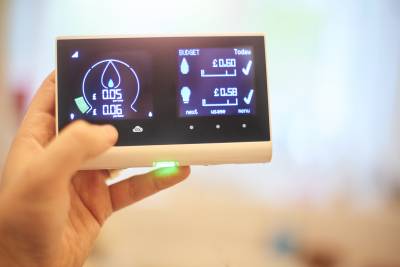
Public Safety Systems: Surveillance cameras equipped with facial recognition and video analytics software enhance public safety by detecting and responding to incidents in real-time. Emergency call boxes with integrated sensors provide immediate assistance in case of emergencies [Business Reporter, 2020].
Augmented Reality and Information Kiosks: Interactive kiosks like Figure 9 illustrates, placed in public spaces provide tourists and residents with information about local attractions, events, public services, and navigation assistance through augmented reality interfaces [Acquire Digital, 2023].

Electric Vehicle Charging Infrastructure: Deployment of Electric Vehicle (EV) charging stations, as Figure 10 shows, in public parking lots, streets, and other accessible locations to support the growing adoption of electric vehicles and reduce carbon emissions [ZDWL, 2023].

2.3 Pedestrian road safety improvement/ Jaywalking prevention

Jaywalking, which is a term used for the crossing of a roadway in a way that contravenes traffic regulations, can be narrowed down and used to define the act of crossing during a red light. This is considered illegal in many countries around the world, although the law is not enforced in all of those countries. Reasons for this, is it being dangerous for incoming cars or other participants of road traffic and, most importantly, the pedestrians crossing themselves. In fact, pedestrians are among the most vulnerable road users, accounting for 38 % of road deaths in urban areas of the EU [Atze Dijkstra, 2021]. Strategies to solve the problem of pedestrians crossing red lights are already in place, starting in the early 20th century with newspaper articles and posters in cities, showing the dangers roads bury. Nowadays, the most common initiative to prevent the crossing of red lights, is the button placed on the traffic light poles as seen in Figure 11. This button notifies the traffic light system that one or more pedestrians are waiting for the red light to cross the street, in addition, some of them have a countdown to let the pedestrians know when the light is going green and they can start crossing the road. More modern technologies are used today, like facial recognition, as Figure 12 illustrates, and artificial intelligence (AI) identification to find offenders. In the Chinese city of Shenzhen, the offenders even get taken pictures of, which are displayed on a screen installed on the crossing in main avenues and later used to identify the person and notify them of their fine [South China Morning Post, 2018].

Other, more suitable solutions try to understand the cause of the problem and why people are even doing it. Cameras, locations of crossings and the routes of pedestrians who cross the roads are being used to analyse why and where people jaywalk and thereby improve road infrastructure, traffic, pedestrian safety and urban mobility in general. Future self driving vehicles are also, in theory, seen to be more safe, reliable and careful on the roads, being able to react faster when someone or something is crossing the road unexpectedly. In some cities, little screens on traffic lights are already installed counting down the time remaining until the light turns green again, aiming at reducing the amount of people crossing red lights by giving them information about how little time they are going to loose and making people more patient, as the unlawful crossing often occurs just second before the light turns green. Making traffic lights more pedestrian-favoured especially during peak hours and adding more crosswalks would encourage more people to cross the roads legally but could also contribute to more vehicle traffic and might only have a small impact. These types of solutions are currently being handled by traffic control installions, which are capable of acquiring external information such as temperature and weather conditions because they are internet-connected. The latest advancements involve the evolution of Traffic Light Installations into intelligent Traffic Light Installations (iTLIs), connected to the internet and capable of interacting with mobile phones. These iTLIs can accurately predict approaching transport vehicles, estimate their time of arrival, and enhance the overall journey experience for road traffic participants [Partnership Talking Traffic, 2024].
Furthermore studies about pedestrian safety posters that are based on proven behavioural change approaches have shown a significant decrease in the proportion of red light crossings after the installation of the poster, which shows that on site road safety communication might have more impact than general public education campaigns [Nirajan Shiwakoti, 2020].
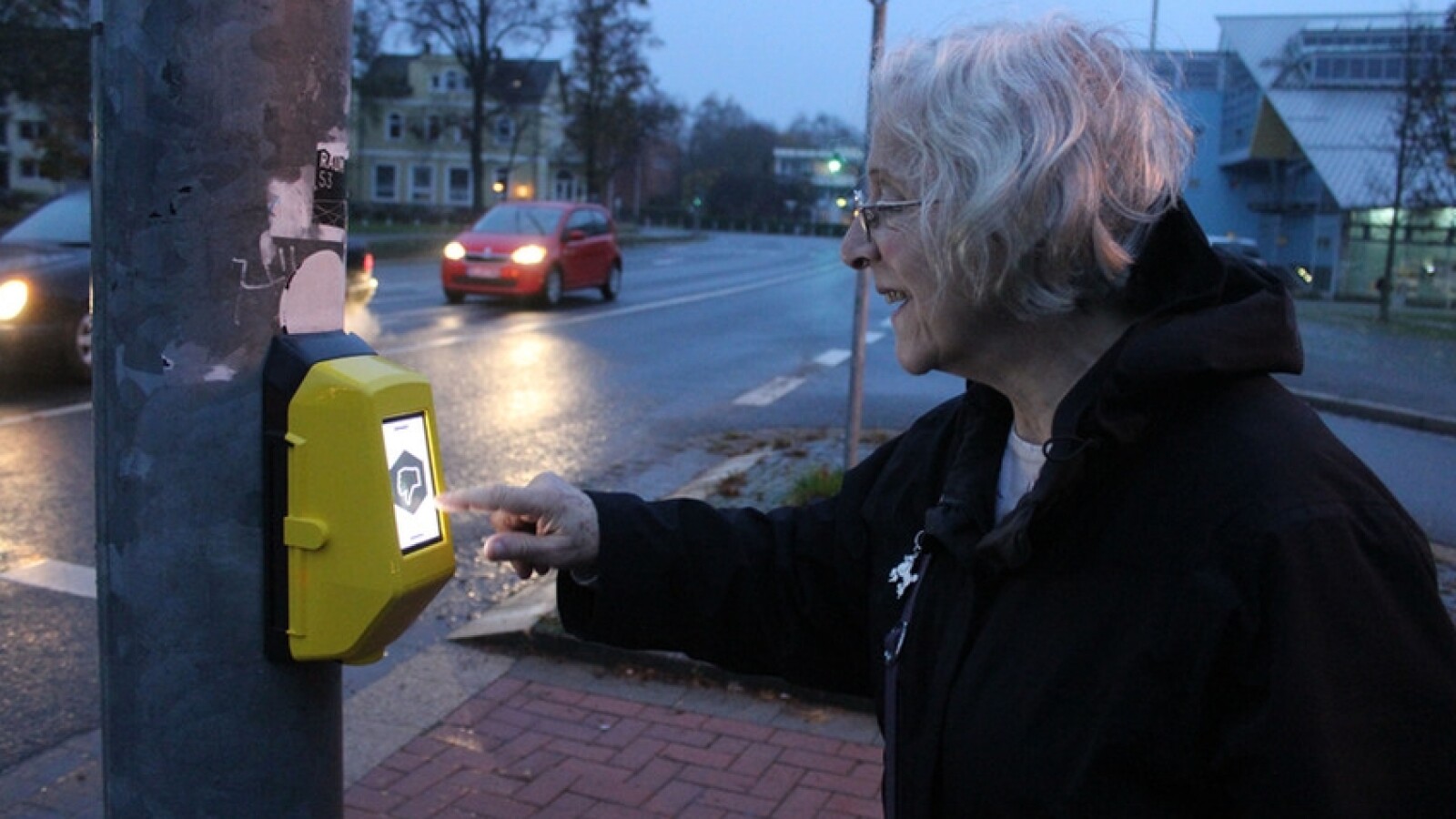
The product closest to SMASHY, is the StreetPong Figure 13 prototype and test phase, which was conducted in Hildesheim, Germany. It consists of a screen on the traffic light, that allows the pedestrian to play a game of pong against an opponent on the other side of the road. Detailed studies about traffic movement and safety concerns were carried out in the testing phase to gather information about important points to include. Here necessary information could also be gathered for the product regarding these topics, as this was already a success in the testing phase. For this game the user plays against an opponent on the other side of the street, so one possible problem was that there might be a second player missing, which doesn’t apply to the product developped by team 5. Another aspect that has to be kept in mind is that the game should stop 5 or 10 seconds before the light turns green, this gives the player time to look at the incoming traffic. In total, this was a success as it shows to have a positive impact on waiting behaviour at the traffic light, just because the game is fun and 84 % of the asked players would like more traffic lights in the city to be equipped with the module [Hawk Hildesheim, 2015].
2.4 Smashing game
The proposed solution entails employing a smashing game as a method of diversion, thereby altering the user's perception of time. This approach facilitates a quicker passage of time as the user's attention is diverted away from the anticipation of the red light transitioning to green. Instead, the user's cognitive faculties are used by the interactive nature of the game, occupying their mind while enabling physical movement.

The main interest of the chosen game is to smash as many buttons as possible, challenging the players to test their agility and reflexes. Many games have already been developed following this pattern but the most well-known would be the Whack-a-mole arcade game shown in Figure 14. Players use a mallet or hammer to hit toy moles that randomly pop up from different holes. The objective is to hit as many moles as possible within a limited time frame. As the game progresses, the speed at which the moles pop up increases, challenging the player's reflexes and coordination. Whack-a-Mole is often enjoyed for its simple yet engaging gameplay and is commonly found in amusement arcades and entertainment venues [Hasbro, 2003].
This classic game has also been adapted for home usage in various forms. Manufacturers have created miniaturized versions of the game that are suitable for tabletop play (Figure 10) or even handheld electronic devices. Additionally, digital versions of Whack-a-Mole are available as mobile apps or video game console downloads, allowing users to enjoy the game from the comfort of their own homes. These adaptations often retain the core mechanics of the original game, providing players with a similar experience to the arcade version.

Other games that require a quick reaction, precise movement and good hand-eye coordination are the mini-games that are found in the arcade centers such as Space Invaders or Tetris. Space Invaders is a game where players control a spaceship at the bottom of the screen, shooting at rows of descending aliens while avoiding their projectiles. The game speeds up as players progress, requiring quick reactions to survive. In Tetris, players manipulate falling differently shaped blocks to create complete horizontal lines, which then disappear. As the game progresses, the blocks fall faster, demanding faster decision-making and hand-eye coordination.
Because the smashing game requires the player to perform physical movements and occupies his mind in a great way, this is the best game to include in the module to make it fulfill its purpose in the best way possible and that is why the team chose it.
2.5 Gamification
Gamification describes the process of including game-related mechanics, elements and fundamentals in non-game domains in order to make them more appealing and fun to users, adding motivation to enhance participation.
There are various ways to implement different approaches in diverse contexts to encourage user engagement with the topic or content. For instance, gamification can make waiting at a red light more appealing by offering extrinsic motivation, such as status through high scores, fostering a sense of community by encouraging teamwork, and providing rewards or goals. Making the game or content genuinely enjoyable also adds intrinsic motivation for long-term participation.
Including a community aspect into content can make users more determined to engage, as they feel part of something bigger. This communal feeling also ties into other defined gamification elements, such as position. Giving someone a position can be achieved by showcasing achievements or comparing them with peers or opponents, for example, through leaderboards or trophy shelves. Another common element, which plays a role in this project is the play: “Play refers to the sensation of fun, pleasure and surprise” [Hal Koss, 2022].
Successful gamification can be reached by tapping into one of the eight core drives of humanity, defined by [Yu-kai Chou, 2015]:
• Epic meaning and calling
• Development and accomplishment
• Empowerment of creativity and feedback
• Ownership and possession
• Social influence and relatedness
• Scarcity and impatience
• Unpredictability and curiosity
• Loss and avoidance
The project's aim isn't to devise an extensive campaign to enforce compliance with traffic signals. Instead, the focus is on integrating a physical game during wait times, promoting both entertainment and physical activity. Therefore, the emphasis lies on short-term enjoyment, with potential incorporation of achievement elements like leaderboards and score tracking. This approach is intended to stimulate extrinsic motivation and potentially offer rewards to encourage participation.
One popular example for the rewarding mechanic used in gamification in public life is Volkswagen's Fun Theory, which aims at making everyday life occasions fun, by adding something playful and interesting. One instance is a trial to reduce speeding in Stockholm, where they switched from speed cameras being only negative to them entering drivers into a lottery when speed limits were obeyed, with rewards being paid by fines of speeders, see Figure 16. Another example is a staircase in Stockholm next to an escalator, converted into piano keys. By grabbing pedestrians' attention, 66 % more people than normal chose the stairs over the escalator, which shows the power of simply adding some fun into an everyday life activity [Volkswagen, 2009].

In summary, incorporating gamification elements into the product involves ensuring that the game or activity at the traffic light is genuinely enjoyable and captivating to maintain people's intrinsic motivation to participate or observe others playing. To tap into extrinsic motivation, users can be informed about the number of individuals who have used the module that day, providing statistics and highlighting their role as positive examples for children. While leaderboards or reward systems are potential options, they introduce complexity that contradicts the project's aim of simplicity and may not foster intrinsic motivation, which remains a priority for the team [Kibbeum Na, Kwanghee Han, 2023].
2.6. Mobile Application
In order to keep track of scores and obtain some rewards, the module is equipped with an NFC reader, allowing players to easily access the application on their smartphones by simply approaching their phones to the reader. The module can also be played without using the app, the only difference is that the player’s score will not be saved and the speed at which the buttons light up will remain constant. The team conducted a state-of-the-art analysis of existing smartphone games and applications to identify interesting features to include in the application linked to the game SMASHY.
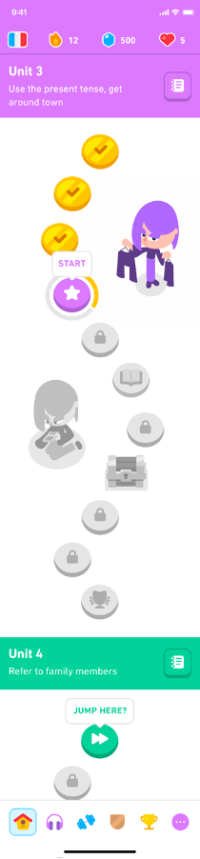
Duolingo is a mobile application created in 2009 by Professor Luis von Ahn and his student, Severin Hacker, from Carnegie Mellon University [Wikipedia Contributers, 2024]. This educational technology uses a gamified approach to learning a new language by taking a short lesson each day conducting interactive quizzes and exercises. Based on the user’s performance on the exercises proposed by the level, if the player is successful, he will level up and the game will adapt the exercises and quizzes to that next level. The interface that the SMASHY application will have is the same one that Duolingo uses to display the user's growth trajectory and acquired abilities. The user advances along a route that resembles a tree and can earn various rewards all the way to the final level, sometimes known as the legendary or golden level.
As seen in Figure 17, the different circles are displayed in a path and, unlocked whenever the current level of the player is completed.
Another example of this layout for leveling up is the well-known game Super Mario Bros developed by Nintendo. A game available on multiple platforms where the principal character, Mario, who must overcome various challenges to level up and unlock new worlds. In this game, players guide the iconic character, Mario, through various challenges, unlocking new worlds as they progress. The level layout, as depicted in Figure 18, follows a vertical path where players advance sequentially through the different worlds.
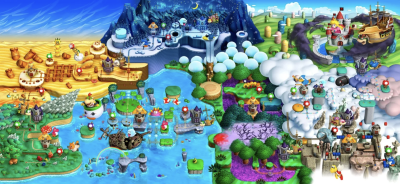
By blending the intuitive level progression mechanics from these examples with the unique gameplay dynamics of SMASHY, the team aims to create an engaging and accessible experience for all users.
Additionally, Duolingo offers a competitive environment by placing its users in leagues where they can challenge themselves against friends or against randomly chosen players from across the globe. A little competition is known for maintaining the engagement of players, and as Duolingo implemented, the SMASHY application will inlude that too. On the bottom of the Duolingo main screen, there is a shield emoji where the leaderboard is displayed as Figure 19 shows. Here, players can check their ranking and position within their respective groups. This feature will also be included in the SMASHY application letting the players who wish to follow their scores, tracking their improvement over time and monitor their progress and ranking within the fellow players competing at the same module (same location).
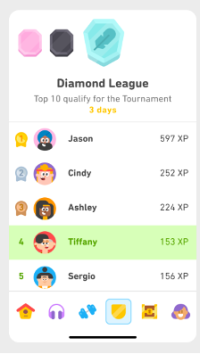
Drawing inspiration from successful applications like Duolingo and iconic games like Super Mario Bros., the team aims to create an engaging and interactive application for users. By adopting a gamified approach to learning and progression, users will be able to track their scores, level up, and compete with others on leaderboards. The inclusion of an NFC reader on the module ensures a good integration with the app, allowing players to easily access their scores and rewards.
2.7 Conclusion
Based on the state-of-the-art above, the team opted to develop a smashing game adaptable for all users, while also incorporating a multi-functional aspect by integrating a screen on the module's back. This decision was made by evaluating all the existing options and combining all the features that could be interesting for this specific product taking into account features that address specific needs and challenges within this topic. As seen in this thorough analysis, the existent solutions for pedestrian safety are not usually interactive for the user and none of them include an agility game.
Regarding the choice of the game, the decision was driven by its ability to become public, human-sized and inducing cognitive function usage in the user.
The selection of the smashing game was driven by its potential to engage the public, its human-scale design, and its capacity to stimulate cognitive functions in users. Inspired by the renowned arcade game Whack-a-mole, this adaptation transforms the concept to suit outdoor environments, substituting the traditional hammer with hand gestures. This innovative modification imbues the product with a distinct technological edge and positions it uniquely in a market devoid of direct competitors.
To further refine the team's approach and ensure the best possible outcomes, the generic trends have been summed upp in Table 4 and some of the most similar solutions for pedestrian safety precisely, were analysed and compared in Table 5.
| Equipment | Picture | Functionality | Price (€) | Educative | Sustainable | Rewards |
|---|---|---|---|---|---|---|
| Smart Street Lighting | 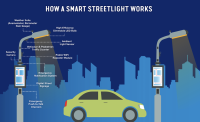 | LED lights with sensors that adjust brightness based on natural light and presence. Integrates with city systems for remote monitoring and control. | 200 - 500 per unit | No | Yes | No |
| Intelligent Waste Management | 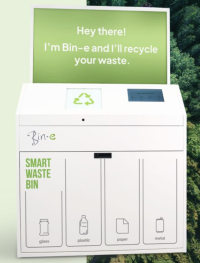 | Bins with sensors that monitor fill levels. Data optimizes waste collection routes, reducing costs and environmental impact. Some bins compact trash. | 250 - 1000 per bin | Yes | Yes | No |
| Smart Parking Systems | 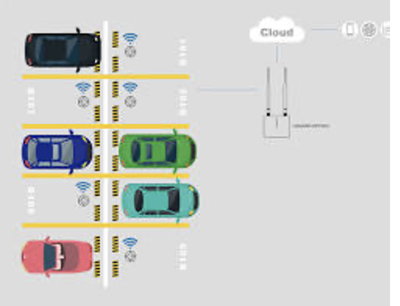 | Sensors or cameras monitor parking availability in real-time. Information accessible through mobile apps, reducing traffic congestion. | 100 - 200 per parking spot | No | No | No |
| Public Transportation Management | | Real-time tracking of buses and trains, predictive maintenance, contactless payment, seamless intermodal travel. | Varies depending on system complexity. | No | No | No |
| Smart Benches and Shelters | 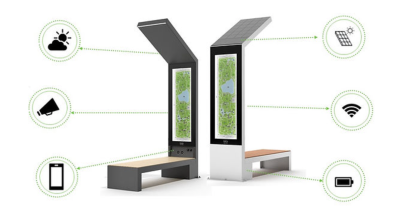 | Benches with solar panels, USB charging ports, Wi-Fi hotspots, and digital displays for information. | 2000 - 10 000 per unit | No | Yes | No |
| Equipment | Picture | Functionality | Educative | Sustainable | Rewards |
|---|---|---|---|---|---|
| Button | 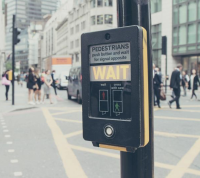 | Button for pedestrians to press in order to accelerate the transition of the traffic light from red to green | No | No | No |
| AI Face ID |  | AI Facial recognition system to spot jaywalkers | Yes | No | No |
| Street Pong | 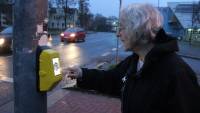 | Game at the traffic light poles for pedestrians to compete against each other on each sides of the crossroad | Yes | No | No |
| Posters | 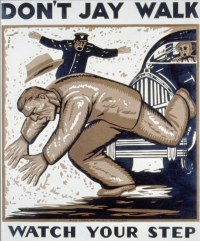 | Propaganda posters to raise awareness about pedestrian safety | Yes | No | No |
| Countdown screens |  | Screens located at the traffic light poles with a countdown of the seconds remaining for the light to turn green | Yes | No | No |
The next chapter deals with all topics regarding project management, giving an overview of how the team frames and manages the process of the product development.
3. Project Management
Effective project management is crucial for the success of a project of any size. In this section of the report, the team focuses on the methodologies and tactics used to guide the project towards its goals and ensure its continuous progress. Covered topics are project scheduling, team member roles, communication protocols, budget and risk management. The aim is to adhere as closely as possible to on time delivery, budgetary limits and the desired quality for the project.
3.1 Scope
A project scope acts as the guiding compass, steering a project from start to end. It delineates specific deliverables, providing the team with a clear overview throughout the project. Its central role in project management lies in its good outlining for planning, executing, and controlling the project. This scope serves to provide a precise direction for both the team and stakeholders, laying out the desired outcomes in unmistakable terms. It provides the team with a definitive direction, ensures alignment with objectives and minimises the risks of scope creep. The project scope essentially defines the boundaries or limits of the project, clearly outlining what will be included in the deliverables and what will not. Within this scope are the project's goals, tasks, and required resources, all essential elements in achieving the desired outcome.
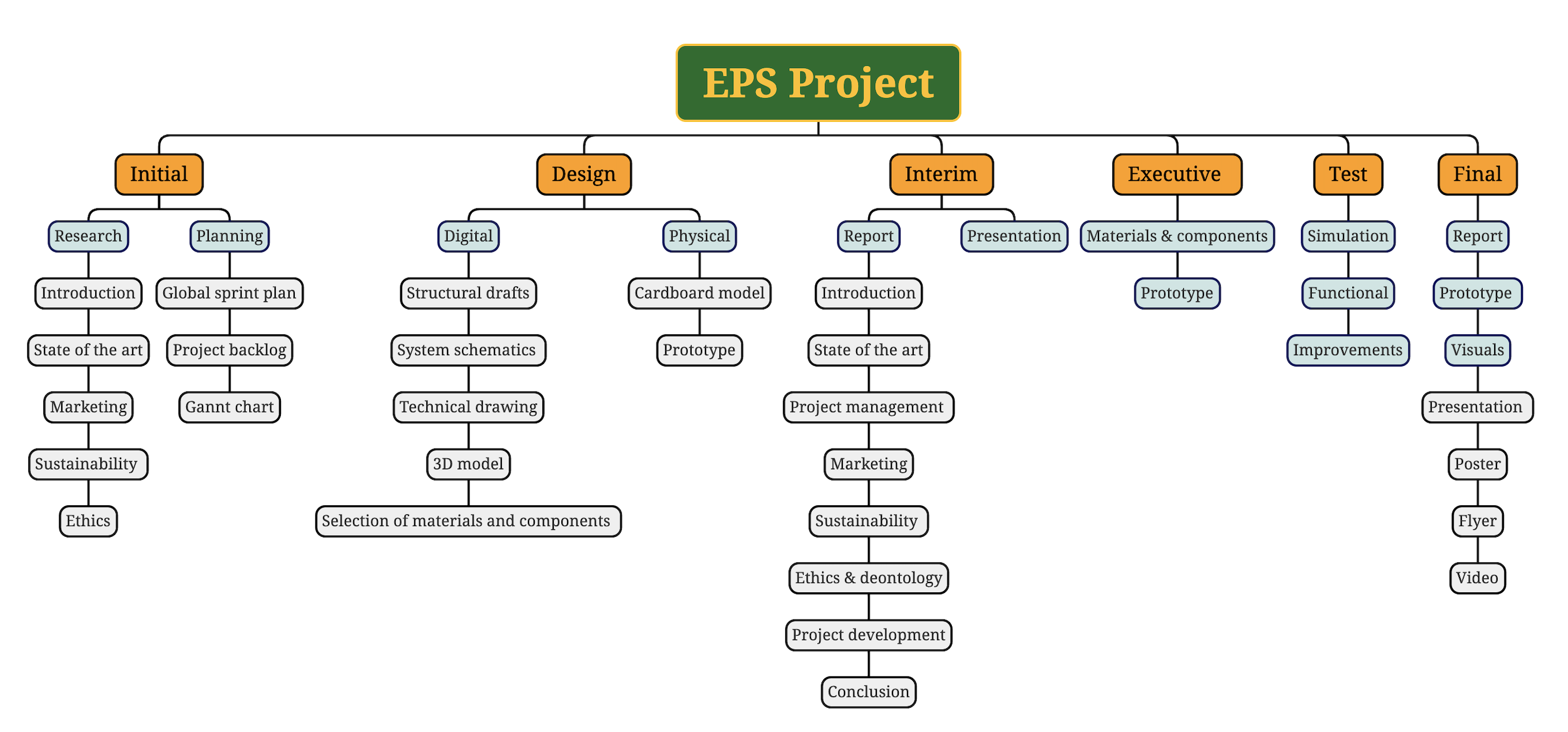
One effective method of presenting the scope is through the Work Breakdown Structure (WBS). This structured approach offers a comprehensive overview of the project and its components, aiding in effective planning and execution. There is a WBS of the EPS project and deadlines as seen in Figure 20.
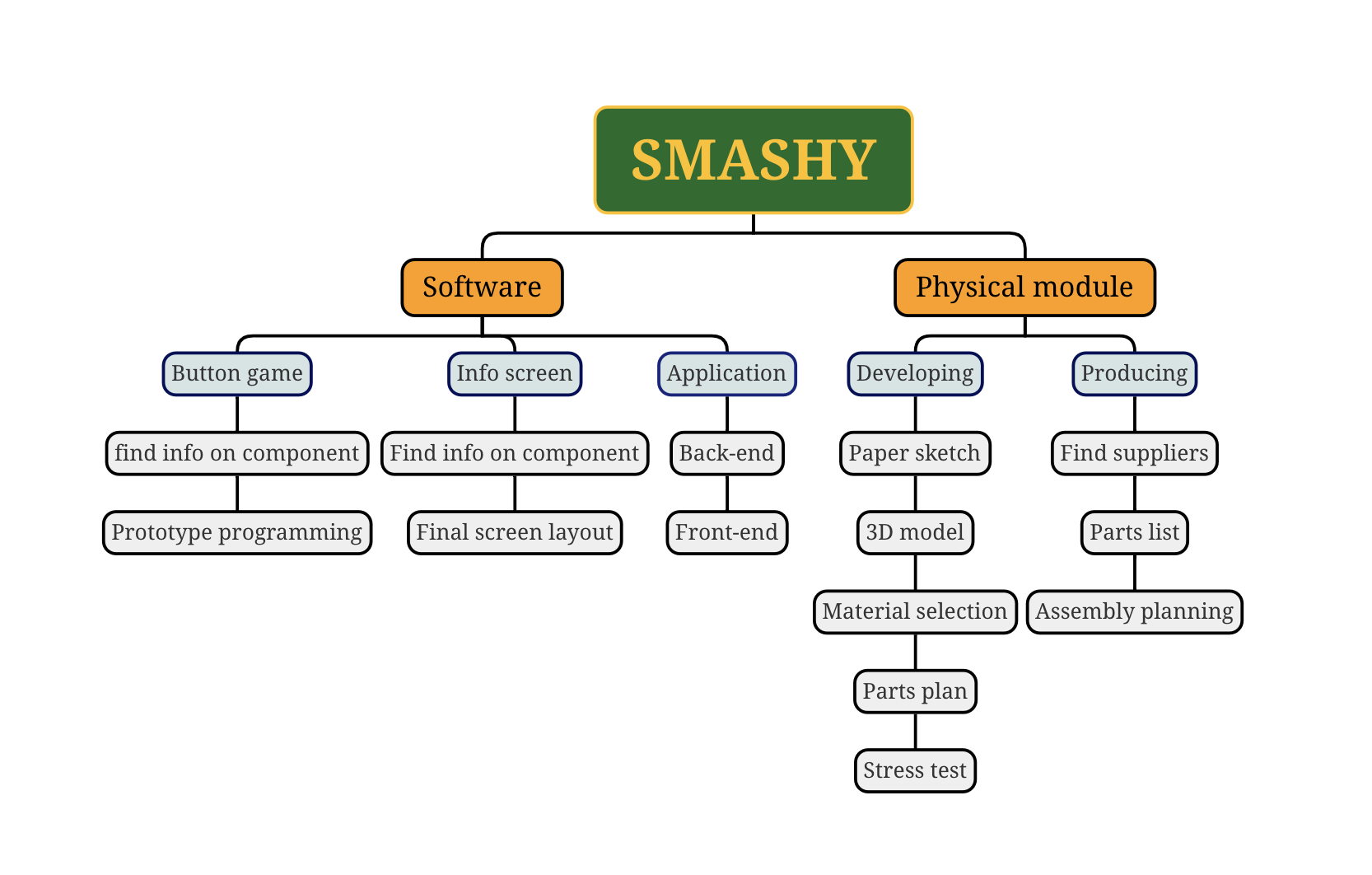
For the development of SMASHY it's also important to define all the steps in a WBS. All the different steps are subdivided in Figure 21.
3.2 Time
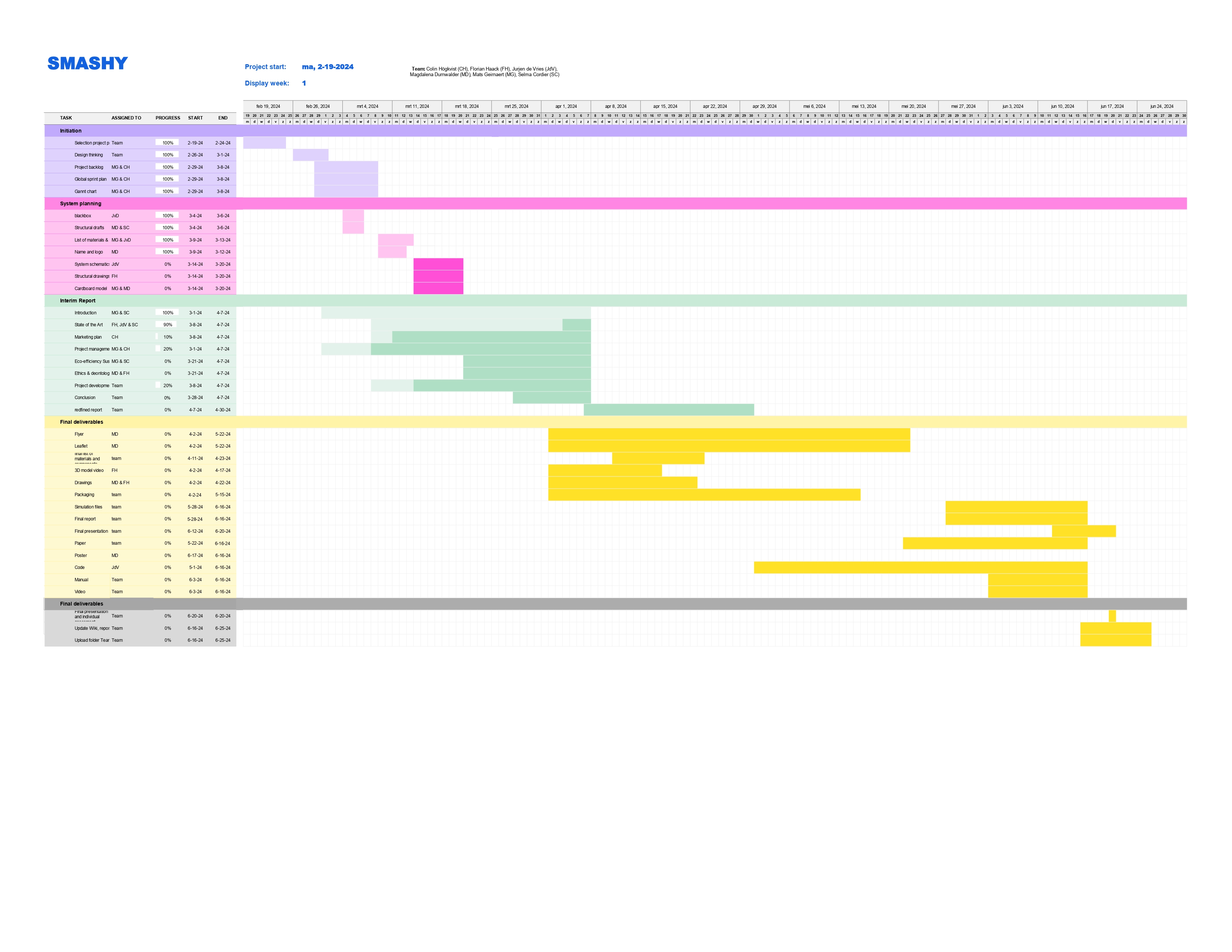
The Gantt chart, as seen in Figure 22, is created based on the work breakdown structure and project deadlines, serves as a tool to gaining insight in tasks and deadlines within the project.
Jira is the primary tool for the team to track time. Initially, a backlog was created containing all the deadlines to be followed. Each week, a new sprint is created, and the most crucial stories from the backlog are included in this sprint. Each story is assigned a time estimate, allowing the team to determine how many stories/tasks can be accommodated in the current week's sprint. Throughout the sprint, time spent on a story or task is logged in Jira. This process enables the team to assess the accuracy of their estimates at the end of the sprint and make adjustments for future sprints.
Gannt chart pdf
3.3 Cost
Effective cost management is an essential aspect of project management, enabling businesses to maintain project expenses within approved spending limits. Failing to control costs can lead to projects exceeding their allocated budgets, resulting in financial losses, delays, and diminished quality. Through adept cost control, organizations can enhance resource utilization, mitigate financial risks, and increase project profitability. Not only does this improve project outcomes, but it also empowers project managers to make informed decisions grounded in precise project cost information.
3.3.1 Material Resources
The material resources for the construction of the prototype are based on the price for each component or material and the respective quantity. Table 6 shows the provider, quantity and cost of each of the components that are required for the making of the prototype.
| Nr. | Item | Item of SMASHY | Provider | Quantity | Unit Price [€] | Item Cost [€] | ||||||
|---|---|---|---|---|---|---|---|---|---|---|---|---|
| Components | ||||||||||||
| 1 | Raspberry Pi pico W | Electronics | Mauser | 1 | 5.58 | 5.58 | ||||||
| 2 | Temperature and humidity sensor (SEN0527) | Electronics | Mauser | 1 | 3.63 | 3.63 | ||||||
| 3 | I/O expander (MCP23017-E/SP) | Electronics | Mauser | 1 | 1.57 | 1.57 | ||||||
| 4 | Ultrasonic sensor (4007 HC-SR04) | Electronics | Mauser | 1 | 3.67 | 3.67 | ||||||
| 5 | Resistor 220 Ohm () | Electronics | Mauser | 10 | 0.26 | 2.56 | ||||||
| 6 | Light dependent resistor (PDV-P8103) | Electronics | Mauser | 1 | 0.96 | 0.96 | ||||||
| 7 | OLED display (DFR0648) | Electronics | Mauser | 1 | 9.21 | 9.21 | ||||||
| 8 | Breadboard Adafruit (4539) | Electronics | Mauser | 1 | 4.65 | 4.65 | ||||||
| 9 | Cables 200mm (ZW-MF-20) | Electronics | Mauser | 2 (20 pcs.) | 5.23 | 10.46 | ||||||
| 10 | Cables 100mm (ZW-MF-10) | Electronics | Mauser | 1 (20 pcs.) | 4.43 | 4.43 | ||||||
| 11 | Tactile Switch (TS02-66-170-BK-160-SCR-D) | Electronics | Mauser | 10 | 0.10 | 1.01 | ||||||
| 12 | LED light (LTL-1CHG) | Electronics | Mauser | 10 | 0.09 | 0.93 | ||||||
| 13 | RFID/NFC Module (ANT7-T-M24SR64) | Electronics | Mauser | 1 | 4.58 | 4.58 | ||||||
| 14 | RFID card (RFID1356-ISO) | Electronics | Mauser | 3 | 1.11 | 3.33 | ||||||
| 15 | Hinge piano (500 mm) | Material | Leroy Merlin | 1 | 3.29 | 3.29 | ||||||
| 16 | Screws 2.5×10 mm | Material | Leroy Merlin | 1 | 4.19 | 4.19 | ||||||
| 17 | Screws 4x25mm | Material | Leroy Merlin | 1 | 1.69 | 1.69 | ||||||
| shipping | 0 | |||||||||||
| Materials | ||||||||||||
| 1 | MDF Plate (1200x600x10 mm) | Material | Leroy Merlin | 1 | 9.99 | 9.99 | ||||||
| 2 | Acrylic glass plate (1000x500x2.5 mm) | Material | Leroy Merlin | 1 | 14.99 | 14.99 | ||||||
| 3 | Wood beam 22x22x2600 mm | Material | Leroy Merlin | 1 | 2.59 | 2.59 | ||||||
| shipping | 3.90 | |||||||||||
| Total | 96,68 | |||||||||||
3.3.2 Labor Costs
If this wouldn't be a school project but a real life company, the calculated labour cost for this project based on the average minimum wage in the Europe, that would be between 477 € in Bulgaria and 2571 € in Luxembourg [Eurostat, 2024]. Assuming that as a start-up earnings uphold the minimum in the design phase. The income tax rate for this level of income in Portugal is 13,25 % [pwc, 2024], which means paying 202 € as an income tax per month. Aside from income tax, the employee is also obligated to make social security contributions, currently that is 11 % of their gross salary in Portugal. For the a startes income, this would translate to 168 € per month in social security payments. Besides this, the employer is also mandated to contribute to social security at a rate of 23.75 % of the employee's gross salary, amounting to 362 € per month in this scenario. [Lara Silva, 2022]. How much the cost for the employer is, and how much is left for the employee after tax can bee seen in Table 7.
The calculations in Table 7 are the wages for the employees to think out the product and give shape to the looks. But also to have a project manager, graphic designer and programmer.
| Name | Cost per month [€] | Taxes( % ) | Income after taxes[€] | Total/year [€] |
| Colin H. | 1 524 | 48 | 793 | 9516 |
| Florian H. | 1 524 | 48 | 793 | 9516 |
| Jurjen dV. | 1 524 | 48 | 793 | 9516 |
| Magdalena D. | 1 524 | 48 | 793 | 9516 |
| Mats G. | 1 524 | 48 | 793 | 9516 |
| Selma C. | 1 524 | 48 | 793 | 9516 |
| Total Cost [€] | 109 728 | 57 096 |
This means that the labour cost for the company to develop the module would be 109 728 € a year for a starters wage for 6 employees. Each employee will get 793 € a month during the beginning of the project.
3.4 Quality
The definition of the word “Quality” stated by [International Trade Centre, 2012] says the following: “the standard of something as measured against other things of a similar kind; the degree of excellence of something.” This attribute or characteristic is what the Stempe Safety team aims to achieve, both in the development of the project and in the finished product. Achieving a high standard will lead to an end product with a certain degree of quality. For the team, it is crucial to ensure the implementation of this feature and the definition that speaks the most to the team is that quality is a measure of how well the product meets the needs and requirements specified by the client or customer, in this case, by the EPS team.
Quality management
Effective project management is the root of quality deliverables and ensures a smooth development of the product development process. Project quality management involves ongoing assessment of the quality of all activities, with corrective measures taken as necessary until the desired quality level is attained. This approach helps control project costs, adhere to timelines, and meet the technical requirements set by the client. Efficient work is crucial for meeting deadlines, even though external factors like material availability or subcontractor schedules can sometimes affect delivery dates. Initial studies conducted before product launch help define the project scope and budget, ultimately determining the cost of the final product. Efficient quality management not only reduces the risk of product failure but also enhances client satisfaction.
In order to ensure a product with high quality, these three quality management procedures ought to be established from the start and used to monitor project quality continuously:
• Quality standards
Firstly, the quality standards of the project have to be defined in order to have a goal and be able to write the path to achieve that objective correctly and compliant to what has been defined in the beginning. Since the product that will be created is aimed to all pedestrians walking the streets, the quality standards to set are very specific. Safety would be the most important one for the project, followed by a high-quality of materials; being a product located on the outdoors, it has to be able to resist the weather conditions and all external inputs it may receive from being on the street. Once the purpose of the project has been defined, a quality planning can be put in place.
• Quality assurance
Quality assurance focuses on preventing issues from happening, taking a proactive stance by establishing clear standards and procedures aiming to build quality into the project from the ground up. This plan addresses how quality will be monitored, assessed, and improved. Focusing on prevention, the team has carried out a potential risk analysis and implemented preventative measures to minimize errors and ensure the project does not lose its track. This might also help improve efficiency, by detecting and mitigating the risks early on, some costly rework may be avoided and even delays can be controlled.
• Quality Control
Quality control and quality assurance are integral components of project quality management. Quality control focuses on identifying and rectifying issues or non-conformities that may arise during the project lifecycle, implementing processes aimed at ensuring deliverables meet established standards. For the team, this involved conducting weekly peer reviews, implementing testing phases, and adhering to predefined checklists before specific deadlines.
In essence, quality assurance creates a quality-focused environment while quality control acts as a safety methodology to catch any issues or defects that may have been overseen during the quality assurance process. When both are implemented effectively, they significantly increase the chances of delivering a high-quality project. While quality control is the one checking for defects, quality assurance sets the stage to make the control efficient. That is why, the quality of the product is established during the process and controlled once it is manufactured. In order to ensure the quality of the product, the following measurements will be held:
- Creation of a prototype
- Review of the product with experts
- Trial runs prior to commissioning
3.5 People
Task delegation is a key aspect of successful project management, but most importantly, wielding immense influence over project outcomes. Some of the most important things about effective task delegation are:
- Team members' capabilities and interests: Matching tasks with team members' skills and passions has a huge impact on their performance. Tasks aligned with strengths, boosts motivation and productivity and fosters a more engaged and effective team.
- Flexibility and adaptability: Projects evolve constantly, that's why flexibility is very important. Adapting to changing priorities or unforeseen challenges maintains efficiency, ensure resources are utilized optimally for successful project completion.
- Responsibilities: Defining and communicating about roles, scopes, timelines, and deliverables ensures everyone understands their duties and expectations. As well as the expectations team members may have about their teammates. By making this clear in the beginning of the project it aligns efforts made towards the shared goal.
- Collaboration: Collaborative efforts often lead to innovative solutions and higher form of creativity. Teams with diverse skills can leverage each other's strengths, by producing good results and getting good feedback will increase their team spirit.
- Monitoring progress and providing support: Regular check-ins and feedback sessions keep tasks on track, while offering support ensures obstacles are swiftly addressed.
Detailed roles are discussed every week on the sprint planning, this is also the moment to have check-ins with each other about the last sprint. Was everybody capable of doing their tasks, are there struggles or any blockers,… The supervisors have a clear helicopter view over the project and will make adjustments as needed.
3.6 Communications
Effective communication is key when overtaking a project. Clarity and honesty are the most important pillars when interacting with teammates. For the EPS project the communication is done in different ways for the team members and there is also communication with the supervisors
Communication channels
In order to stay up to date between each other, the team created a Whatsapp group at the beginning of the semester where information, such as, absences, pictures or everyday updates are shared. Additionally, Microsoft Teams is used to upload documents and share quantitative updates of the work ongoing.
Meetings
A daily stand-up meeting is conducted to monitor individual work progress and address any impediments encountered. Additionally, the group meets each Thursday to assign tasks and deliberate on project-related issues. Table 8 below shows the detail of the chosen communication methods by the team.
| What? | Why? | Who? | When? | How? |
|---|---|---|---|---|
| Deliverables | Develop the project | Team members | Before the deadlines | Uploading to Wiki and presenting to the supervisors/teachers |
| Weekly team meeting | To gain feedback | Team members, supervisors | Every Thursday | In Person |
| Everyday Stand-up | Discuss the work being done on the previous day, set new tasks, identify blockers | Team members | Everyday | In person or Whatsapp |
| Sprint planning | Divided into team members, set deadlines and add tasks to the project Backlog | Team members | Every Thursday | Jira |
| Sprint retrospective | To check the progress | Team members | Every Thursday | Jira |
| Brainstorming | To find new ideas | Team members | Every Thursday | WhatsApp, In person, Miro, Microsoft Teams |
| Agenda | To pick the topics for meetings with supervisors | Team members | Every Wednesday | Wiki |
| Interim Presentation | To present the current state of the project and obtain feedback from the supervisors | Team members, supervisors | April 12, 2024 | In Person |
3.7 Risk
Risk management is a way to think about potential pitfalls and respond to them quickly, both positively and negatively. By identifying, assessing, and prioritizing risks, businesses can develop strategies to mitigate adverse impacts and capitalize on favorable outcomes. It allows the company, as a team, to adapt quickly to situations, which is necessary in an ever-changing world.
Risk management typically involves [Lavanya N., Malarvizhi T., 2008]:
- Risk identification: The identification is something done in advance, but should also been done throughout the project life cycle. This allows recognising risks that can occur during the project life cycle.
- Risk evaluation: Once the risks are identified, they need to be evaluated to know how big the potential risk is to occur and if it happens how it would change the outcome of the project. Also the examination of the quantitive and qualitative impact of the risks need to be taken in account. As a result of the evaluation there can be taken appropriate steps to mitigate them.
- Risk handeling: A risk can be negative but it can also be positive. The approach of both risks are different. For negative risks the first thing to try is to avoid it, if the threat cannot be eliminated, it's better to try to mitigate it. Another way to respond is by transferring the risk to other party's such as insurance company's.
For positive risk it's different because these are most likely to be opportunities. For example by exploiting how it's possible to implement the opportunity in the project. Other possibilities are enhance, share or accept and don't do anything with it. - Risk monitoring and control: After identifying and building strategies around the risks, it's important to keep monitoring and controlling them during the project. In this way if anything changes, it's possible quickly respond to it.
Identification
- Government doesn't allow it in infrastructure: There is a risk the government doesn't allow SMASHY at a crosswalk or usage of the traffic light.
- vandalism: It's a public product so there is always a risk of vandalism.
- Car drivers distracted: Because it's standing at crosswalks where cars pass as people are playing they could be distracted.
- Lack of intrest from pedestrians for product: People don't try the game or only play it once, as well the low contribution of the game to let people jaywalk less.
- Product breaks during playing: The main goal is to smash buttons, some people will play with more caution than others. When smashed to hard things could break.
- Water damage: The module is in the open air so there will be rain and humidity.
- Technical malfunctioning: This risk takes into consideration that the game could crash, malfunctioning of the buttons, error on the screen, bugs in the programming,…
Evaluation
Firstly, risk analysis is conducted to estimate the likelihood of a risk occurring.
There are 4 levels of probability, % :
- High probability - (80 to 100 )
- Medium (high probability) - (60 to 80 )
- Medium (low probability) - (30 to 60 )
- Low probability - (0 to 30 )
Together with 3 levels impact of the risk:
- High - catastrophic (Rating A – 100)
- Medium – critical (Rating B – 50)
- Low – marginal (Rating C – 10)
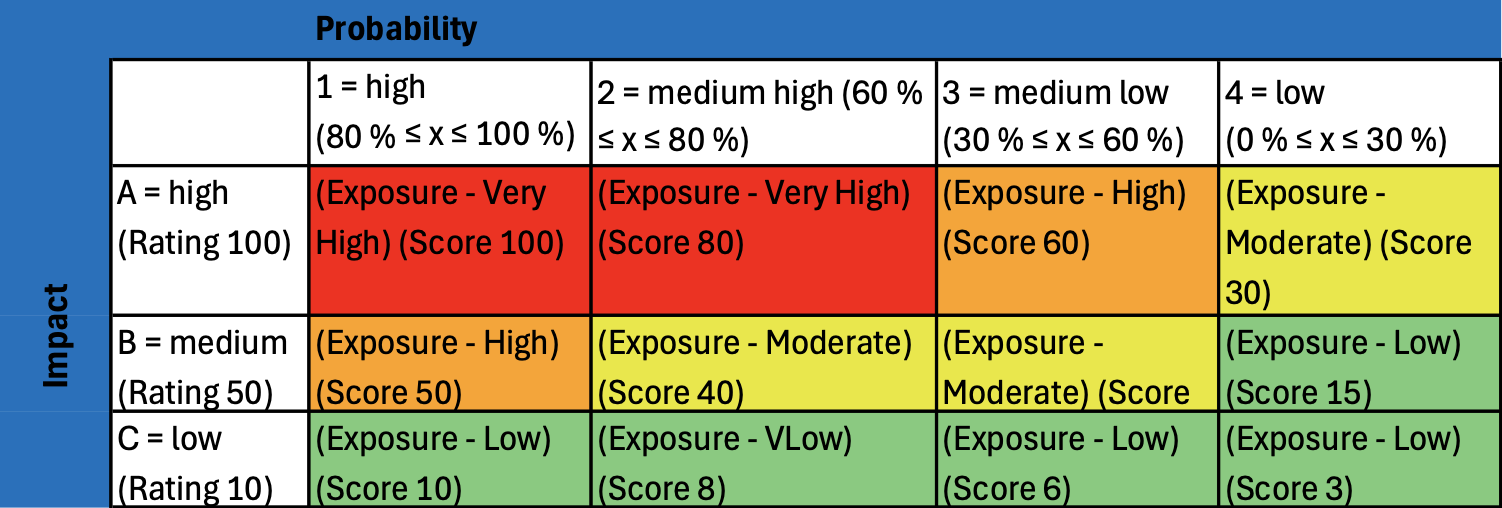
By multiplying the probability with the impact of risk, the result is the risk exposure. Figure 23 gives a good view of the urgency of risk that needs to be taken into planning.
Risk occurence timeframe
To know when the risk could happen, it's good to identify the timeframe in Table 9 of the event that could be happening.
| Timeframe | Discription |
|---|---|
| Near | Now - one month |
| Mid | 2-6 months |
| Far | more than 6 months |
risk classification
There is a risk analysis for both the development of the product and for the general project of the EPS. These are both conducted in Table 10.
| no. | Risk | Timeframe | Impact rating | How to handle? |
|---|---|---|---|---|
| SMASHY | ||||
| 1 | Not allowed in infrastructure | Near | A(60) | Make sure there is no dependence on the government. |
| 2 | Vandalism | Far | B(40) | Make the device strong enough and take precautions for theft. |
| 3 | Distractive for drivers | Near | C(30) | Be sure the drivers cant' see the screen nor the buttons. |
| 4 | Lack of intrest | Mid | A(60) | After a while, people can start getting bored of the game. That's why a marketing plan is being developed, to know what people want. Also make it attractive enough for people to keep playing the game every time passing by. |
| 5 | Product breaking while playing | Mid | A(60) | Have a qr-code/mail-adress on the module so people can report things. |
| 6 | Water damage | Far | A(80) | The design should be made leakage proof so that everything is sealed. Even then when it storm's it's still possible for water to enter. For this maintenance is important. |
| 7 | Technical malfunctioning | Mid | B(80) | By doing maintenance and having a connection with the minicontroller that can say when there are problems with the electronics. For the physical buttons testing the buttons every other time will do. |
| Project | ||||
| 1 | Person not showing up | Near | B(60) | When an important moment make sure to be clear on when to be there. Keep each other informed when one team member is not able to make it on time or for the day. |
| 2 | Conflict inside team | Near | A(40) | Be clear and honest with each other. Talk about things each person deos not appreciate or would want to do a different way. |
| 3 | Procrastination | Near | B(70) | Have deadlines within the team, deadlines before the final deadline of school. |
| 4 | Problems with pc/wiki/teams | Near | A(60) | Talk with people with knowledge about it as soon as possible. |
3.8 Procurement
Procurement is a crucial process within an organization that involves identifying and analyzing the items that are needed from external sources. Once identified, the organization proceeds with the acquisition of these supplies, which includes sourcing, obtaining, and paying for goods and services. Effective procurement management ensures that all the required items from outside the organization are available when they are needed and helps to ensure that the organization can function smoothly. In this particular project, it is essential that all suppliers be local and that the final product meet specific requirements, such as being ergonomically designed, smart, and suitable for public use. Achieving this goal requires careful consideration of the materials used and their environmental impact. It is just as crucial to have a reliable and efficient system for suppliers. All suppliers should be held to the same standards, and information must be shared and frequently updated to ensure clear communication and a defined goal for both parties.
The most important factor to take into consideration when choosing suppliers is the Lead Time. In supply chain management, lead time exclusively refers to the time it takes for a supplier company to have goods ready for delivery, [Edouard Thieuleux, 2023]. This includes the time it takes for raw materials to be ordered and received, the time it takes for the products to be manufactured and shipped, and the time it takes for the products to be delivered to their final destination. Lead times are a crucial factor in the successful completion of any supply chain process, and they can have a major impact on the profitability of a business. Lead time is an essential metric across many industries. It can be divided into these five different types:
- Production Lead Time: The amount of time it takes to produce a product or service. This includes the time it takes to source materials, manufacture, package, and prepare products for shipment.
- Transportation Lead Time: the amount of time it takes for a shipment to move from its point of origin to its destination. This includes the time it takes for the product to be shipped from the manufacturer, go through customs and other regulatory processes, and finally reach its destination.
- Inventory Lead Time: the amount of time it takes to receive a shipment of inventory. This includes the time it takes to place the order, receive the shipment, and process it into the company’s inventory management system
- Order Processing Lead Time: the amount of time it takes to process and fill an order. This includes the time it takes to pick and pack the items, prepare the shipment, and arrange for its delivery.
- Customer Service Lead Time: the amount of time it takes for a customer service representative to respond to an inquiry or address a customer’s issue. This includes the time it takes for a representative to answer the phone, assess the issue, and provide a resolution.
Components and suppliers
To build the prototype of SMASHY, the team is committed to use national products, supporting the local economy, reducing transportation costs, and keeping expenses low. After careful consideration, the team has selected the following companies to fulfill all supply needs:
- Leroy Merlin
- Mauser
The chosen suppliers for electrical parts and components provide a reliable source of materials to produce the “SMASHY” product. However, each batch of material delivered needs to be thoroughly checked for possible faults. If faults are found, the material may need to be sent back to the supplier or a discussion may need to take place for possible redesign. The company relies on the “just-in-time” production system for the parts produced, which allows it to keep the quantities of items stocked to a minimum. This way, the stock is reduced and only produced on customer demand, following a “pull” strategy. In procurement management, it is important to acknowledge the preferred communication methods with each supplier and to jointly define the delivery plan. Below is Table 11 with all the specifications of the product components and their respective suppliers:
| What? | Supplier | Preferred communication |
|---|---|---|
| Electrical components | Mauser | Contact form, email and call |
| Materials | Leroy Merlin | Contact form, email and call |
As shown in the table above, the communication method chosen will depend on the supplier the team is working with. Their preferred contact method is mostly via their website or, for more specific demands, via email or phone call.
Some of the materials used, such as electrical components have been supplied by ISEP. The university procured the main material during the making of the cardboard model.
3.9 Stakeholders Management
A stakeholder is a person, group, or organization with a vested interest, or stake, in the decision-making and activities of a business, organization, or project, [Nick Barney, Brian Holak, 2023]. These parties are often divided into two groups, internal and external stakeholders. Internal stakeholders are those within the company whose interest comes through a direct relationship, such as employment, ownership, or investment; whereas external stakeholders are those interested parties who do not work directly with the company but are affected by the actions and outcomes of the business.
Table 12 below shows the different stakeholders taking part in this project, with their interests and influence values:
| Stakeholder | Role | Interest (1-5) | Influence (1-5) | Type |
|---|---|---|---|---|
| Stempe Safety | The project team is the most implicated in the project, managing and monitoring the completion of the process | 5 | 5 | Internal |
| Traffic management authorities | Potential partners for implementing the solution | 4 | 5 | Depending on the implication |
| Government Agencies | vested interest in improving pedestrian safety and may be involved in funding, regulating, or implementing jaywalking prevention initiatives | 4 | 4 | External |
| Users | Pedestrians who benefit from safer roads are the main stakeholder as they are the end-users | 4 | 5 | External |
| Business Owners | Businesses located in areas with high pedestrian traffic may have an interest in ensuring safe access to their premises for customers and employees | 3 | 2 | External |
To effectively manage stakeholders and keep them invested in the project, it is key to follow the following strategies:
1. Stakeholders’ identification and understanding
This first step has been completed and summarized in Table 12, by identifying the primary stakeholders and understanding their role, interest, and influence, understanding which of them will offer the most influence and support to the project. It is important to get to know each one of them individually so that the relationship can be customized for better understanding their interests, power level and how the project impacts them.
2. Communication
To keep all parties engaged in a project, it is crucial to maintain transparent and effective communication with them. The root of successful communication is to define clear goals and objectives right from the start so that both parties are on the same wavelength. This can be achieved by tailoring the channels and methods of contact according to their preferences, ensuring that they feel heard, and keeping the communication transparent and open at all times. Addressing and discussing any concerns from stakeholders and having them involved throughout the project’s process will lead to better trust, transparency, and building positive relationships.
3. Engagement
By involving stakeholders in key decision-making and prioritizing their feedback, the team can establish a strong foundation of trust and mutual respect. Regular meetings, open communication channels, and the use of surveys and questionnaires can help the team gain valuable insights and ensure that stakeholders feel supported throughout the project.
4. Manage Expectations
Establishing practical expectations with stakeholders regarding project timelines, deliverables, and outcomes is crucial to ensuring transparency about any constraints or limitations that may affect the project's success. Proactively communicating about any changes or adjustments will help to manage any disappointments or disagreements that may arise during the project.
5. Recognition
It's important to acknowledge stakeholders' contributions to milestones and achievements. Recognizing their efforts and celebrating milestones together can help maintain motivation and engagement throughout the project. This fosters a sense of accomplishment and keeps them invested in the project's overall success.
6. Monitor and adapt
Finally, to maintain a high level of stakeholder engagement, it is crucial to continuously monitor their engagement levels. This will help the team adapt their approach as needed to proactively address any issues or concerns that may arise, ensuring ongoing support and commitment from stakeholders.
3.10 Project Plan
The optimal sprint duration for this project is from Thursday until Wednesday, because every Thursday there is a project meeting. In this meeting, the new sprint is planned. The sprints are planned until the project ends using Global Sprint Plan Table 13. Every item in the backlog gets a letter so that it's possible to follow the item in each sprint. Every sprint item is assigned to a different person, this is done by the abbreviation of every team member's name: Colin Högkvist (C.H.), Florian Haack (F.H.), Jurjen de Vries (J.d.V.), Magdalena Durnwalder (M.D.), Mats Geirnaert (M.G.) and Selma Cordier (S.C.).
| Sprint | Start | Finish | Status |
|---|---|---|---|
| 1 | 01/03/2024 | 06/03/2024 | Finished |
| 2 | 07/03/2024 | 13/03/2024 | Finished |
| 3 | 14/03/2024 | 20/03/2024 | Finished |
| 4 | 21/03/2024 | 03/04/2024 | Finished |
| 5 | 04/04/2024 | 10/04/2024 | Finished |
| 6 | 11/04/2024 | 17/04/2024 | Finished |
| 7 | 18/04/2024 | 24/04/2024 | Finished |
| 8 | 25/04/2024 | 01/05/2024 | Finished |
| 9 | 02/05/2024 | 15/05/2024 | Finished |
| 10 | 16/05/2024 | 22/05/2024 | Finished |
| 11 | 23/05/2024 | 29/05/2024 | Finished |
| 12 | 30/05/2024 | 05/06/2024 | Finished |
| 13 | 06/06/2024 | 12/06/2024 | Finished |
| 14 | 13/06/2024 | 19/06/2024 | Finished |
The project backlog includes all relevant tasks and deliverables during the project, as seen in Table 14. Using Prioritised Backlog Items (PBI), the project manager normally keeps the higher priority items at the top, and lower priority at the bottom. This backlog was made at the start of the project. So the items that were the most important back then, are at the top.
| PBI | Title | Status |
|---|---|---|
| A | Define direction of Solution | Done |
| B | Define Project | Done |
| C | Global Sprint Plan | Done |
| D | System Diagrams & Structural Drafts | Done |
| E | Gantt Chart | Done |
| F | Research | Done |
| G | State of the Art | Done |
| H | System Schematics & Structural Drawings | Done |
| I | Interim Presentation | Done |
| J | Video of the 3D Model | Done |
| K | List of Materials | Done |
| L | Poster | Done |
| M | 3D Modelling | Done |
| N | Packaging Solution/Building Plan | Done |
| O | Functional Test | Done |
| P | Marketing Plan | Done |
| Q | Eco-efficiency Measures for Sustainability | Done |
| R | Ethics | Done |
| S | Refine report | Done |
| T | Prototyping | Done |
| U | Paper | Done |
| V | Manuel | Done |
| W | Cardboard model | Done |
| X | Upload | Done |
| Y | Final Report | Done |
| Z | Presentation | Done |
| AB | Video | Done |
Each Thursday at the Sprint Planning session a new sprint is planned, using the Sprint Plan Table 15.
| Sprint | PBI | Responsible | Involved |
|---|---|---|---|
| 1 | A | All | All |
| 1 | B | All | All |
| 2 | D | F.H. | F.H. & J.d.V. |
| 3 | C | M.G. | M.G. & C.H. |
| 3 | B | All | All |
| 3 | L | M.D. | M.D. |
| 3 | E | M.G. | M.D. & C.H. |
| 3 | F | S.C. | F.H., S.C. & J.d.V. |
| 4 | G | S.C. | F.H., S.C. & J.d.V. |
| 4 | H | J.d.V. | F.H. & J.d.V. |
| 4 | K | M.G. | M.G. & J.d.V. |
| 4 | W | M.G. | M.D. & M.G. |
| 4 | M | F.H. | F.H. |
| 5 | I | M.D. | All |
| 5 | P | J.d.V. | J.d.V. & C.H. |
| 5 | Q | M.G. | M.G. & M.D. |
| 5 | R | S.C. | S.C. |
| 5 | M | F.H. | F.H. |
| 6 | I | M.D. | All |
| 7 | J | F.H. | F.H. |
| 8 | S | All | All |
| 8 | K | M.G. | J.d.V. & M.G. |
| 9 | S | All | All |
| 9 | T | M.G. | F.H., M.G. & J.d.V. |
| 10 | U | S.C. | All |
| 10 | N | F.H. | All |
| 11 | U | S.C. | All |
| 11 | V | M.D. | M.D. |
| 11 | O | J.d.V. | All |
| 12 | U | S.C. | All |
| 12 | V | M.D. | C.H. & M.D. |
| 12 | T | M.G. | F.H., M.G. & J.d.V. |
| 12 | O | J.d.V. | All |
| 13 | S | S.C. | M.G. |
| 13 | T | M.G. | F.H., M.G. & J.d.V. |
| 13 | X | All | All |
| 13 | AB | M.D. | M.G. & C.H. |
| 14 | X | All | All |
| 14 | Y | All | All |
| 14 | Z | M.D. | All |
| 14 | AB | M.D. | All |
After finishing each sprint, the sprint plan is reviewed and the status is updated in the Progress Register Table 16.
| Sprint | PBI | Responsible | Involved | Status |
|---|---|---|---|---|
| 1 | A & B | M.G. | All | Done |
| 2 | D | M.G. | F.H. & J.d.V. | Done |
| 3 | C, B, L, E & F | M.G. | M.D., M.G & C.H. | Done |
| 4 | G, H, K, W & M | M.G. | All | Done |
| 5 | I, P, Q, R & M | M.G. | All | Done |
| 6 | I | M.G. | All | Done |
| 7 | J | M.G. | F.H. | Done |
| 8 | S & K | M.G. | All | Done |
| 9 | S & T | M.G. | All | Done |
| 10 | U & N | M.G. | All | Done |
| 11 | O, U, V & T | M.G. | All | Done |
| 12 | U, O, V & T | M.G. | All | Done |
| 13 | S, T, X & AB | M.G. | All | Done |
| 14 | X, Y, Z & AB | M.G. | All | Done |
For the global planning of the project, there is a gannt chart with the main key project deliverables in it. This can be followed over time in Figure 24.
3.11 Sprint Outcomes
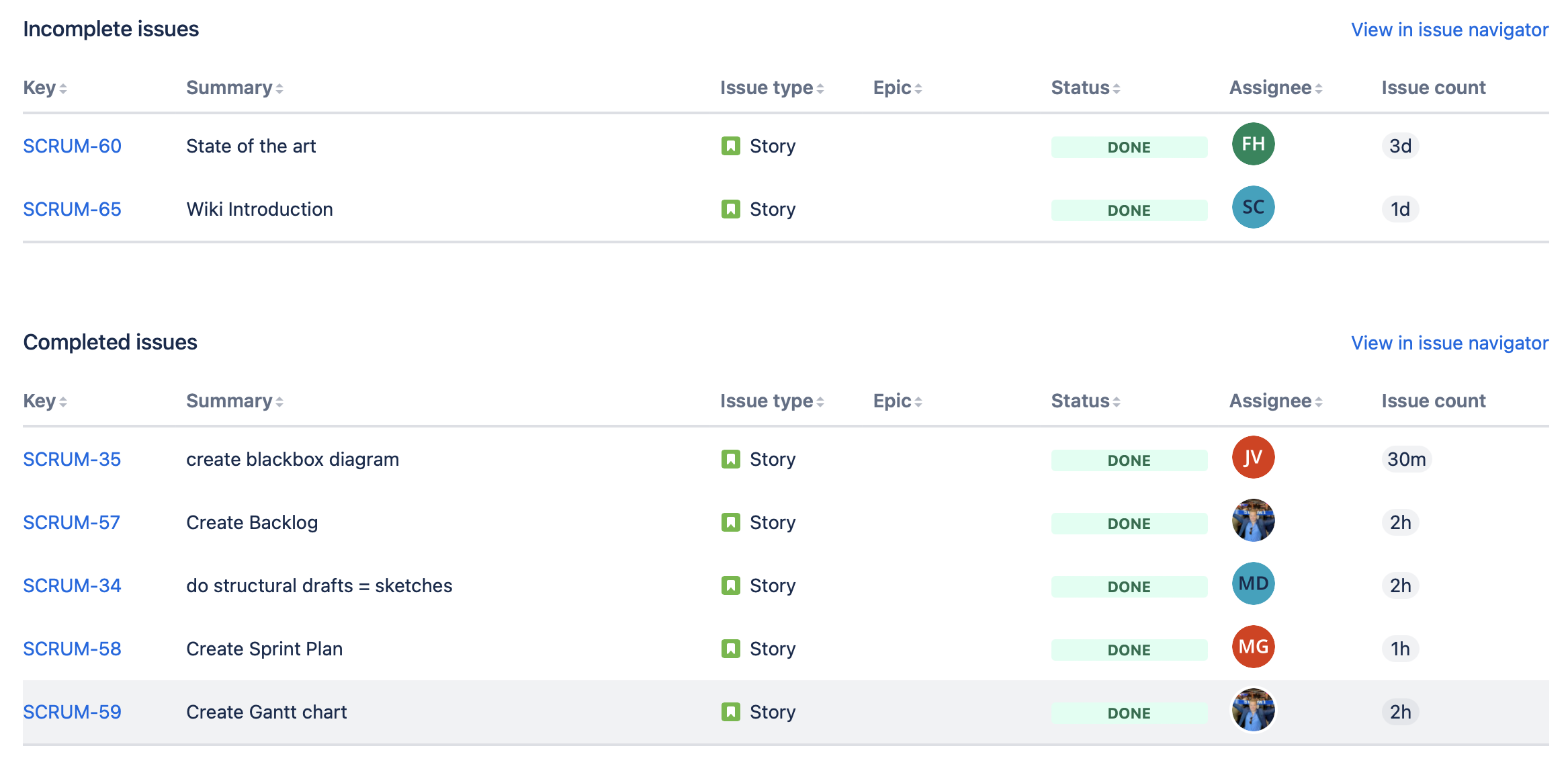
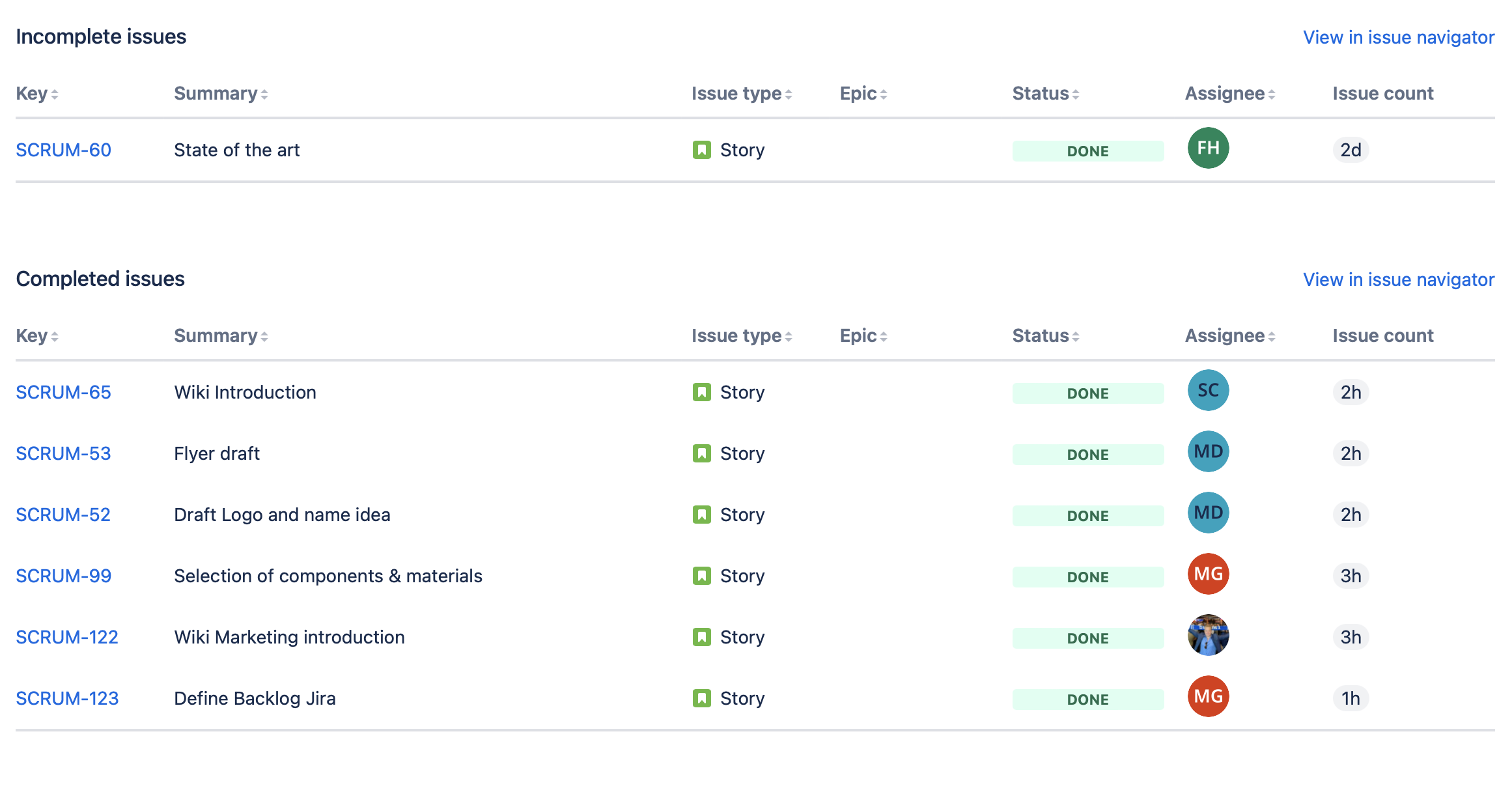
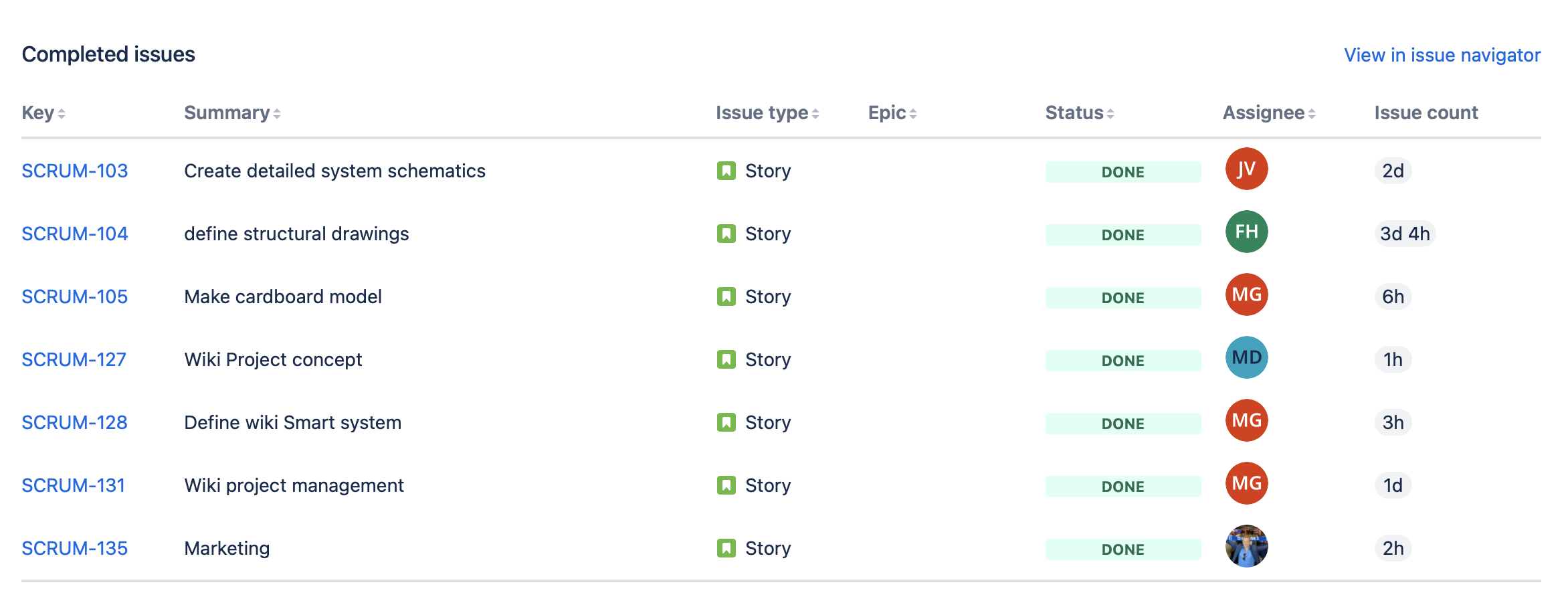
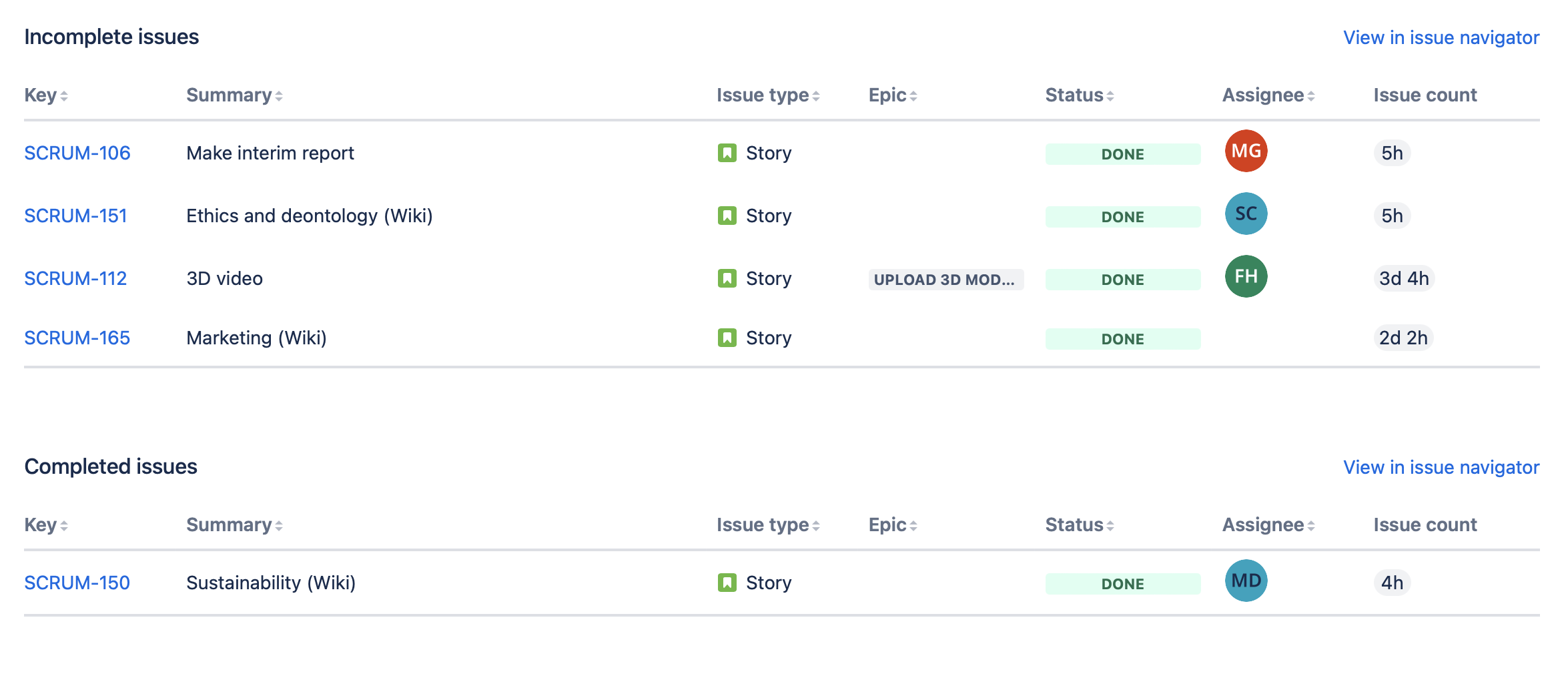
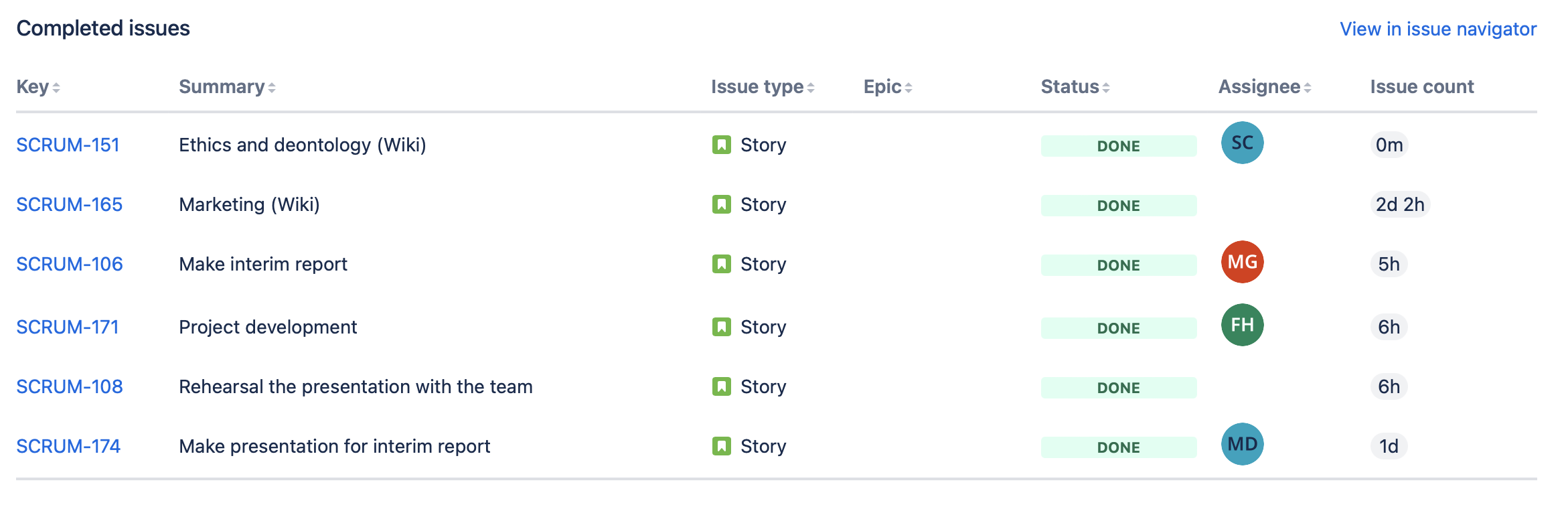
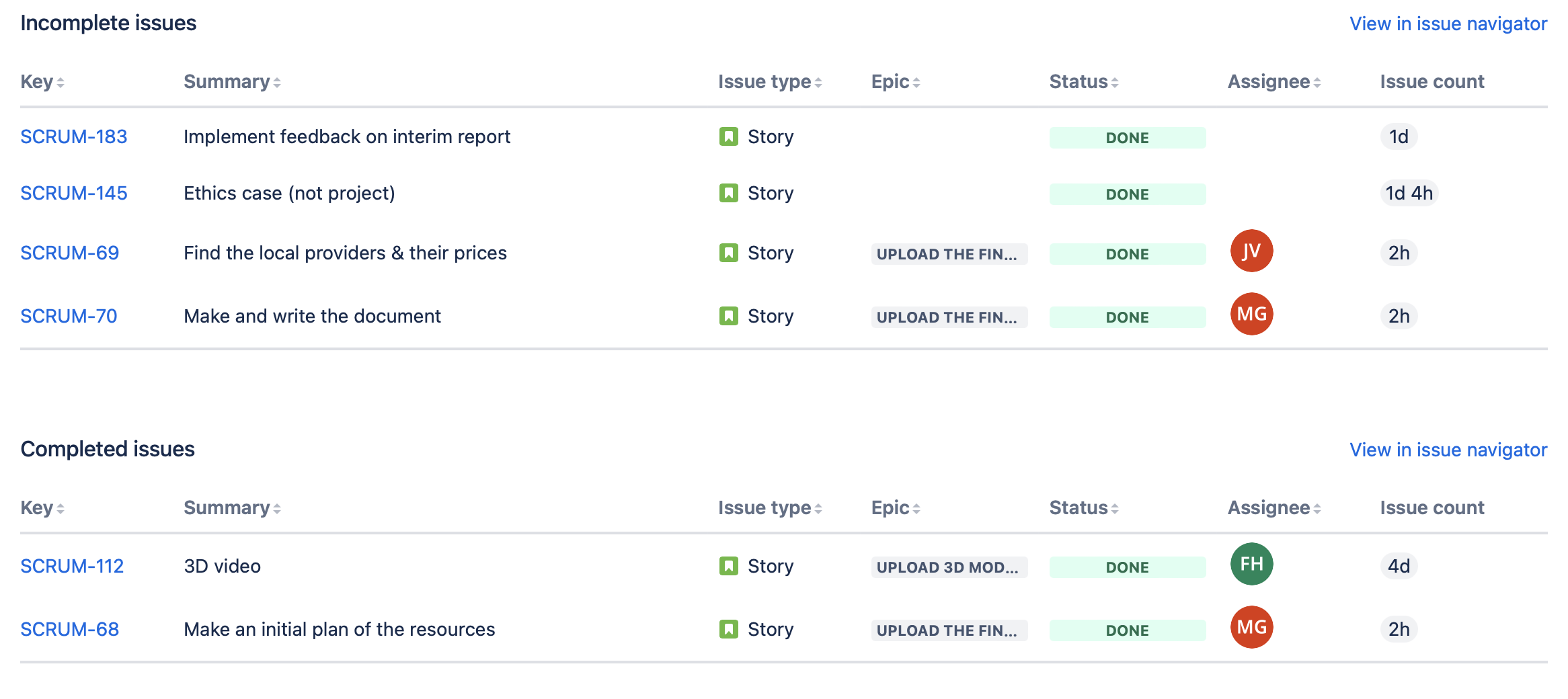
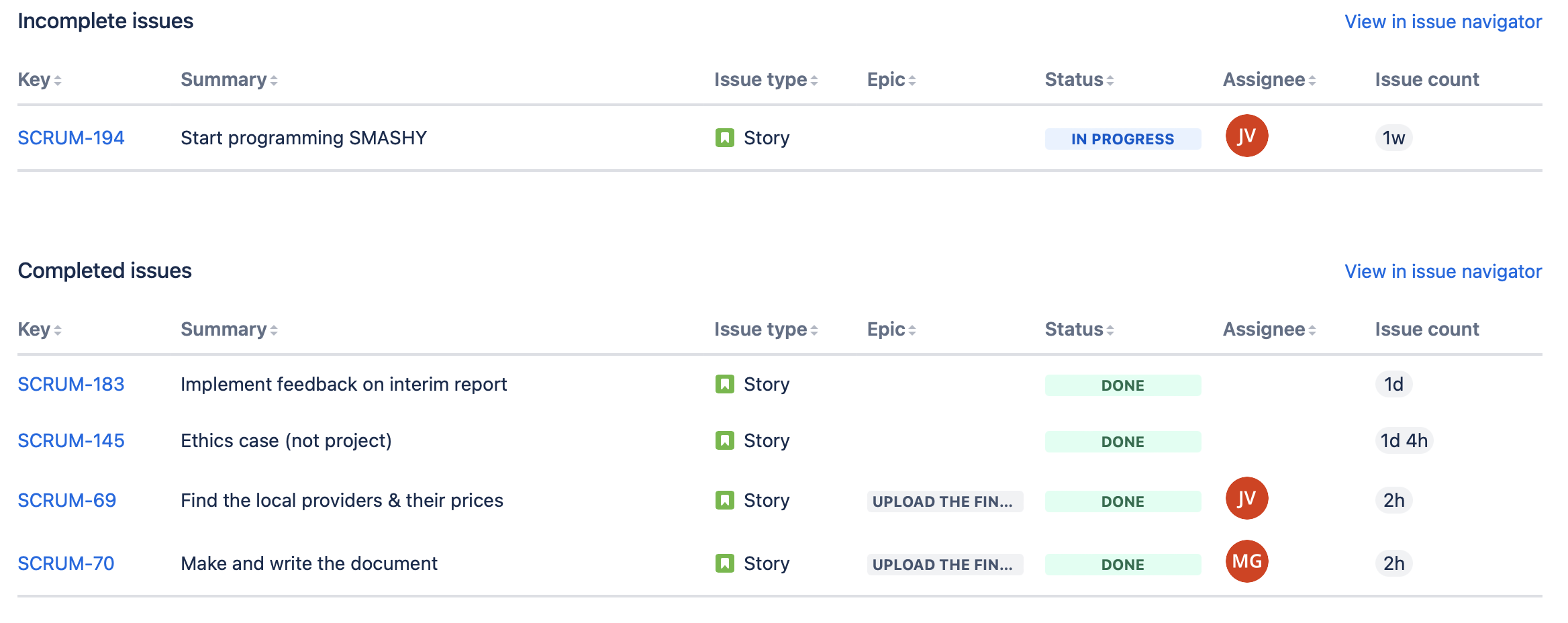
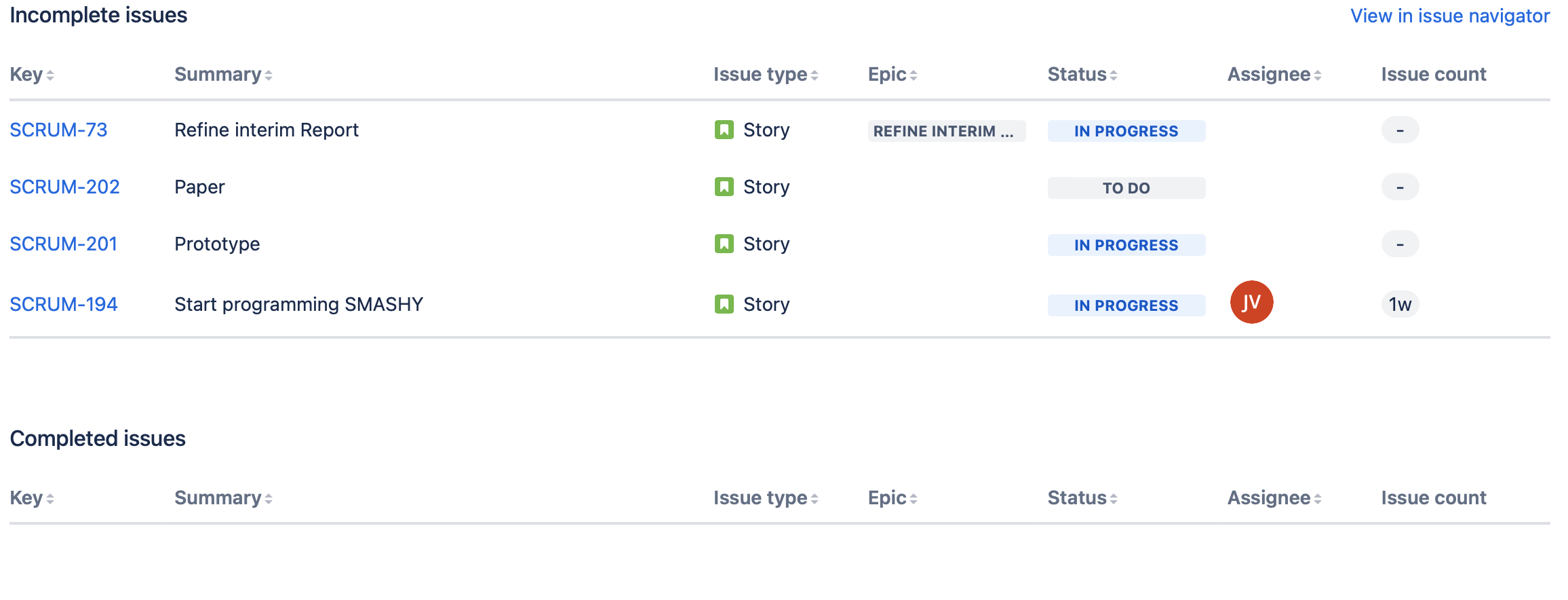
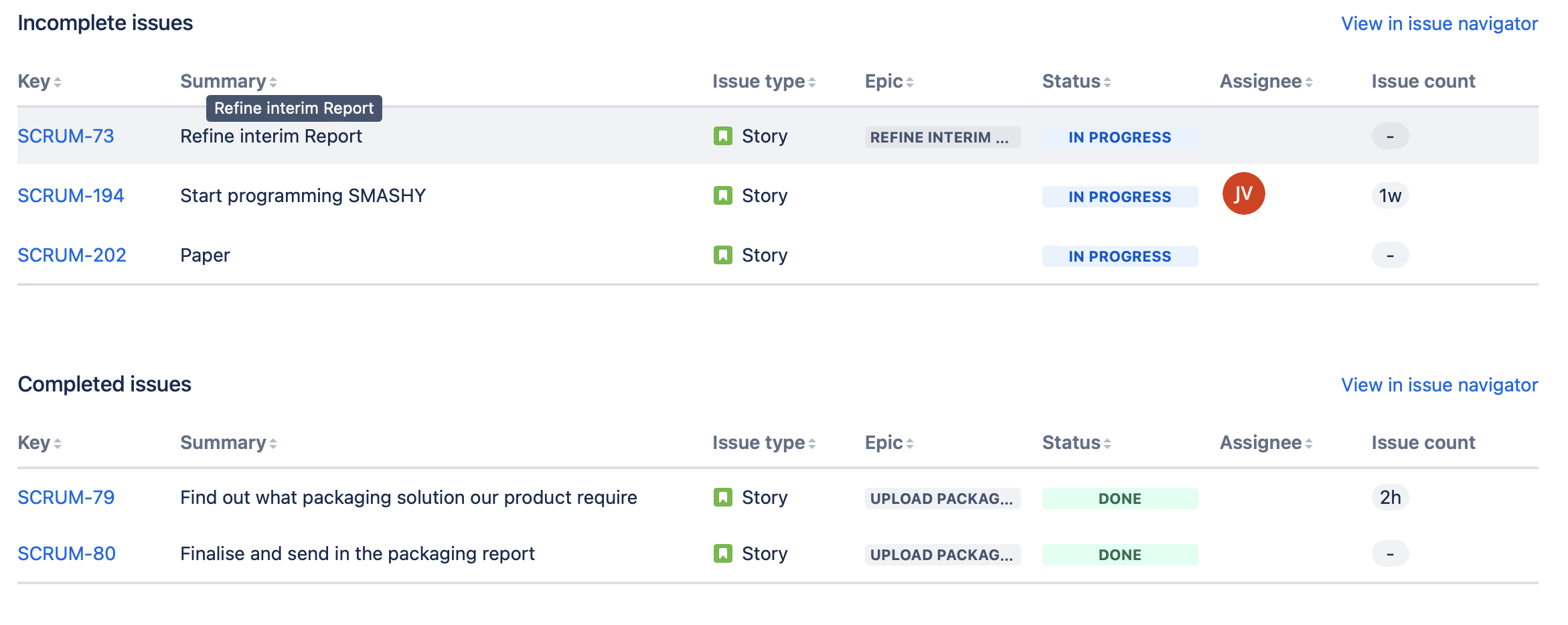
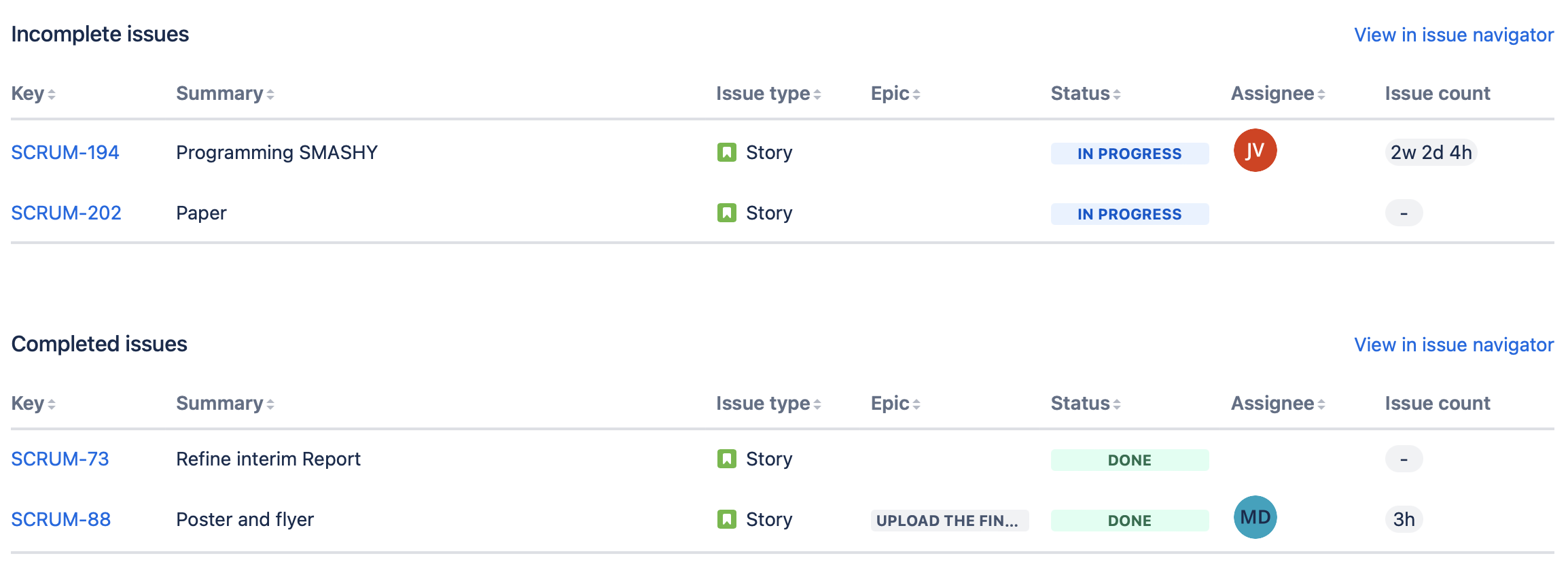
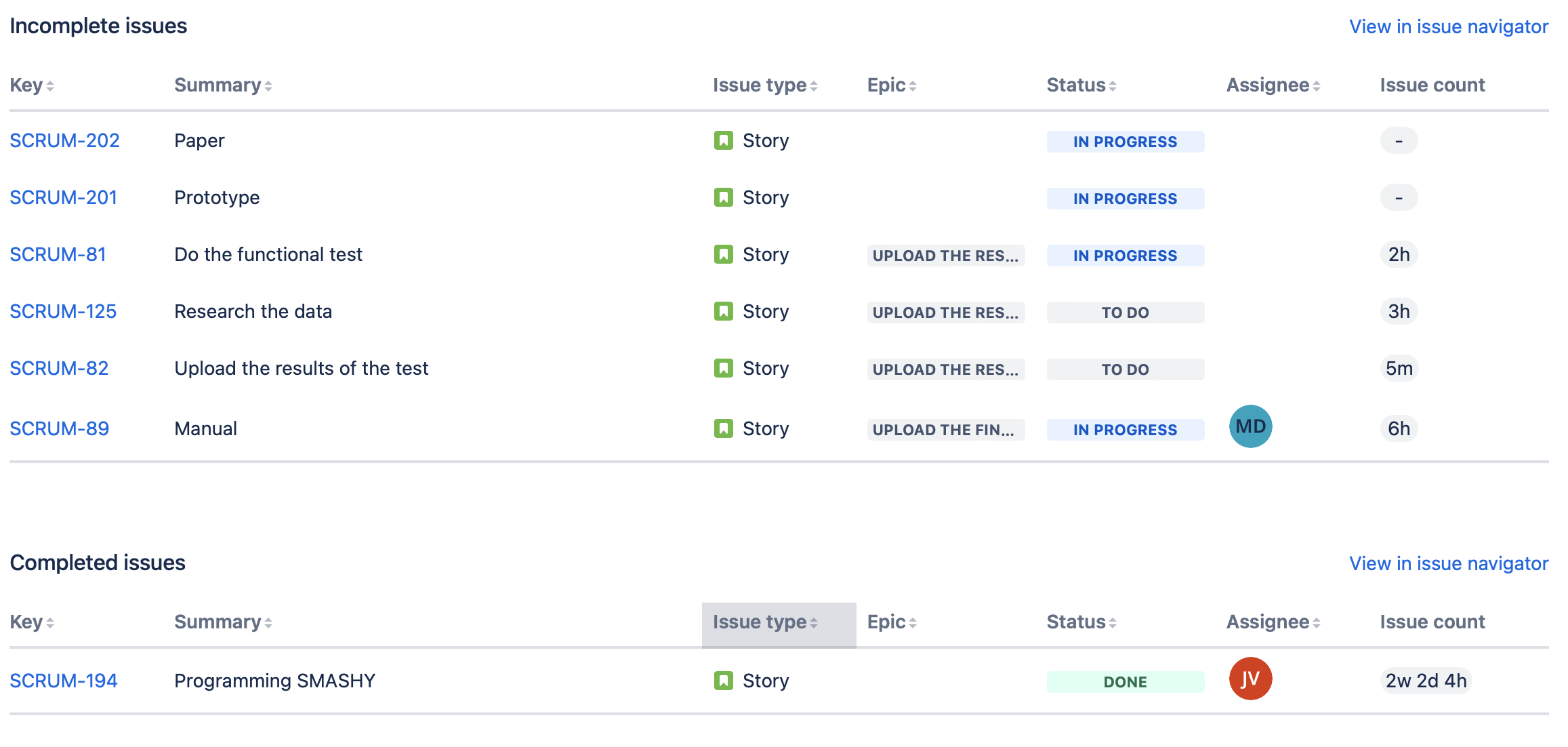
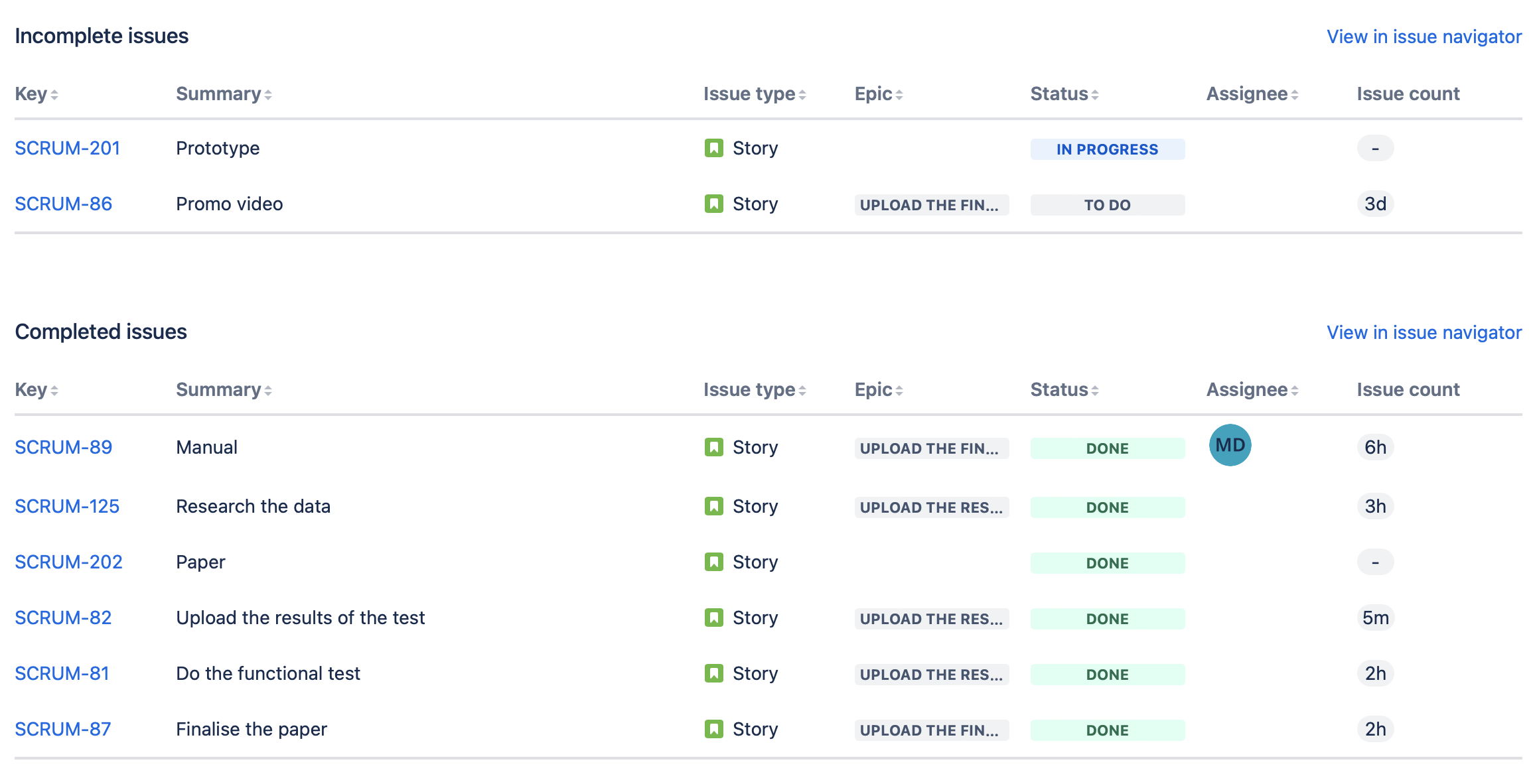
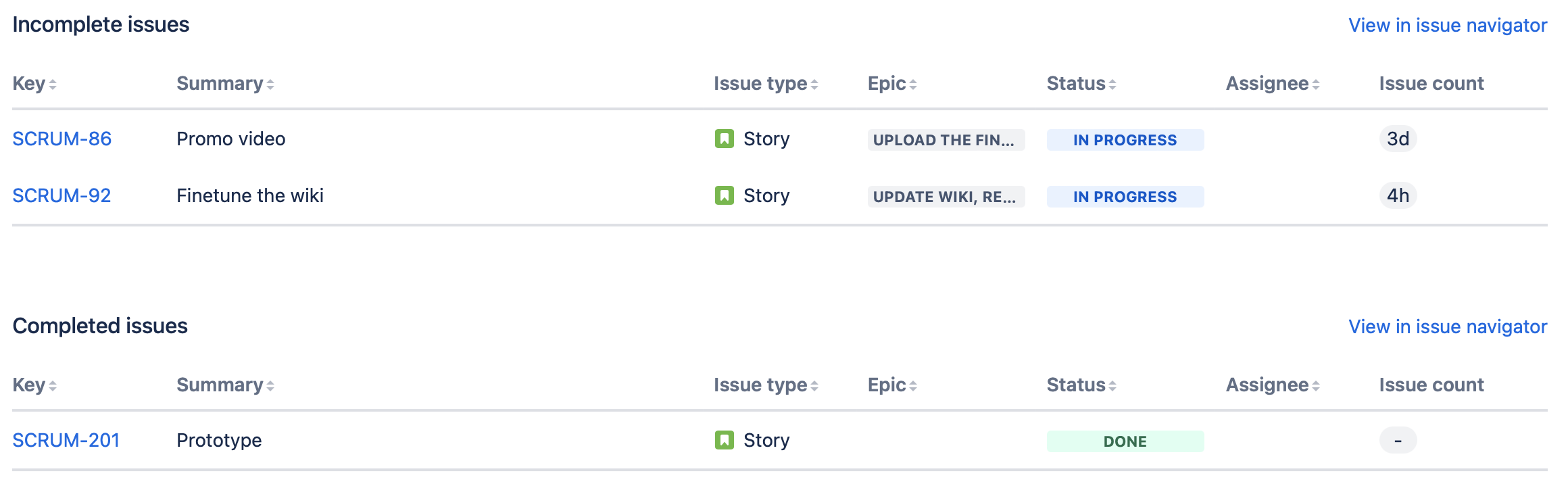
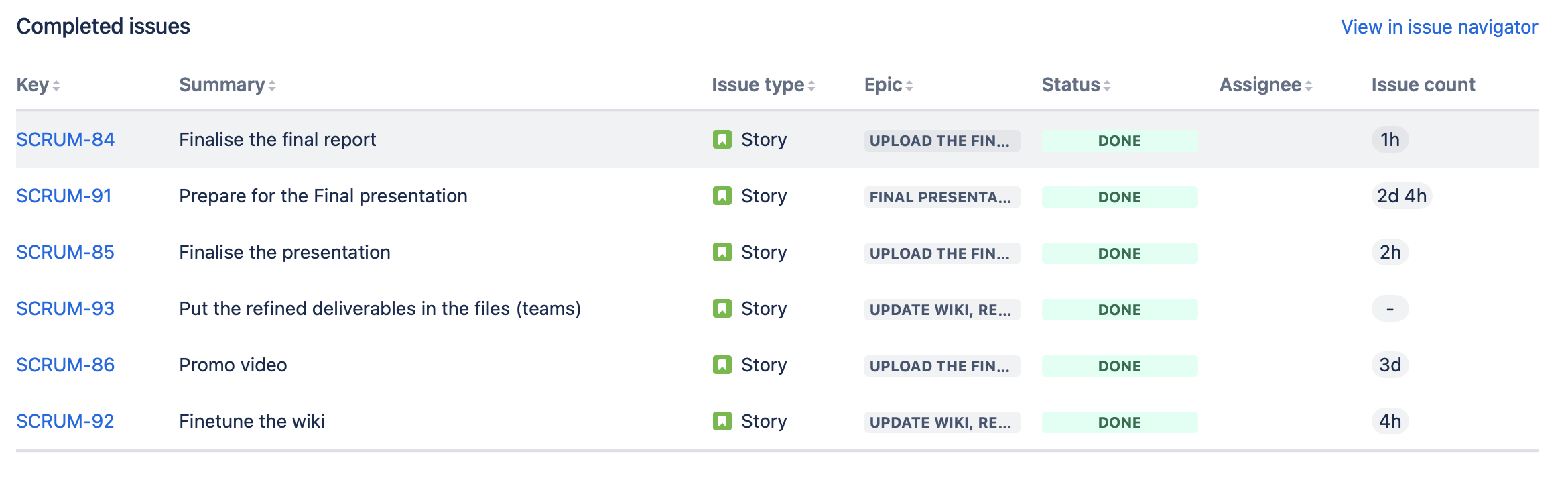
During each sprint review, the team examines the outcomes, from the backlog to completion status and planned capacity versus achieved velocity. Looking into completed tasks and noting problems such as uncompleted items or bad planning.
Summaries of these discussions are compiled in sprint outcomes tables where it's possible to see if the task is completed or not. All the sprint reviews can be seen from Figure 25 to Figure 38 These reviews are crucial to reflect on the work and make changes to improve future sprints.
3.12 Sprint Evaluations
Before starting the new sprint planning, a sprint evaluation is conducted. This is done in Jira, where a retrospective automatically is made for the sprint. The retrospective includes actions that the team should start doing, stop doing or keep doing as well as what went well and what went bad. The retrospectives for each sprint can be seen in Jira or in Table 17 below.
| Sprint | Start doing | Keep doing | Stop doing | What went well | What went bad |
|---|---|---|---|---|---|
| 1 | Brainstorming ideas | - | - | Getting to know the team | - |
| 2 | Conducting research | Communicating | Procrastinating | Already done a lot of work, on schedule | Forgot to finish some tasks |
| 3 | Start the structure in the wiki, focusing on the goal (think out of the box) | Keep track of each others work, putting info in Jira | - | Cardboard model, communication improved | No answers from town hall, struggling with solution for button |
| 4 | Rehears the presentation more, teambuilding | Every day meeting in real live | - | Good teamwork | Not finished all the foreseen tasks, procrastinating, presentation cohesion |
| 5 | Implement feedback in report, more coordination | Communication, taking feedback into account | Procrastinating | Good presentation with very good cohesion, very adaptable to each other | Jaywalking research |
| 6 | Planning team meeting for when there are no classes | Improving wiki | People skipping school | Feedback implementation | School/life balance |
| 7 | Keeping each other up to date on changes, start working on paper | Improving wiki (feedback), programming SMASHY | Doing tasks but leaving them unfinished | Brainstorm for engagement in game | Unfinished tasks |
| 8 | Writing the paper | Implementing feedback, meeting on school to work together & good communication | - | Working in team, implementing the feedback & finding a solution on the engagement | Not started on the paper yet , feedback on marketing and ethics not done due to no feedback |
| 9 | Improve leaflet, flyer and poster | Working on the paper and programming the prototype | working on 3D video | Packaging was done pretty quickly, implementing feedback | - |
| 10 | Functional tests and making prototype | Working on the paper, programming and manual | - | Stress analysis, work on the paper | Marketing feedback still not finished and some trouble with the programming |
| 11 | Functional tests, making of prototype and creating video | Working on the paper and manual | procrastinating and thus not finishing work | Work on the paper and development of the manual | Marketing still not in wiki or paper, functional test not done on time |
| 12 | Making the video, finishing up the wiki, start working on the presentation and upload all the deliverables | Good motivation and team spirit, working on the prototype and programming | - | The finishing of the paper and big part of the prototype | The bending of the plexiglass of the prototype |
| 13 | Putting the video together, making the presentation | Finalising the wiki | Working on the programming | Filming of the video, finalisation of the prototype | Not everything is working in the programming |
| 14 | Implementing feedback | - | Changing deliverables | Presentation and rehearsing, video | - |
3.13 Conclusion
In conclusion, project management emerges as a cornerstone during the project, providing a necessary framework for optimal organization. It delineates objectives, deadlines, and budgetary constraints, facilitating focused attention on important tasks and enhancing productivity.
Moreover, comprehensive analyses concerning risk, cost, quality, and communication to be ahead of potential problems or pitfalls. This proactive approach equips the team with the means to promptly address emergent issues, minimizing downtime and maximizing efficiency. Effective project management also ensures transparent communication with stakeholders, managing expectations and communicating project milestones. Lastly, the use of the Scrum methodology and Jira tool for daily and weekly progress makes sure to not forget any upcoming tasks.
The upcoming section delves into the significance of marketing in ensuring the success of a project. It outlines the adopted strategy and the specific demographics targeted by the project.
4. Marketing Plan
As urban populations continue to grow and city streets become increasingly congested, ensuring the safety of pedestrians at intersections has become a growing concern for cities around the world. This project entails an innovative product designed specifically to address this challenge by seamlessly integrating with existing traffic lights.
The system not only reduces the temptation to jaywalk but also offers an interactive game for pedestrians to play while waiting for the light to turn green. This turns the waiting experience into something positive and enjoyable.
This marketing plan outlines the team's strategy for introducing the product to government customers, particularly city agencies responsible for traffic management and public safety. By leveraging this innovative technology with proven effectiveness, Stempe Safety aims to establish the product as the premier solution for enhancing pedestrian safety in urban settings.
In the following sections, will discuss market analysis, identify target customers, outline competitive positioning, detail marketing strategies, and lay out implementation plans to achieve the objectives. Through a comprehensive and strategic approach, the team is confident in its ability to drive adoption of the product and contribute significantly to improving pedestrian safety globally.
4.1 Market Analysis
Micro-Environment
Customers:
The key stakeholders and customers for the project primarily include government agencies responsible for traffic management and pedestrian safety, such as the department of transportation and local transportation departments. These agencies have a common interest in implementing solutions to enhance pedestrian safety at intersections and ensure efficient traffic flow.
Understanding the needs, preferences, and pain points of these customers is essential for designing a module that meets their requirements. This could mean conducting detailed research and engaging directly with government officials and transportation experts to learn about existing challenges and opportunities related to pedestrian safety.
Additionally, gathering feedback from potential users, pedestrians, and community organizations is crucial for ensuring that the product addresses the needs and concerns of the communities it serves. By getting input from a diverse range of stakeholders, including residents, advocacy groups and local businesses, Stempe Safety can gain valuable insights into the specific requirements and preferences of different user groups.
Suppliers: Several factors should be considered for potential suppliers for the hardware, software, and other components needed for the development and implementation of the module. Firstly, reliability and quality are important to ensure that the components meet the necessary standards for safety and performance. Suppliers should be thoroughly considered to ensure they have a track record of delivering high-quality products consistently.
Cost-effectiveness is also a crucial consideration, as the project must stay within budget constraints while still obtaining components of sufficient quality. However, it's essential to have a good cost-quality balance to avoid bad performance or reliability for lower prices.
Diversifying the supplier base can help reduce the risk associated with dependence on a single supplier. By working with multiple suppliers, Stempe Safety can lower the impact of potential disruptions in the supply chain and ensure continuity of operations.
Competitors: Identifying competitors offering similar or alternative pedestrian safety solutions or technologies is a good way to find understanding in the competitive landscape, which will help positioning the product effectively. Since the product is very unique, there are no direct competitors. On the other hand, indirect competitors may include providers of “smart crosswalks”, pedestrian countdown timers, interactive pedestrian signals/modules, pedestrian safety public awareness campaigns and urban planning etc.
Monitoring competitor activities and market trends is an ongoing process that involves staying ahead of new product launches, partnerships and pricing changes. By keeping a close eye on potential competitor actions and market dynamics, the project team can adapt marketing strategies and product offerings accordingly to maintain a competitive edge.
Collaborators: Collaboration with relevant stakeholders is something many businesses could benefit from. It could help establish alignment with community needs and enhance the project's effectiveness. Relevant stakeholders that the project could benefit from by collaborating with include urban planners and safety advocates. The team could engage with urban planners and transportation engineers to integrate pedestrian safety considerations into urban design and transportation infrastructure projects. By collaborating with safety advocates and organizations, some insights would be gained into best practices and community priorities for pedestrian safety initiatives to help improve SMASHY. It could be interesting to seek input and feedback from these stakeholders to discuss the design and implementation of the module, ensuring that it aligns with broader urban planning and safety goals.
Other collaborations could be held with technology providers and research institutions. From partnerships with these entities, access would be granted to more expertise, resources and networks in developing and implementing this product. Technology providers would help access cutting-edge solutions, hard and software components for the module. Working with research institutions and industry associations would help stay informed about new potential emerging trends and technological advancements regarding pedestrian safety.
It would also be a good idea to work with local businesses and property owners to better find installation locations and promote community involvement. With help from these entities, Stempe Safety would be able to identify suitable locations for deploying the module and ensure its integration into the city.
Intermediaries: Identifying intermediaries or channels for distributing, marketing and installing the module is crucial for ensuring its successful deployment and adoption. One key channel is government procurement processes, which involves acquiring contracts and approvals through various levels of government. This requires understanding the intricate procedures, compliance standards, and preferences of government agencies responsible for traffic management and pedestrian safety. Building relationships with procurement officials and decision-makers within these agencies is essential for navigating the procurement process smoothly and addressing any concerns they may have regarding the module's implementation.
Another important intermediary is traffic management companies, which specialize in installing and maintaining traffic control systems. Partnering with these companies enables the integration of the product into existing traffic infrastructure, ensuring seamless operation and compatibility. Using their expertise can help overcome technical challenges and optimize the deployment process. Working with urban planning agencies would also open up the integration of the module into long-term planning strategies. Collaborating with these agencies ensures that pedestrian safety considerations are prioritized in urban development efforts, creating a supportive environment for the module's implementation.
Internal Resources: The team consists of one industrial management engineer, two mechanical engineers, one mechatronics engineer, one media technology engineer and one civil engineer. This diverse skill set enables the team to approach the project from various perspectives and address complex challenges effectively.
In terms of project management skills, the team possesses the necessary competencies to plan, execute, and monitor the project's progress. The industrial management engineer has knowledge in project planning, resource allocation, and risk management, while the rest of the team members contribute their knowledge and experience to ensure smooth project execution.
Financial resources are also a crucial consideration for the project. While the team may have limited financial resources initially, effective resource allocation and budget management can ensure that the project stays within its financial constraints.
Allocating resources effectively to support the development, testing, and implementation phases of the project is paramount. This involves prioritizing tasks, setting realistic deadlines, and ensuring that milestones are met in a timely manner. Regular communication and collaboration among team members are essential for coordinating efforts and addressing any challenges that may arise.
PESTEL
In today's modern business environment, a deeper understanding of external factors is crucial for decision-making and strategic planning. PESTEL stands for Political, Economical, Social, Technological, Environmental, and Legal factors. The PESTEL analysis provides a structured approach to understand the macro-environmental forces impacting a business or industry. Each element represents a different aspect of the external environment that influences business operations, market conditions, and consumer behavior [Michelle Battista, 2024].
Political
Government policies and regulations related to transportation and pedestrian safety can significantly impact the project. Also, changes in government priorities or funding allocations for infrastructure projects may affect the availability of resources for implementing pedestrian safety measures.
One ongoing project is the Vision Zero 2030 [National Road Safety Authority, 2021]. The project is aimed at reducing road fatalities and serious injuries to zero by the year 2030. The project focuses on implementing various measures to improve road safety, including infrastructure enhancements, stricter enforcement of traffic laws, public awareness campaigns and promoting safer driving behaviors.
The goal of SMASHY is directly aligned with the goals of Vision Zero 2030 to promote safer pedestrian behaviour and reducing accidents associated with jaywalking. By offering a compelling and engaging experience at intersections, Stempe Safety aims to increase compliance with traffic signals and decrease the incidence of pedestrian-related accidents. Collaborating with the Vision Zero initiatives offers an opportunity for the SMASHY product as a proactive solution to pedestrian safety challenges, securing contracts and funding while contributing to broader public education efforts on road safety.
Environmental
Environmental concerns, such as air quality, noise and sustainability can influence urban planning decisions and infrastructure investments, including pedestrian safety initiatives. The design and implementation of the module should consider its environmental impact, including energy consumption, materials used, and potential effects on surrounding ecosystems.
One initiative being launched in the EU is the Advanced Materials Initiative 2030 [Fraunhofer LBF, 2022]. AMI2030 is a European program focused on propelling Europe's leadership in research, development and implementation of advanced materials. It aims to achieve this by enhancing discovery and development of these materials and developing manufacturing and processing technologies for them. They also try to encourage life-cycle management that aligns with a circular economy approach.
This initiative is considered crucial for Europe to maintain its competitive edge in the green and digital transitions underway and therefore SMASHY should align its materials according to this initiative. Collaborating with AMI2030 can provide access to the latest discoveries in advanced materials and innovative manufacturing technologies. Furthermore, the initiative’s emphasis on life-cycle management and a circular economy approach aligns with our commitment to sustainability, ensuring that the project not only improves urban safety but also contributes to a greener, more sustainable future.
Social
Social factors consist of changing demographics, including population growth, urbanization trends and shifts in mobility patterns These factors can impact pedestrian safety needs and priorities in the city. Also, public attitudes towards pedestrian safety, including awareness of the risks of jaywalking and willingness to adopt new technologies, may influence the acceptance and adoption of the product. Factors such as lifestyle preferences, pedestrian behavior norms, and community engagement can also shape the effectiveness of pedestrian safety interventions.
When it comes to public attitude towards the product it is essential for the team to thoroughly evaluate what factors that need to be kept in mind. The product has to be as accessible as possible and have a low entry barrier. By implementing this into the product it will be easy to use and attract more users. It's also important to prove eco-friendly implementations in the product.
Technological
Rapid technological change and the need for ongoing updates and maintenance may present challenges in keeping the module up-to-date and effective over time. The pace of technological advancements means that the product must be designed with flexibility to more easily implement innovations it will be important to anticipate these challenges to ensure that the module remains at the forefront of pedestrian safety solutions, delivering long-term benefits to users and stakeholders.
Artificial Intelligence (AI) offers significant potential to enhance the effectiveness and impact of the project. By integrating AI, the team can gain a deeper understanding of pedestrian behavior and preferences, which is crucial for creating a more engaging and safe experience at traffic lights. AI can enable several key advancements in our project, such as hyper-personalization, predictive analytics and the use of chatbots and voice assistants, ultimately improving pedestrian safety and satisfaction. [Elena Gonzalez Castillo, 2023]
Hyper-personalization uses AI and machine learning to create custom experiences for each pedestrian. By looking at data on how people move, how long they wait, and how they interact with the module, AI can suggest personalized games and content to keep users interested. For example, like how Netflix suggests shows [Netflix, 2024], our module can change its offerings based on what pedestrians like and do, making the wait more fun and reducing the urge to jaywalk.
Predictive analytics, another useful AI tool, can predict what pedestrians need and want by looking at data on foot traffic patterns, weather, and busy times. This helps us place the modules in the best spots and make them work well. For example, predictive analytics can help us find times when jaywalking is more likely and adjust the module's features to keep people engaged and safe during those times.
AI-powered chatbots can give immediate help and information to pedestrians at the modules. These chatbots can answer questions about traffic light timings, suggest safe crossing practices, and provide real-time traffic updates. By being available 24/7, chatbots make sure pedestrians always have the information they need right away.
Voice assistants can make the module easier to use, especially for pedestrians with disabilities or those who prefer talking instead of using screens. AI-powered voice assistants can guide users through the module's features, offer personalized tips, and give voice cues about when it's safe to cross, making the module more user-friendly and inclusive.
Economical
Economic conditions, such as Gross domestic product (GDP) growth, inflation rates, and unemployment levels, can affect government budgets and spending on infrastructure projects. Also, availability of funding and financial resources for the development and implementation of the product may be influenced by economic factors. The economic disparities between urban and rural areas may impact the prioritization of pedestrian safety initiatives in different regions.
The cost of the materials to build the product has risen and could continue to rise. A report about the forecast of HDPE provides an overview of the factors influencing its prices, spanning from market dynamics to raw material costs, regulatory policies, and consumer trends [Chemical Reports & Market Analysis, 2024]. Understanding these variables is necessary for the team to navigate pricing better, anticipate market trends, and optimize strategies. While advancements in technology offer opportunities for cost optimization, challenges such as regulatory compliance costs and competitive pressures demand further strategic planning. Insights from this report is something to take into consideration to make informed decisions and decrease risks in the HDPE market.
Legal
Compliance with laws and standards governing pedestrian safety technologies, traffic management systems, and data privacy is essential for the project's success. Therefore, new updates of regulations in these areas could present themselves as problems.
Portugal as a country also advocates for new interventions and technologies. As stated in the constitution of Portugal [Assembleia da República, 2005] in article 73, “Scientific creation and research, as well as technological innovation, are encouraged and supported by the State”. Our project is a new technological invention and will therefore be faced positively by the state.
A new regulation can be highly beneficial for a new startup as it outlines the supportive ecosystem Portugal has established for startups and scaleups [GFDL Advogados, 2023]. By detailing the legislative framework introduced by Law no. 21/2023, it provides a clear path for obtaining startup status and accessing significant tax benefits. The law includes beneficial measures such as favorable taxation of stock options, which can attract and retain talent. Additionally, the article highlights the streamlined administrative processes and ongoing support from Startup Portugal, ensuring startups can maintain their status and benefit from the ecosystem. This information equips new startups with the necessary steps to leverage Portugal's supportive environment for innovation and growth.
Also, liability issues related to accidents or malfunctions involving the product may have legal implications that need to be addressed. The team should evaluate the placement of the product in the intersections, and install it in such a way that it is as safe as possible for the user.
4.2 SWOT Analysis
A SWOT analysis is a strategic planning tool used to assess internal strengths and weaknesses, as well as external opportunities and threats. By looking into these factors, one can identify areas where they excel and areas that is in need of improvement, while also recognizing potential growth opportunities and external challenges [Kyle Peterdy, 2024].
Strengths
• The concept can be used in cities all over the world.
• It is a product that offers safety in cities, which makes it easier to promote.
• It is simple, cheap, and easy to build and distribute.
• The product can be used among a broad range of ages.
• The product will be an excellent addition to cities who want to become “smart”
Weaknesses
• If the product only offers one single activity it might, in time, get boring and need a new concept.
• In some cities with narrow streets, it might be difficult to place the product at the traffic lights.
Opportunities
• Collaboration with Vision Zero 2030 can provide funding, support, and credibility. The project's alignment with government priorities for reducing road fatalities and serious injuries by 2030 presents a strong opportunity for securing contracts and gaining public sector support.
• Using AI for hyper-personalization, predictive analytics, chatbots, and voice assistants offers a significant advantage in creating a more engaging and safer pedestrian experience.
• Aligning with the Advanced Materials Initiative 2030 and focusing on sustainable materials and practices can attract environmentally conscious consumers and stakeholders. Emphasizing lifecycle management and a circular economy approach can enhance the product's appeal and align with broader environmental goals.
Threats
• Inflation rates, GDP growth, and unemployment levels can affect government budgets and spending on infrastructure projects. Economic disparities between urban and rural areas might influence the prioritization and availability of funding for pedestrian safety initiatives.
• The increasing cost of materials, such as HDPE, poses a risk to the project's budget and financial sustainability. Understanding market dynamics and regulatory policies influencing these prices is crucial to managing costs and maintaining profitability.
• Keeping up with rapid technological advancements requires continuous updates and maintenance of the module. The need for flexibility in design to implement new innovations can present challenges in ensuring the product remains effective and up-to-date.
• Compliance with evolving laws and standards governing pedestrian safety technologies, traffic management systems, and data privacy is essential. Liability issues related to accidents or malfunctions involving the product could have legal implications, necessitating careful planning and adherence to safety standards.
4.3 Strategy
The marketing strategy for this project is concentrated on engaging users to ignite enthusiasm and interest, ultimately stimulating demand among buyers. Our strategic objectives are designed to achieve this goal, focusing on all the different aspects that are crucial for success.
Firstly, it is important to clarify that the priorities are safety and education, aiming to increase awareness and understanding of the module's benefits. Through educational campaigns, webinars, and user feedback sessions, the team aims to refine our messaging and features to meet the audience’s demands.
Enhancing user experience is another key aspect, with a focus on user-centric design and usability testing. The group aims to gather feedback and improve the design continually, creating a module that not only fulfills user needs but also demonstrates its real-world effectiveness through examples.
Furthermore, the team's strategy involves aligning buyer interests with user needs by developing partnerships with government agencies and urban planners. This entails presenting compelling business cases that highlight the benefits of the developed product and addressing any concerns or objections they may have, with the ultimate goal of securing buy-in and support for the module's implementation within existing infrastructure and planning initiatives.
4.3.1 Strategic Objectives
In this section, three strategic objectives that form the backbone of SMASHY’s marketing initiatives are presented. Each objective is crafted to align with our business goals and help to enhance our position in pedestrian safety solutions.
1. Leveraging Government Support and Regulations Strategic Objective: Secure at least 5 partnerships or contracts with government agencies and municipalities by the end of the first year, leveraging alignment with Vision Zero 2030 and showcasing compliance with Portugal's supportive legal frameworks. Increase brand recognition among policymakers and industry leaders by achieving 20% engagement growth on LinkedIn through targeted content and endorsements from key stakeholders.
2. Promoting Sustainability and AI Integration Strategic Objective: Achieve a 30% increase in user engagement with the SMASHY modules through the integration of AI-driven features by the end of the second year. Position SMASHY as a leading sustainable pedestrian safety solution by securing at least 3 partnerships with environmental organizations and tech blogs, resulting in a 25% increase in positive media mentions and social media interactions related to sustainability and AI innovation.
3. Inclusivity and Cost Optimization Strategic Objective: Expand SMASHY's market presence to 10 new urban areas, focusing on diverse demographic regions, within the first 18 months. Enhance community engagement and accessibility by ensuring that 90% of user feedback highlights the ease of use and inclusivity of the product. Optimize material costs and secure a 15% reduction in production expenses by leveraging insights from economic reports and adjusting procurement strategies accordingly.
4.3.2 Segmentation and Targeting
“Market segmentation is the process of dividing the market into subsets of customers who share common characteristics. The four pillars of segmentation marketers use to define their Ideal Customer Profile (ICP) are demographic, psychographic, geographic, and behavioural” [Yieldify, 2022]. This is done in the following paragraphs.
Demographic
The demographic segmentation for users is pedestrians in urban areas. Most of these people will be between 10 and 65 years old. Furthermore, this product will not be for people who have limited eyesight or arm movement. The customer demographic is local governments that want to increase the safety in their city/town.
Psychographic
The psychographic profile of the user is someone who likes to be competitive, enjoys playing games and gets bored fast. The psychographic profile of the customer will be local governments that are willing to explore unknown opportunities.
Geographic
The location of the module will be traffic lights in urban areas. To add on the product is targeted at reducing jaywalking so it will not focus on cities without jaywalking problems. Furthermore, the level of English of the local government should be enough to cooperate with the company.
Behavioural
Before purchasing this product, the local government will need to be convinced about it using statistics on the effectiveness of the module. The product is not bound to time but will receive the most interest after statistics about road safety are published. To keep a local government as a customer, the game can vary based on the local government inputs and studies can be done on road safety after the product is introduced.
The entry barrier of the product is low because playing it is free and speaks for itself. The user will interact with the product when waiting for a red light. The user’s main interest in the product will be entertainment.
Targeting
The target audience for SMASHY encompasses various stakeholders and individuals who play a role in pedestrian safety and traffic management. However, to create effective marketing strategies and design a module that meets the specific needs of users, it's important to develop personas representing the primary users of the system. Here's a breakdown of the target audience and a sample persona:
Target audience:
- Government agencies: Departments of transportation, local transportation departments, urban planning agencies.
- Traffic management authorities: Traffic engineers, urban planners, safety regulators.
- Pedestrian advocates and organizations: Nonprofit organizations, community groups, safety advocates.
- Pedestrians: Individuals who regularly walk or use alternative modes of transportation.
Persona: “Safety-Conscious Sarah”:
Demographics: Sarah is a 25-year-old urban professional living in the densely populated city of Porto. She commutes to work daily and often walks to nearby shops and restaurants.
Needs and Preferences:
- Sarah prioritizes safety and appreciates initiatives aimed at improving pedestrian safety in her community.
- She values convenience and efficiency in her daily routines and seeks solutions that seamlessly integrate into her urban environment.
- Sarah is tech-savvy and open to innovative technologies that enhance her pedestrian experience and make walking more enjoyable.
Pain Points:
- Sarah is concerned about the prevalence of jaywalking and pedestrian accidents in her city and wishes for safer intersections and crosswalks.
- She finds waiting at traffic lights tedious and wishes there were ways to make the wait more engaging and productive.
Goals:
- Sarah's primary goal is to feel safe and secure while walking in her neighborhood and commuting to work.
- She hopes to see improvements in pedestrian infrastructure and welcomes initiatives that promote pedestrian safety and accessibility.
4.3.3 Positioning
The position of the company in the current market is important because it can give a competitive advantage to the company and fill a hole in the market. The positioning can be based on characteristics such as costs, safety, fun, and healthiness. This aspect is crucial because it shapes the target audience's perspective of the company's product or service [Corporate Finance Institute Team, ].
The positioning has been done on the characteristics, costs, safety, fun, and healthiness. As there are no direct competitors to the product alternative solutions to prevent jaywalking have been chosen as competitors. These include urban planning, facial recognition using Closed-Circuit Television (CCTV), a timer to indicate when the light is turning green, and awareness campaigns to prevent jaywalking. Only one direct competitor has been found: StreetPong.
After identifying potential competitors, they were placed on the graph as seen in Figures 39 and 40 below. Following the positioning of the competitors the placement of the company was done. It is important that the company has a unique place in the market to set ourselves apart from the competitor and gain brand recognition of this.


As seen in the Figure 39 the company was placed close to StreetPong, because this company has a similar product to us. The way that the Stempe Safety team differentiates from StreetPong is that it is healthier because SMASHY requires the user to physically move instead of only having mental activity.
4.3.4 Marketing-Mix
The marketing mix for the project encompasses various strategies and tactics to promote awareness, drive adoption, and encourage usage [Rock Content Writer, 2023]. This includes:
• Product: Designing and developing a product that meets the needs and preferences of target segments, incorporating user feedback and usability testing to optimize functionality and appeal.
• Price: Determining the price in such a way that it makes the module accessible and affordable for government agencies, municipalities, and other stakeholders.
• Place: Identifying strategic locations for deploying the module based on pedestrian traffic patterns, accident (and close call) hotspots, and community input, ensuring maximum visibility and impact.
• Promotion: Launching targeted marketing campaigns to raise awareness of the modules benefits and features among key stakeholders, leveraging traditional media, social media, and community outreach channels.
• Partnerships: Forming strategic partnerships with government agencies, technology providers, urban planners, and community organizations to leverage their networks, resources, and expertise in promoting and implementing the module
4.3.5 Brand
The brand identity for the product will reflect its commitment to safety, innovation, and community engagement [Anpar Research, 2022] . Key brand attributes include:
• Safety: Positioning the product as a trusted and reliable solution for enhancing pedestrian safety and reducing accidents at intersections.
• Innovation: Communicating the module's use of cutting-edge technology and interactive features to create a unique and memorable waiting experience for pedestrians.
• Community: Emphasizing the module's role in fostering community engagement and collaboration among government agencies, stakeholders, and residents to address pedestrian safety concerns collectively.
• Trust: Building trust and credibility by delivering on promises, maintaining transparency, and prioritizing the needs and interests of pedestrians and communities.
Trademark
SMASHY is going to protect its brand by applying for patents to safeguard unique technologies, registering trademarks for the product name and logo, and copyrighting any software or digital content. Implement strong cybersecurity measures and monitor the market for infringements to ensure comprehensive protection of your intellectual property.
Logo
The project is named “SMASHY”, which clearly indicates that the game will involve smashing. The logo of the game conveys a message that players should stop for the red light and play the game. The image of a hand is used to depict the action of stopping and smashing. The colors of the traffic light used in the logo give the idea that the game will be played at a traffic light.
Logo and name development
Initially, finding the perfect name was quite a challenge, as can be seen in Figure 41. However, after much deliberation, “SMASHY” emerged as the clear winner for our product. The term “smash” directly relates to the action-packed essence of the game, where players constantly need to be smashing buttons to achieve victory.
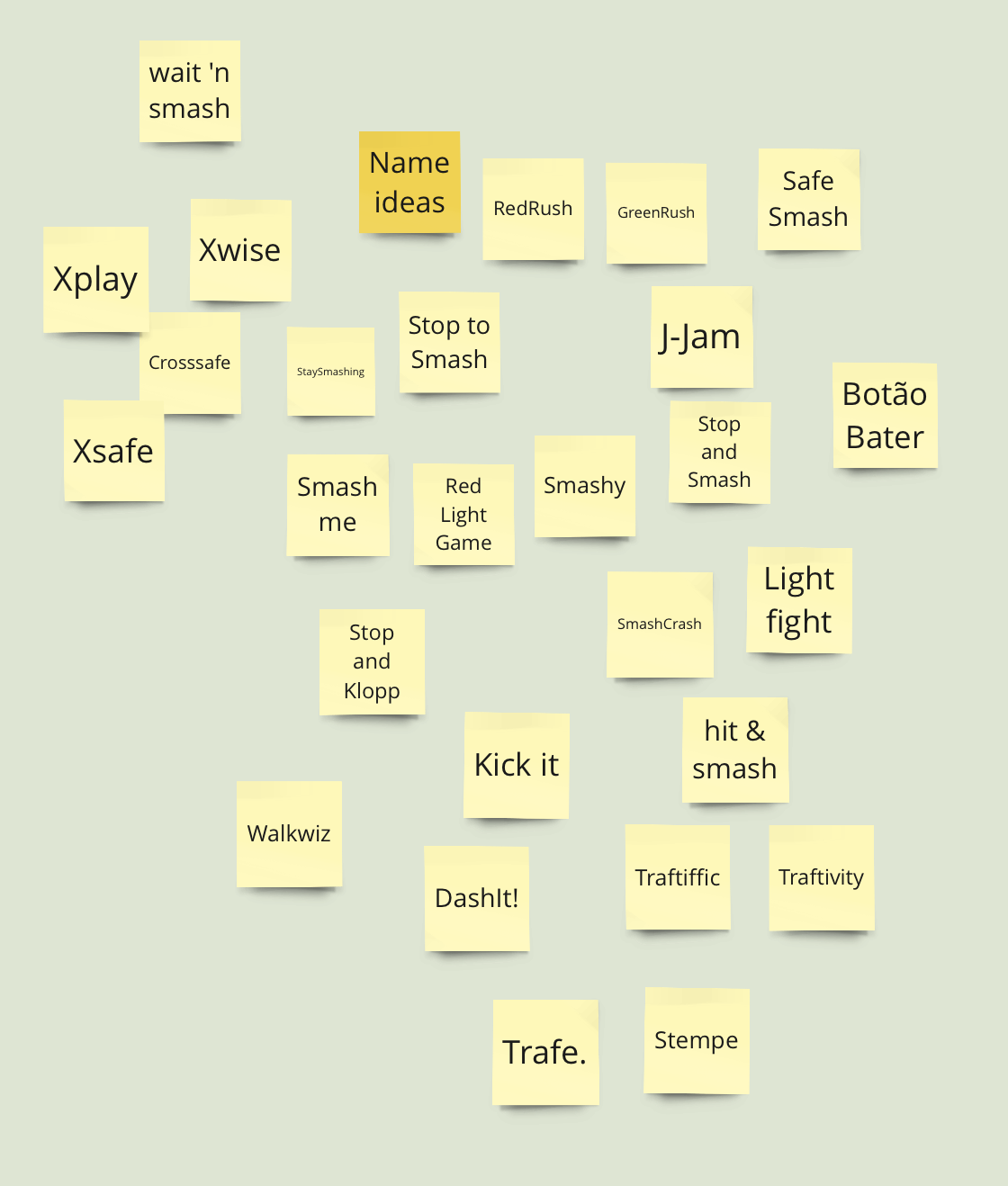
As for the logo, its development journey has been a dynamic one, evolving through numerous iterations, as illustrated in Figure 42. Nearly all the iterations of the logo prominently featured either a hand or a traffic light. This choice was made to visually communicate the essence of the product. The hand symbolizes the active engagement of the player, while the traffic light serves as a clear nod to the game's premise, highlighting its focus on traffic management and control.
Final Logo
The final logo for the project utilizes a traffic light motif. Three circles form the outer layer, with three smaller circles stacked on top within, mimicking the structure of a real traffic light. The color scheme also aligns with a traffic light, featuring a bright orange-red at the top, a vibrant orange-yellow in the middle, and a yellowish green at the bottom. The colors can be seen in Figure 44.
These vivid and bright colors were chosen for their intensity, aiming to replicate the eye-catching nature of a traffic light's signal. Wave-like shapes incorporated within the center circles add a sense of movement and dynamism to the logo. Overall, the logo prioritizes simplicity and clarity, effectively representing SMASHY and its goals. The final logo is shown in Figure 43.

Leaflet
The flyer is designed with a special folding technique - It can be opened in the middle like a door, see Figure 46. This was to add a little special effect to the displayed information. It can read the game's rules, discover the information from the display, and see how SMASHY looks on the street, see Figure 45.
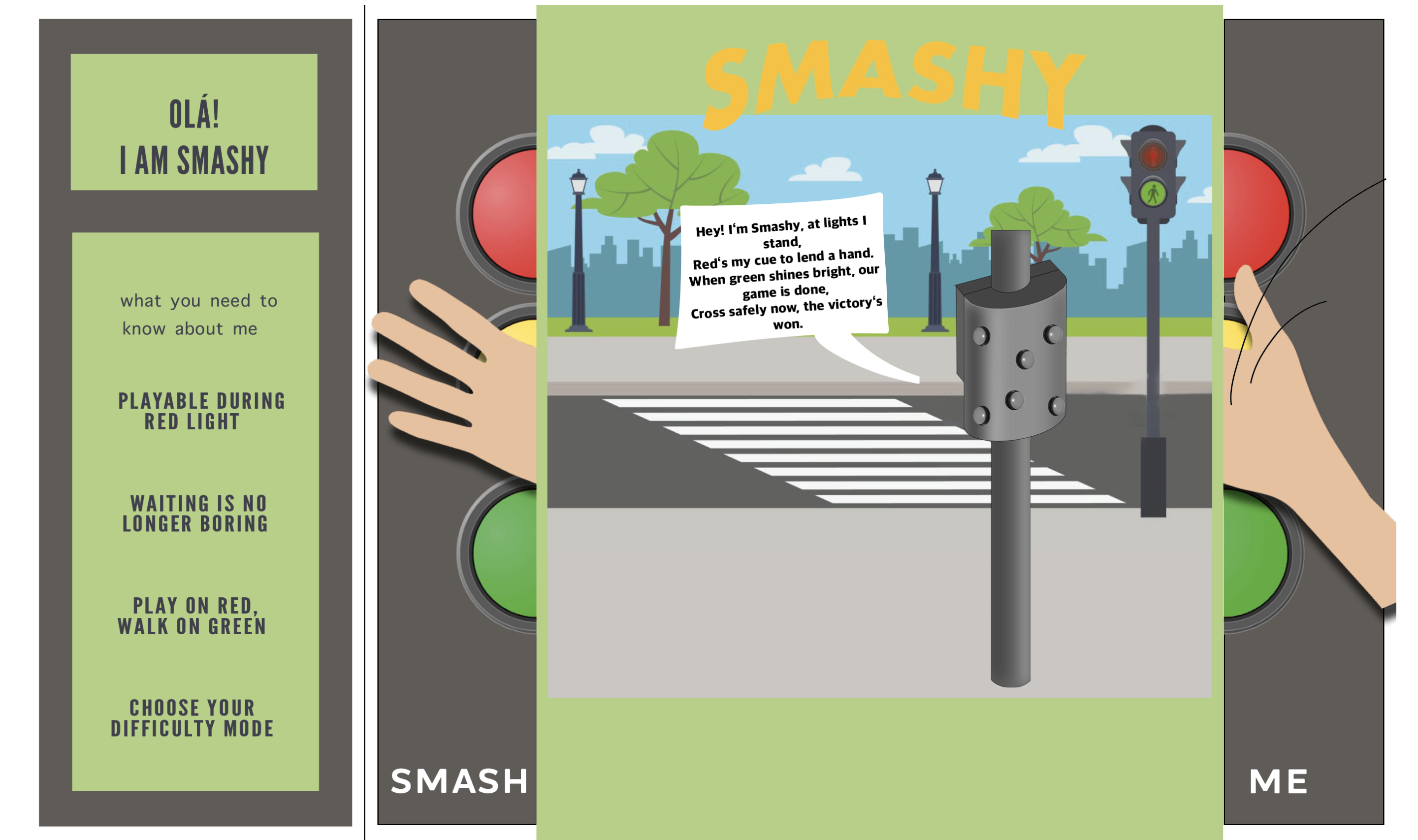
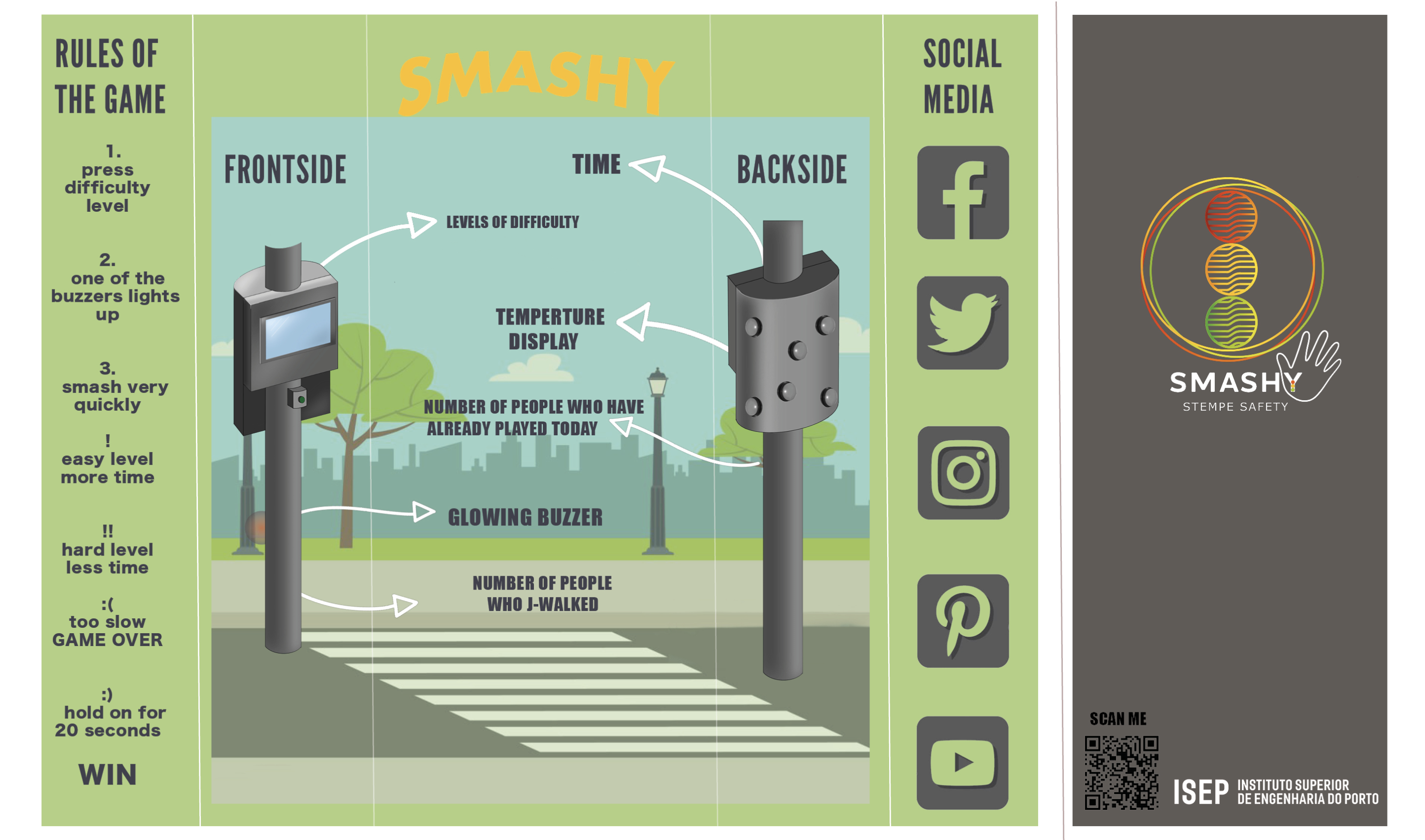


4.4 Marketing Programmes
For this product, the primary advertising channel of significance is public advertisement. Recognizing the criticality of connecting with the target audience, this medium presents a valuable opportunity. The objective is to cultivate interest and reduce barriers to entry for the product by employing captivating marketing strategies.
To attain the objective, it is crucial to allocate considerable time to crafting appealing advertisements that captivate the audience. Additionally, it's imperative to ensure that the advertisements target a diverse spectrum of people, maximizing outreach and engagement across various demographics. The advertisement will be made to create interest in the product for the target audience. These advertisements will be physical, below a poster can be seen. These aim to create interest in the audience.
Furthermore, the strategic placement of these public advertisements will be pivotal in generating interest. The advertisements will be strategically positioned near the product to direct interested audiences towards it, facilitating interaction and usage. It's anticipated that audiences may forget about the product if they cannot engage with it directly, and they are less likely to interact with it if it's too distant. Thus, ensuring proximity between the advertisement and the product is essential to prevent wasted advertising efforts.
To add on the marketing for the local government should be done using leaflets and presentations. The local government will care more about the statistics of the product than the users of the product. That is why it is important to create an advertisement to convince the product will help with road safety.
To summarize, it is believed that public advertising is the most important channel of advertising to create interest. This will be done using appealing posters and smart placements. For the local government leaflets and presentations will be the key to convince them about the product.
4.4.1 Programmes
Bellow 3 different marketing programs designed to promote SMASHY is presented. Each program is made to support the main business goals: gaining government support, highlighting sustainability and technology, and ensuring inclusivity and cost-effectiveness. These initiatives are crafted to engage stakeholders effectively across various platforms. The aim is to expand SMASHY’s presence in urban safety and make a positive impact in communities worldwide.
1. Leveraging Government Support and Regulations.
Campaign: “SMASHY: Partnering with Government for Safer Streets”
Platform: LinkedIn, Government Websites, Industry Forums
Strategic Objective: Secure at least 5 partnerships or contracts with government agencies and municipalities by the end of the first year. Increase brand recognition among policymakers and industry leaders by achieving 20% engagement growth on LinkedIn.
Marketing Programme:
- LinkedIn Campaign: Share case studies and success stories of SMASHY’s alignment with Vision Zero 2030. Highlight endorsements from government officials and industry leaders to build credibility.
- Government Outreach: Develop targeted outreach programs to connect with municipal planners and traffic safety officials. Present tailored proposals that showcase the benefits of partnering with SMASHY.
- Industry Forums and Webinars: Participate in and host webinars discussing pedestrian safety initiatives, focusing on SMASHY’s compliance with legal standards and contributions to government goals. Engage with industry leaders and policymakers to foster relationships and explore collaboration opportunities.
2. Promoting Sustainability and AI Integration.
Campaign: “SMASHY: Green, Smart, Safe”
Platform: X, Tech Blogs, Environmental Forums
Strategic Objective: Achieve a 30% increase in user engagement with the SMASHY modules through AI-driven features by the end of the second year. Secure at least 3 partnerships with environmental organizations and tech blogs, resulting in a 25% increase in positive media mentions and social media interactions.
Marketing Programme:
- X Campaign: Use hashtags like #GreenTech and #SmartCities to share updates on SMASHY’s AI integration and sustainability efforts. Post user testimonials and success metrics to highlight the product’s impact.
- Tech and Environmental Blog Outreach: Partner with influential tech blogs and environmental forums to publish articles and guest posts about SMASHY’s innovative use of AI and commitment to sustainability. Highlight case studies and data-driven results.
- Environmental Partnerships: Collaborate with environmental organizations to promote SMASHY’s alignment with the Advanced Materials Initiative 2030. Participate in joint campaigns and events to increase visibility and credibility among environmentally conscious consumers.
3. Inclusivity and Cost Optimization.
Campaign: “SMASHY: Making Streets Safe and Accessible for All”
Platform: Instagram, Community Forums, Economic News Outlets
Strategic Objective: Expand SMASHY's market presence to 10 new urban areas within the first 18 months. Ensure 90% of user feedback highlights the ease of use and inclusivity of the product. Achieve a 15% reduction in production expenses through optimized procurement strategies.
Marketing Programme:
- Instagram Campaign: Share user stories and testimonials, emphasizing SMASHY’s accessibility and user-friendly features. Use engaging visuals and interactive content to highlight the product’s benefits and inclusivity.
- Community Engagement: Participate in local community forums and events to gather feedback and promote the product. Offer demonstrations and trial periods to encourage adoption and gather testimonials.
- Economic Strategy and Outreach: Collaborate with economic news outlets to publish insights on SMASHY’s cost optimization strategies and the economic benefits of implementing pedestrian safety solutions. Highlight successful case studies where SMASHY has reduced costs and improved safety.
4.4.2 Budget
A marketing budget serves as a financial roadmap detailing projected expenditures for promoting and selling a company's products or services, encompassing costs for advertising, public relations, direct marketing, trade shows, and social media initiatives. These costs can be seen in Table 18.
The main goals of the advertising are:
- Generate interest in product.
- Lower entrance barrier
- Convince local government.
| Income | Price ( € ) | Link |
|---|---|---|
| Budget | 850 | |
| Expenses | ||
| Leaflets | 50 | [360imprimir, 2024] |
| Posters | 450 | [let's copy, 2024] |
| Presentations | 100 | |
| Total | ||
| Income | 850 | |
| Expenses | 650 | |
| Differential | 200 | |
Initially, various advertising platforms have been assessed, with the selected ones outlined in Table 18. Subsequently, projected costs have been assigned to each advertising method, prioritizing those likely to generate the highest product interest. At the table's conclusion, the income-expense differential is displayed, serving as a safety buffer in anticipation of potential advertising cost fluctuations.
4.4.3 Control
To control the marketing the Plan-Do-Check-Act (PDCA) cycle method will be used to monitor success. This method enables the company the measure the positively received aspects and improvement of aspects by following Figure 47.

Plan
The market analysis conducted has been used to create marketing strategies and following this the specific actions have been planned to satisfy the customers. “Marketing Programmes” describes this concrete marketing plan.
Do
The execution is done in this phase. This includes placing this product on a traffic light and putting posters to generate interest. Also, a meeting with the local government will be held to convince them about the road safety improvements.
Check
To measure the success of the marketing analysis, key performance indicators will be monitored.
Product
- Number of presses/visitors
- Amount of jay walking
- Surveys
Leaflet:
- Amount of traffic to site
Presentation:
- Number of local governments that buy in.
- Surveys
Act
After reviewing the data gathered by the previous phases, this phase will be used to act accordingly to the customers wants and needs. The data collected by the survey will be an indicator on what to improve and what is unnecessary. And the number of jaywalkers will indicate the success of the goal of the product. This way the marketing can be adjusted to increase the success. Some possible adjustments are:
- Make game easier/harder.
- Make game more accessible.
- Increase number of products.
- Change place of product
- Change/add language of product.
- Make presentation more appealing.
4.5 Conclusion
Based on the market analysis, a critical need for enhancing pedestrian safety, particularly at intersections, has been identified. To address this need, an innovative module aimed at preventing pedestrians from crossing streets during red lights has been developed. This module caters to pedestrians of all ages, offering a broad target audience due to its adaptable difficulty levels and engaging gameplay, effectively alleviating the boredom of waiting for the green light. In addition to its primary function, the module is multipurpose, with a screen displaying useful information like time, temperature, and the number of jaywalkers.
The marketing plan presents a comprehensive strategy for introducing SMASHY to government customers. By utilising the module's ability to transform waiting times into an enjoyable experience, a significant reduction in accidents and an overall improvement in pedestrian well-being within urban settings are anticipated.
Utilizing the marketing mix, strategies for product development, pricing, placement, promotion, and brand messaging have been developed. To reach the target audience and decision-makers within government agencies, a mix of public advertising campaigns, informative materials, and data-driven presentations will be employed. The objective is to captivate their interest and demonstrate the tangible benefits of the solution.
The PDCA cycle will be implemented to continually monitor and optimize marketing efforts. By analyzing key performance indicators such as user engagement metrics, accident statistics, and survey feedback, strategies will be refined for maximum impact.
In conclusion, the marketing plan positions the innovative pedestrian safety module for successful adoption in urban environments. By prioritizing user engagement, promoting strategic partnerships, and embracing data-driven decision-making, confidence lies in the ability to make a substantial contribution to enhancing pedestrian safety in cities worldwide.
5. Eco-efficiency Measures for Sustainability
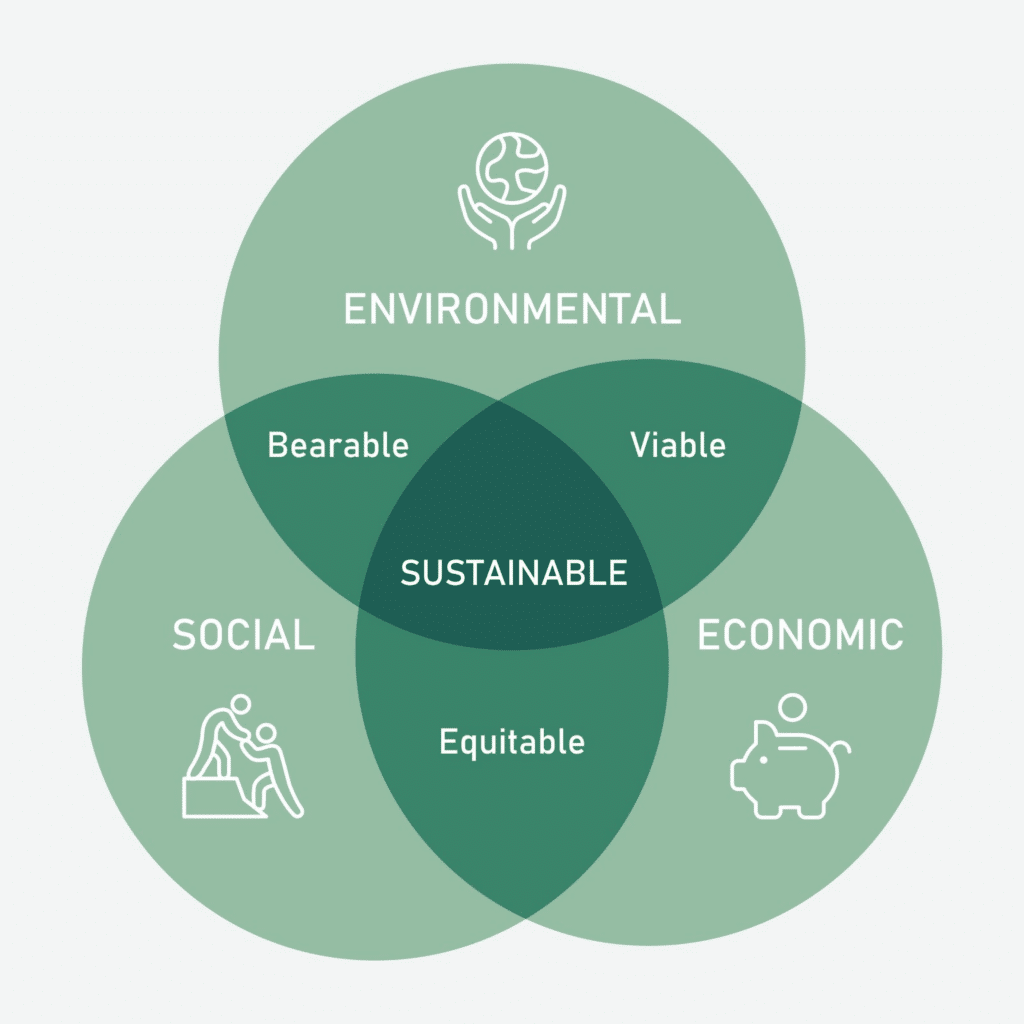
Over the last decade, sustainability has emerged as a prominent topic, gathering attention from various sectors. It holds significance for product developers, politicians, buyers, and, notably, the climate. Sustainability entails development that addresses present needs while preserving resources for future generations. Recognizing the finite nature of resources, it advocates for their judicious and cautious utilization to ensure their availability for future use, all while minimizing disruption to current lifestyles. [TWI, 2024].
In the past, raw materials such as oil, gas and coal were widely used, these had a very positive impact on the development of the economy. However, to this day these substances have a bad influence on the health of humans and the planet. So, the use of environmentally friendly engineering techniques is necessary to minimize this negative effect on the environment.
Sustainable development consists of 3 pillars, namely: Economic development, Social development and Environmental protection as showed in Figure 48.
The Sustainable Development Goals (SDG) developed by the United Nations such as no poverty, climate action, clean water,… aim to successfully create a better and more sustainable future. The goals are all integrated, so an action in one of the 17 SDGs will also influence the solution of other goals [United Nations Development Programme, 2024]. All the 17 sustainable development goals are shown in Figure 49. An example of an SDG for SMASHY would be responsible production (no. 9) and infrastructure (no. 12).
Indicators such as the Happy Planet Index measure a nation's ability to ensure its population lives long and satisfying lives without excessive resource consumption or environmental harm. Two essential concepts for achieving sustainability are eco-efficiency and life-cycle analysis. Eco-efficiency involves producing goods and services with reduced environmental impact while maintaining financial benefits [Happy Planet Index, 2024]. Life-cycle analysis is a systematic approach to evaluating the environmental impact of a product, service, or process from raw material extraction to disposal or recycling.
A life cycle analysis (LCA) is the act of measuring the environmental impact of a product throughout its lifecycle. This goes from the used resources to the use of the user to the end destination of the product. An LCA measures the environmental impacts of each distinct part involved in creating and using products and services, such as energy used in production, fuel used in transport, and end-of-life ecological costs [Kara Anderson, 2023]. This helps us compare between products, materials, and methods used, providing useful information by which to make decisions that could help the environment.
Energy policy is vital for sustainability as it determines the energy sources driving economic development and progress. For example, the European Union's energy policy focuses on promoting renewable energy sources, improving security of energy supply and enhancing energy efficiency [Matteo Ciucci, 2023].
5.1 Environmental
Sustainability is a widely used concept that is applied by companies, organizations and politicians in various contexts. It is part of the day-to-day life and is seen as a guiding principle for the harmonious coexistence of all living beings on earth. However, nature, including flora and fauna, does not follow the principles of sustainability. It expands and adapts to environmental conditions. Humans, as part of nature, have a similar tendency to expand and have developed tools to extend their capabilities. Nevertheless, man is the only species that produces waste on a large scale, thereby endangering his own livelihood. Sustainable management is therefore a cognitive challenge that needs to be solved [Stefan Theßenvitz, 2023].
An exemplary instance of this approach can be seen in the utilization of sustainable materials such as High Density Polyethylene (HDPE) and stainless steel. HDPE, known for its durability, adaptability, and high recyclability, stands out for its resilience against weathering and chemicals, thus prolonging the lifespan of products. Similarly, stainless steel, renowned for its durability and versatility, proves itself in various applications. By selecting HDPE and stainless steel, companies can curtail environmental impact by conserving natural resources and minimizing waste generation. Additionally, embracing these materials enables companies to enhance energy efficiency through the adoption of energy-conscious manufacturing processes.
In today's value-driven world, companies ought to be motivated not solely by profit but also by the imperative of environmental stewardship. While many recognize this as aspirational, it remains an essential goal worth pursuing. Thinking and acting sustainably at scale enables companies to leverage their own ecosystems with maximum agility. In the face of increasing competition and consumer transparency, agility is key [Burkard Schemmel, 2023].
In this project, the team endeavors to create the most sustainable version of their product. This can be achieved by utilizing durable materials that ensure extended service life, thereby minimizing resource consumption. Materials are sourced from local suppliers to reduce transportation distances and diminish the ecological footprint. Moreover, the team ensures that selected materials are environmentally friendly, aiming to minimize an adverse impact on the environment. Through these initiatives, the aim is not only to deliver a high-quality product but also to make a favorable environmental impact and advocate for sustainable business practices.
5.2 Economical
“Economical” in the realm of sustainability pertains to the efficient and cost-effective utilization of resources, aiming to minimize environmental impact while ensuring long-term economic viability. The goal is to strike a balance between environmental responsibility and financial success by devising products, processes, and business models that are both ecologically good and economically advantageous.
Within the scope of a project or product, “economic sustainability” involves considering all related expenses from the project's inception to its ultimate disposal or recycling. This entails creating products that are sturdy, long-lasting, recyclable, and repairable while employing cost-efficient materials and components that are environmentally friendly.
In today's business world, it is crucial that companies and projects are economically sustainable in order to remain financially viable in the long term. Economic sustainability means finding a balance between resource management, economic development and environmental protection. A key aspect of economic sustainability is to consider all costs associated with a project or product, from conception to disposal or recycling. This requires the development of products that are robust, durable and repairable or recyclable, as well as the selection of materials and components that are cost-effective and environmentally friendly.
For the product - economic considerations are also taken into account when selecting transportation methods. By using lightweight materials and selecting local suppliers, transportation costs can be reduced and the carbon footprint reduced.
Another important aspect of economic sustainability is the consideration of end-of-life options for materials and components. There has been a careful selection of recyclable materials and long-lasting materials such as HDPE and stainless steel in order to minimize waste and maximize the economic use of resources.
Overall, companies and projects strive to achieve economic sustainability by taking cost-effective measures to ensure their financial stability while promoting environmentally friendly practices. By implementing these principles, companies can achieve long-term success while making a positive contribution to environmental protection.
5.3 Social
“Social sustainability” refers to a society's ability to maintain social justice, inclusion and stability in the long term. It is about ensuring that the needs and rights of all people, both in the present and the future, are met without jeopardizing resources for future generations. Social sustainability aims to create inclusive, diverse and equitable communities in which all members have the opportunity to lead fulfilling lives without neglecting the needs of others or damaging the environment. This includes issues such as education, healthcare, social equality, access to basic needs, cultural diversity, human rights and community participation.
The project demonstrates inclusion by addressing the needs of individuals of all ages, sizes, and genders. It is designed to be accessible and usable for everyone, regardless of individual differences. Ensuring that no one is excluded and that everyone has an opportunity to participate is highly important. Furthermore, the product fosters positive social sustainability by encouraging various aspects of social cohesion and interaction as described below.
- Safety: using this product avoids people having to cross a busy road, contributing to overall safety and accident prevention.
- Fun: The audience range allows the game to be enjoyed in pairs, which contributes to shared fun and entertainment and can strengthen social bonds.
- Movement and reaction: The game requires a certain amount of physical activity and quick reactions, which helps to get players moving and train their concentration skills. This not only promotes physical health but also mental fitness and can help to improve attention span - a skill that is also beneficial when dealing with traffic situations.
- Educational: By letting children play this game, they learn that crossing a red light is dangerous and that they should wait. This also has an influence on the parent, because their kid will want to play the game, so the parent has to wait together with the kid.
5.4 Life Cycle Analysis
One crucial task is to assess how each stage of the life cycle contributes to the overall environmental impact. This analysis is typically aimed at prioritizing enhancements in products or processes and comparing various products for internal purposes.
Goals and scope
The Life Cycle Analysis (LCA) for this product will span from the collection of raw materials to the end of their useful life and treatment. Specifically, it will focus on the module itself, constructed primarily of HDPE and stainless steel, as well as the electronic components, with particular emphasis on the buttons and screen. The analysis will prioritize aspects of sustainability, including repairability, weather resistance, ease of disassembly, and recyclability of broken parts. However, energy usage and electronics will be left out of this analysis.
inventory analysis & impact assessment
During this phase, the focus is gathering data concerning the material flow associated with the product. Raw materials serve as inputs, while waste and pollutants are considered as outputs. Although the current knowledge may limit the ability to conduct a thorough analysis, strategies about how to efficiently use the materials can still be explored.
- Procurement: The stainless steel used in the module has an 82-recovery percentage at the end of the product's life. A big percentage of this recovered stainless steel is recycled and used to make new stainless-steel plates [P. Payet-Gaspard, 2012]. So, it’s a product with a high recyclability. Depending on the HDPE, it’s mainly made of post-consumer products and is recyclable. These are products like plastic bottles, toys and utility pipes [Plastic Expert, 2021]. Just like other plastic, HDPE has a high amount of air and water pollution, but the impact is significantly lower than with other plastics [Arete Industries, 2015]. This approach minimizes the use of new natural resources, aside the product used in the process, while maintaining quality and sustainability.
- Treatment: Because of the usage of stainless steel, which is corrosion resistant, no extra treatment is needed to make it waterproof. Same thing for the HDPE.
- Production: The stainless steel needs to be cut into the desired pieces, but because of the recyclability the cutting waste can be used in new steel. The different pieces should be welded together to make a strong skelet for the module. On top of that plastic has different usages. At one part it’s used to make the curved shape to put the buttons on and be able to hit these in an ergonomic way. On the other side, it’s used to fit the screen in because the plastic attracts less heat than the steel.
- Assembly: SMASHY is a module that can be relocated multiple times a year to different traffic light poles. So, it’s important that the assembly is easy, but still very strong. It’s not possible to use screws because after a few times, the screws won’t have any grip in the holes anymore. That’s why the usage of a hinge on one side is useful. On the other side, we’ll use a rod to fix the 2 separate parts into each other.
- Transportation: Keeping the contribution of transportation to sustainability low is challenging. The stainless steel becomes a plate first, after that in another factory the plate needs to be manipulated,… Same thing for the HDPE, because doing the manipulation yourself is impossible. But, the module only exists from a couple of products so this can be kept pretty low. The assembly of the module together with the electronics can be done in one factory. This can be done by local production sites. The usage of a foldable transportation box with wheels makes transportation easy and reduces the carbon dioxide emission when shipping back, this is due to a smaller volume of the box when it's empty.
SMASHY, a game module designed for traffic light poles, prioritizes sustainability throughout its lifecycle. Utilizing HDPE from recycled plastic alongside recycled stainless steel, minimizes new resource consumption. The module's production process reduces energy use and waste, with a focus on easy, screw-free assembly for durability. Localized manufacturing of components further decreases transportation impact. Overall, SMASHY embodies durability, weather resistance, and ease of repair and recycling, showcasing a holistic commitment to environmental responsibility.
5.5 Conclusion
Based on this sustainability analysis, the team chose HDPE and stainless steel for the final design of SMASHY, the game module for traffic light poles. These materials were selected for their environmental benefits.
HDPE, derived from recycled plastic, reduces the demand for new resources while being fully recyclable, ensuring a circular lifecycle. Its low environmental impact, compared to other plastics, minimizes pollution. Additionally, HDPE provides durability and weather resistance, extending the product's lifespan.
Stainless steel, with an 82 % recovery rate through recycling, minimizes the need for new production. Its inherent resistance to corrosion eliminates the necessity for extra treatments. Furthermore, stainless steel's durability ensures the module's longevity without frequent replacements.
The team's choice of HDPE and stainless steel aims to:
- Minimize resource consumption by utilizing recycled materials.
- Reduce waste generation through recyclability.
- Lower environmental impact by selecting materials with low pollution factors.
- Extend the product's lifespan with durable and weather-resistant components.
This material selection aligns with the project's commitment to sustainability, promoting environmentally friendly practices and responsible resource management throughout SMASHY's lifecycle.
6. Ethical and Deontological Concerns
The word deontology derives from the Greek words for duty (deon) and science/or study of (logos), [Alexander Larry, Moore Michael, 2021]. In simpler words, deontology is an ethical theory in contemporary moral philosophy that uses rules to distinguish right from wrong. Often associated with the philosopher Kant, deontology is simple to apply since he believed ethical actions follow universal moral laws; it just requires that people follow the rules and perform their duties. Unlike consequentialism, which judges actions by their results, deontology does not require weighing the costs and benefits of a situation. This avoids subjectivity and uncertainty making the principle of the theory very simple, however, rigidly following deontology can produce results that are, for some people, unacceptable. Nonetheless, understanding and addressing ethical and deontological concerns are essential considerations in any project, ensuring that actions align with ethical principles and contribute to positive outcomes for all stakeholders involved.
In the following chapter, the paper will discuss engineering ethics, delve into sales and marketing ethics, explore environmental ethics, and finally address liability to ensure compliance by all engineers.
6.1 Engineering Ethics
All engineering projects and technological developments must take into consideration engineering ethics. Social, political, and ethical issues are all as crucial a part of engineering as technical ones. Engineers are often confronted with ethical dilemmas that require careful consideration and decision-making. These dilemmas may involve balancing the interests of various stakeholders or ensuring public safety. To guide ethical decision-making and behaviour in such situations, deontological ethics can be used. This approach involves prioritizing ethical considerations and adhering to moral duties and obligations, such as honesty, fairness, and respect for human life and dignity. By following deontological principles, engineers can ensure that their actions align with their ethical responsibilities and uphold the highest standards of professionalism.
According to [National Society of Professional Engineers, 2019], engineers should follow fundamental canons, practice rules, and personal obligations, as listed below:
I. Fundamental cannons
- Hold paramount the safety, health, and welfare of the public.
- Perform services only in areas of their competence.
- Issue public statements only in an objective and truthful manner.
- Act for each employer or client as faithful agents or trustees.
- Avoid deceptive acts.
- Conduct themselves honourably, responsibly, ethically, and lawfully so as to enhance the honour, reputation, and usefulness of the profession.
II. Rules of practice
- Engineers shall hold paramount the safety, health, and welfare of the public.
- If engineers' judgment is overruled under circumstances that endanger life or property, they shall notify their employer or client and such other authority as may be appropriate.
- Engineers shall approve only those engineering documents that are in conformity with applicable standards.
- Engineers shall not reveal facts, data, or information without the prior consent of the client or employer except as authorized or required by law or this Code.
- Engineers shall not permit the use of their name or associate in business ventures with any person or firm that they believe is engaged in fraudulent or dishonest enterprise.
- Engineers shall not aid or abet the unlawful practice of engineering by a person or firm.
- Engineers having knowledge of any alleged violation of this Code shall report thereon to appropriate professional bodies and, when relevant, also to public authorities, and cooperate with the proper authorities in furnishing such information or assistance as may be required.
- Engineers shall issue public statements only in an objective and truthful manner.
- Engineers shall be objective and truthful in professional reports, statements, or testimony. They shall include all relevant and pertinent information in such reports, statements, or testimony, which should bear the date indicating when it was current.
- Engineers may express publicly technical opinions that are founded upon knowledge of the facts and competence in the subject matter.
- Engineers shall issue no statements, criticisms, or arguments on technical matters that are inspired or paid for by interested parties, unless they have prefaced their comments by explicitly identifying the interested parties on whose behalf they are speaking, and by revealing the existence of any interest the engineers may have in the matters.
III. Professional obligations
- Engineers shall be guided in all their relations by the highest standards of honesty and integrity.
- Engineers shall at all times strive to serve the public interest
- Engineers shall avoid all conduct or practice that deceives the public.
- Engineers shall not disclose, without consent, confidential information concerning the business affairs or technical processes of any present or former client or employer, or public body on which they serve.
- Engineers shall not be influenced in their professional duties by conflicting interests.
- Engineers shall not attempt to obtain employment or advancement or professional engagements by untruthfully criticizing other engineers, or by other improper or questionable methods
- Engineers shall not attempt to injure, maliciously or falsely, directly or indirectly, the professional reputation, prospects, practice, or employment of other engineers. Engineers who believe others are guilty of unethical or illegal practice shall present such information to the proper authority for action.
- Engineers shall accept personal responsibility for their professional activities, provided, however, that engineers may seek indemnification for services arising out of their practice for other than gross negligence, where the engineer's interests cannot otherwise be protected.
- Engineers shall give credit for engineering work to those to whom credit is due and will recognize the proprietary interests of others.
The rules mentioned above ensure the safe delivery of a product to a client. It's crucial to ensure that these rules are followed, which is why professional liability is important in upholding these fundamental principles. Whenever an engineer is not obeying to the code of ethics of the profession, there can be some disciplinary penalties such as warnings, registered censorship, or even suspension from practicing as an engineer for up to 15 years.
In conclusion, engineers have a moral obligation to uphold the safety, health, and well-being of the public. This can be achieved by following the fundamental canons and rules of practice outlined in by the National Society of Professional Engineers (NSPE) of the United States of America in the Code of Ethics and Professional Conduct. By adhering to these ethical principles, engineers can ensure they are acting with integrity and competence in their profession. Following these guidelines will foster public trust in the engineering profession and ensure that engineering projects are conducted ethically and responsibly. Stempe Safety, as the name indicates itself, aims to achieve safety and reliability in the final product. The module will be created following these guidelines and ensuring the user’s safety at all times. This will be achieved by conducting thorough risk assessments and testing the product under various scenarios. The manufacturing process of a product involves various factors such as the materials and components used, and its impact on the environment and society. It is the responsibility of the manufacturer to ensure that the production and use of the product do not cause any negative impact. Adhering to ethical procedures ensures that the SMASHY module is created and produced in an ethical manner, which can enhance consumer trust and loyalty.
6.2 Sales and Marketing Ethics
Ethical marketing and sales practices are essential for building trust, maintaining reputation, and fostering long-term relationships with customers. In markets, different players often have conflicting interests, leading to competition for resources, customers, and prices. This competition can create opportunities for activities that may not be ethical. A certain code of conduct, policies and practices called ethics are required to manage markets and marketing. Therefore, a set of policies, practices, and conduct, known as ethics, is necessary for the effective management of markets and marketing. There are two different schools of thought when it comes to ethics in marketing: political philosophy and transaction-focused [Management Study Guide, 2022]. One school of thought believes that the main goal of marketing should be to maximize shareholder value and that this is the only ethical approach. The other school of thought, however, argues that marketing has a responsibility not just to shareholders, but to other stakeholders and consumers as well.
As [Harvard Business Review, 2019] mentions, one of the biggest dangers in selling is using a narrow perspective: focusing on immediate profits and sales goals at the expense of broader gains. When sales professionals take a narrow perspective, they may prioritize closing deals over the needs of the customer, potentially leading to misrepresentation of products or services, or making promises that internal departments cannot deliver. In each of these situations, the company risks losing more than it gained. On the other hand, a company's broader perspective, one that seeks to achieve a purpose beyond just making money, can motivate employees and ultimately does not necessarily harm profits. When entering the business world with the SMASHY prototype, the teams must keep this in mind to be able to focus on aligning the interests of the employee with the long-term interests of the company.
Some of the key practices to integrate in any selling interactions are the following [Luke Smith, 2023]:
- In-depth knowledge of the product: this helps create a personalized and transparent customer experience
- Putting the customer first: Being aware of their preference and the differences between each party helps persuade the customers to purchase the product.
- Active listening: It creates rapport and trust, showing genuine concern for customer needs and ethical practices beyond sales.
- Transparency: The more informed the client is, the more likely they will be satisfied with their purchase.
- Adressing competition: Competition is an inevitable aspect of the market. However, when discussing this topic with clients, it is important to approach it with empathy and ethics. Rather than engaging in trash-talking about competitors, it is better to focus on highlighting the strengths of one's own product. This approach demonstrates to the client that the topic is being addressed in an ethical manner, and helps to showcase how the product may be a better fit for their needs than a competitor's.
For Stempe Safety, it is important to make the safety goal clear during the negotiations and advertisement for both potential users and buyers. The SMASHY module includes two main features: the game and the screen display, making the competition quite limited as it does not currently exist on the market which is a positive aspect for marketing and sales. As a team, it is crucial to establish a trusting relationship with the relevant governments by communicating clearly and transparently. Additionally, listening to potential buyers' feedback will help improve the product, as the common goal for both parties is the safety of pedestrians.
Overall, ethics in marketing and sales is essential for building and maintaining trust with customers, implementing a positive brand image, and contributing to a positive and responsible business environment. By prioritizing ethical considerations in their practices, marketing and sales professionals can create value for both their organizations and society as a whole.
6.3 Environmental Ethics
As exposed in the [Alasdair Cochrane, 2020], the field of environmental ethics concerns human beings’ ethical relationship with the natural environment. In a company, managing environmental ethics involves integrating environmental considerations into decision-making processes, policies, and practices. There are 6 ethical principles to guide environmental health decision-making: principles of sustainability, beneficence, non-maleficence, justice, community, and precautionary substitution [Klara Matouskova, Laura N. Vandenberg, 2022].
Environmental ethics is indeed, a belief that recognizes humans as a part of society along with other living creatures such as plants and animals. These entities are crucial to the world and are considered as a functional part of human life. Our planet is currently facing challenges such as global warming, climate change, deforestation, pollution, resource depletion, and the risk of extinction. Environmental ethics establish the connection between people and the environment, emphasizing the importance of humans' contribution to the safe and protected maintenance of the environment. Therefore, it is essential for every human being to respect and honor this connection, using morals and ethics when dealing with all living creatures that surround us.
SMASHY incorporates both reused and recyclable materials in an effort to be as environmentally friendly as possible. Also, to decrease the number of greenhouse gases produced, the transportation of all materials needed will be reduced to the minimum possible distance by choosing suppliers that are local to Portugal, or, if it is needed, that are located in Spain, which is the nearest country. By minimizing the distance that materials need to be transported, the carbon footprint can further be reduced.
6.4 Liability
As described in the introduction to this section, deontology considers moral obligations that human beings should adhere to. These obligations are often accompanied by laws and regulations to ensure compliance. This would be englobed in the term of product liability; it refers to the legal responsibility of manufacturers, distributors, suppliers, and retailers for injuries or damages caused by their products to consumers or users. It encompasses the duty to design, manufacture, and distribute products that meet safety standards and do not pose unreasonable risks to consumers or the environment. Product liability also involves accountability for any harm or damage caused by defects in the product, including personal injury, property damage, or financial losses. In the European Union (EU), several directives and regulations govern product liability and environmental protection. Some key directives and regulations the team must comply with to avoid product liability issues are the following:
- The Machinery Directive (2006/42/EC): Covers the safety of machinery placed on the market within the EU [European Commission, 2014].
- Electromagnetic Compatibility (EMC) Directive (2004/108/EC 2004-12-15): refers to the ability of electronic devices and systems to operate properly in their intended electromagnetic environment without causing interference to other devices or being affected by external electromagnetic interference [European Commission, 2014].
- Low Voltage Directive (LVD) (2014/35/EU 2016-04-20): This directive applies to electrical equipment and sets safety requirements for placing such products on the EU market [European Commission, 2014].
- The RoHS Directive (2011/65/EU): Restricts the use of certain hazardous substances in electrical and electronic equipment; [European Commission, 2014].
To ensure that the newly created trademark is not already in use by any other company, the team had to conduct some research in the European Union Intellectual Property Office (EUIPO) database. The team also checked whether the name of the company and product is not in use and is available.
6.5 Conclusion
In conclusion, ethical and deontological considerations play a crucial role in guiding decision-making processes and ensuring responsible conduct in project management. The team has undertaken a comprehensive analysis of ethical principles and obligations, particularly focusing on engineering ethics, sales and marketing ethics, and environmental ethics.
Based on the life cycle analysis taken in the previous section, the team chose HDPE and stainless steel for the design of SMASHY, the game module for traffic light poles. These materials were selected for their environmental benefits, including reduced resource consumption, recyclability, and low environmental impact.
In addition, the team is committed to upholding ethical standards in sales and marketing practices, prioritizing customer needs and transparency to build trust and foster long-term relationships. By integrating ethical considerations into marketing and sales strategies, the team aims to create value for both the organization and society.
Furthermore, the team acknowledges its legal and moral responsibilities regarding product liability and environmental protection. Compliance with relevant EU directives and regulations, such as the Machinery Directive and RoHS Directive, is essential to mitigate risks and ensure the safety and sustainability of the Smashy module.
Overall, the team's dedication to ethical and deontological principles underscores its commitment to responsible project management and environmental stewardship, promoting positive outcomes for all stakeholders involved. Once these analyses have been carried out, the development of the project may start, as is described in the following section below.
7. Project Development
In this chapter, the focus shifts to the process of developing the module. Firstly, the ideation and concept will be explained to provide clarity on the background of the project. The logo and name development are explained. Additionally, both the design and packaging will be discussed, providing further details on the selected materials and 3D model.
In the chapter Smart systems, the selection of components of both hard and software will be made clear by using the black box. The last section gives some insight on how everything is coded and connected, in the end there are some results on tests that have been done on the prototype.
7.1 Ideation
Initially, the project theme “Smart Ergonomic Public Multipurpose Equipment” was approached from a different perspective, with a strong focus on each component in the name. However, after being stuck in a tunnel vision for a week without coming up with a great idea, a significant issue emerged: jaywalking, prevalent in major cities across Europe and worldwide.
The term jaywalking may not be known by everyone, but the concept it describes definitely is. Crossing through a red light as a pedestrian, almost everybody has done it, at least once.
Is it safe? NO!
Existing solutions have been developed, but the team sought a slightly different approach. They aimed to create a game that provides entertainment while waiting for the red light, while also encouraging daily movement. The game is designed to be fast-paced and stops as soon as the light turns green, ensuring pedestrians are engaged and distracted from waiting.
Additionally, the team recognized the importance of ensuring the product is ergonomic and smart. To achieve this, careful consideration was given to the height, shape, and placement of the module. Furthermore, the integration of smart features will provide information to pedestrians as they cross the road from the opposite side.
First designs
Version 1: Traffic light pole with buttons. The idea of the first version is that the user stands at a red traffic light and can press buttons, see Figure 50. The buttons would light up as long as the traffic light is red, when it turns green the game stops.
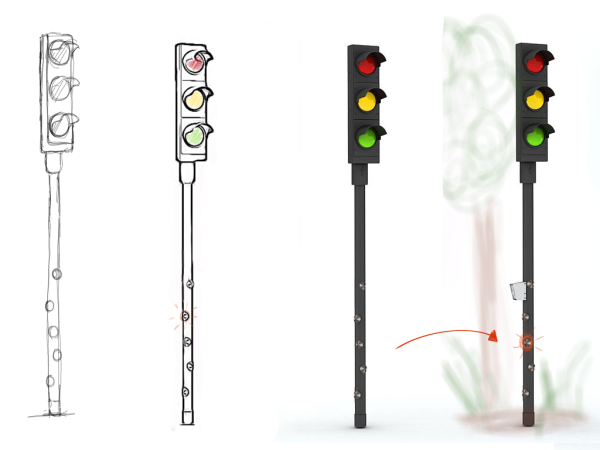
Version 2: Smash-Box
To ensure more safety, the idea arose to install a separate box at road crossings. It is intended to prevent those interested from getting too close to the street, see Figure 51. Additionally, this type of structure would be very stable and better protected against vandalism.
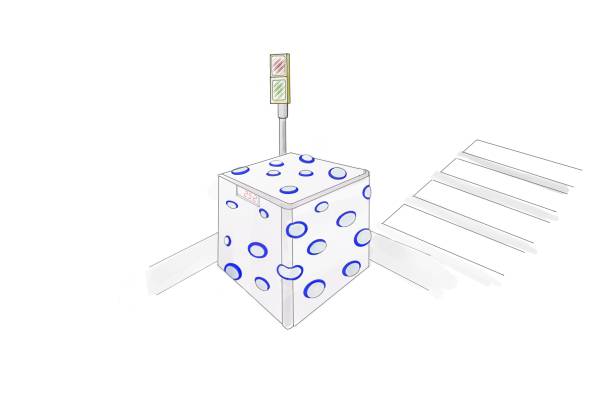
Version 3: Standing module with screen
This third version of the product offers a standing module with buttons and incorporates a big screen displayed on the back side of it, see Figure 52.
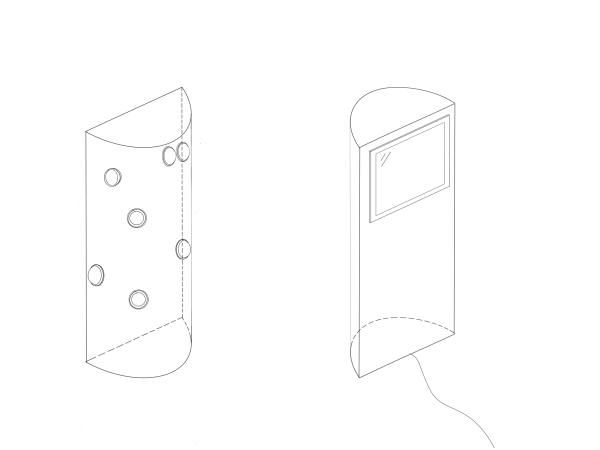
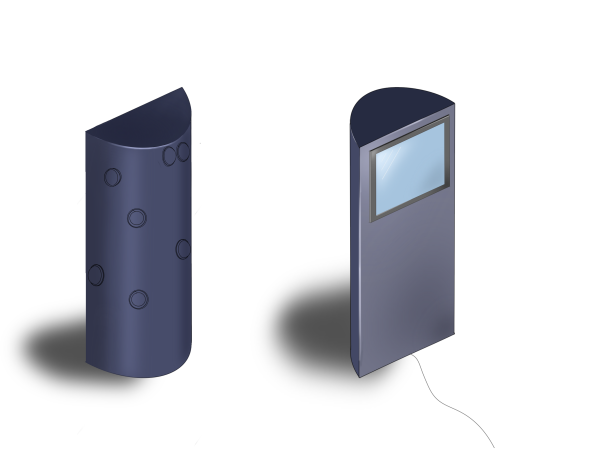
Version 4: SMASHY - Final Design
The look chosen for the final product is rounded on the front part, the team decided on this shape because of the ergonomic benefit it offers users while playing, see Figure 53. It makes it easier to hit with the arms, without having to do unnatural movements. The back part is box-shaped to fit in a screen and other electronic components. The module is wrapped around the traffic light, so another robust pole is unnecessary.


7.2 Concept
Throughout the brainstorming phase of the project, the team delved into the issue of public safety, looking into both the perceptions of feeling unsafe and the risks individuals face in public spaces. Pedestrians receive significantly less recognition and attention compared to car drivers and cyclists. Pedestrian safety, particularly the prevalence of individuals crossing roads during red lights, emerged as a critical concern, especially in big cities. This issue demanded our focused attention and innovative solutions.
To tackle this challenge, a game module with a connecting app was conceptualized to entertain and educate people while waiting for the line to turn green. The game inspired by the Whack-a-mole arcade game consists on smashing the buttons as they light up. SMASHY has a total of 10 buttons equipped with LED technology that light up one by one for a few seconds and turn off the light when either the player has smashed it or the time has run out. To ensure safety, the game will be connected to the traffic light and sense when it changes from red to green so that the game only is active while the light is red.
Prior to playing, users have the option to scan the QR code situated on the module with their smartphone to download the application. Once downloaded, the NFC reader positioned on the right side of the module will simply open the app by approaching the smartphone to it, thereby linking game data to their app. The app incorporates interactive elements such as score-tracking and rewards, including the creation of levels to encourage the positive behaviour of playing the game rather than crossing during red lights. This application saves the data for each game the player initiates and adapts the speed of the buttons lighting up depending on the level being played, the higher the level, the more difficult the challenge accelerating the speed of the buttons lighting up.
Once scanned, the user can begin the game and attempt to hit all the buttons within the time established by the level in the mobile application.
For users who don’t wish to use their phone for it, the game still works. Once the light is red, one random button will remain lit until a user engages with the product and smashes this button. This generates the game to start and the next button lights up until being smashed or until the established time ran out. The lighting up of the buttons’ pace will remain constant and the score will not be saved since there has not been any app reading.
Flow chart of the user journey:
Figure 54 shows the step-by-step process a user would go through when interacting with the product. It gives an overview of the decisions that must be made, the actions required to participate in the game, as well as what users can expect from the game. This exemplifies two different scenarios, one using the app and the other without the use of the app.
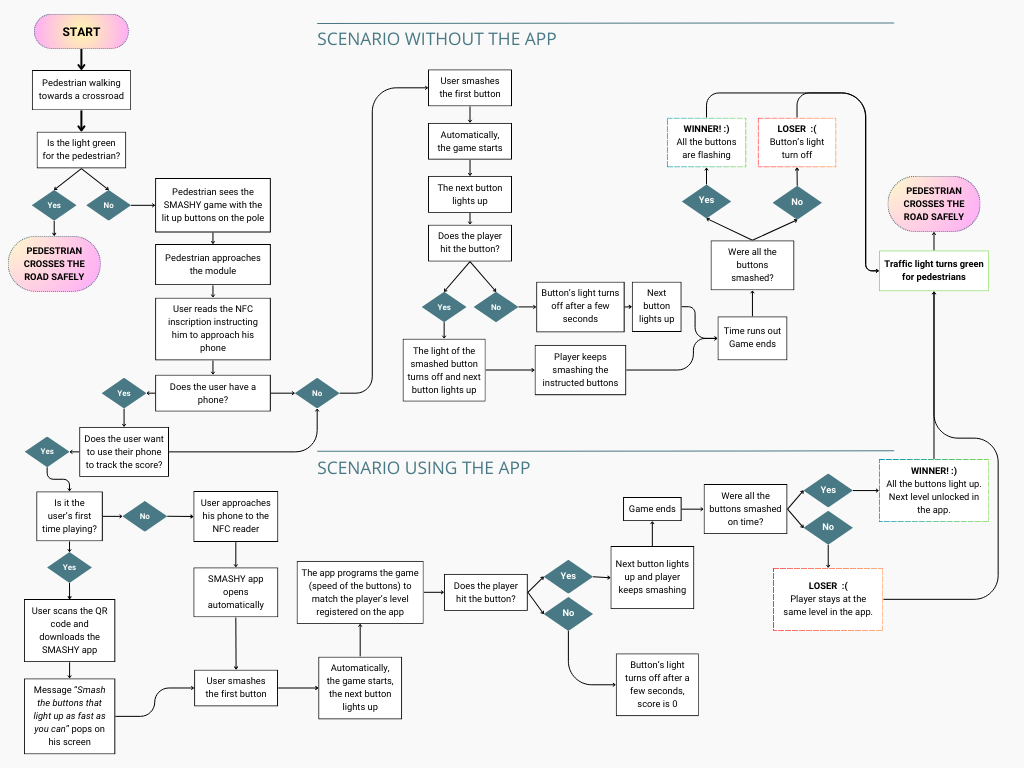
The multipurpose facet of this project is, the screen positioned on the back side of the module. The screen displays useful information that can be read by both drivers and pedestrians on the opposite side of the road. Information such as temperature, the number of players on that day, UV ray levels, or even a count of jaywalkers can be viewed on the screen.
7.3 Design
7.3.1 Structure
After creating initial sketches, the team began strategizing the efficient design of the prototype and the final product. Securing the module to the traffic light pole emerged as a key concern. To address this, a two-part, hinged design was envisioned in Figure 55. The primary section, facing the pedestrian waiting area, would press against the pole using tension belts that would tighten a strap secured within six triangles (Figure 56). Recognizing the need for additional structural support in the final product, an inner ring was incorporated. This ring will be welded to the triangles, forming the internal framework.
A significant challenge arose in determining the ideal position for the module on the pole, particularly concerning the existing pedestrian call button. Observations of various traffic lights revealed inconsistencies in button placement relative to the desired module location and therefore an adjustable or general solution was necessary. To solve this, the inner structure had to include a cut-out in the part connected to the pole, so the button-box could fit regardless of its direction (Figure 57).
In order to mitigate vandalism, a locking mechanism was integrated so that a customary lock could be used, seen in Figures 58 and 59. Additionally, rubber layers were incorporated between the triangles and the pole, as well as between the buttons and the module's shell, to absorb the shock of the smashings and generate friction between those parts to ensure a secure fit. The force inside of the strap or the bolt clamp, necessary to prevent any movement of the Module when it is strapped on to the pole was calculated with an extra weight of 100 kg added to the own weight of around 40 kg. This resulted in an internal force of 420 N being necessary, which can be easily applied with both components.
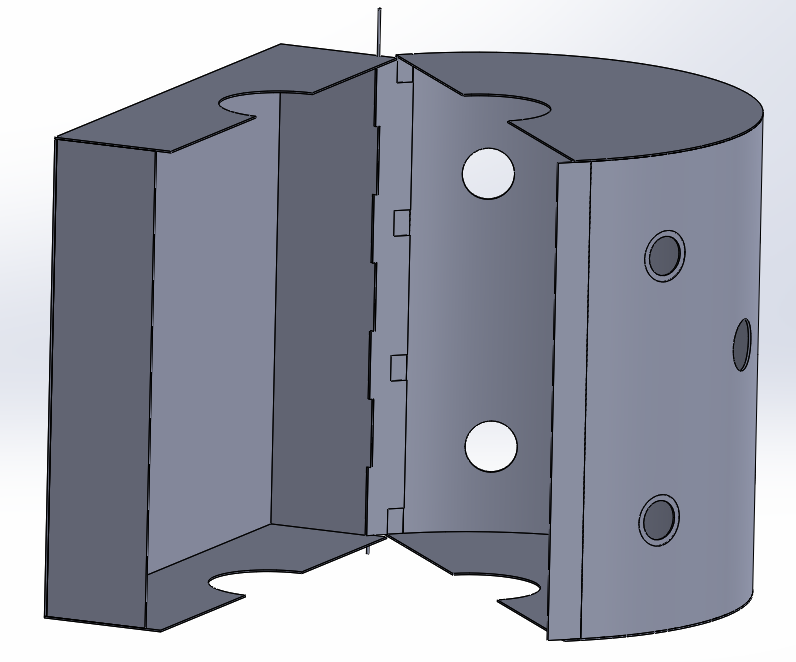
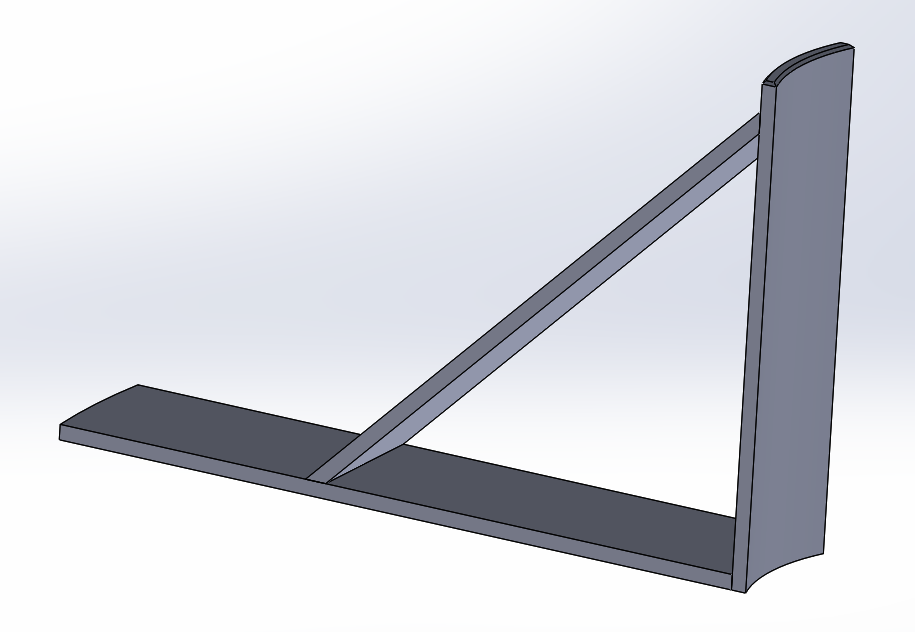
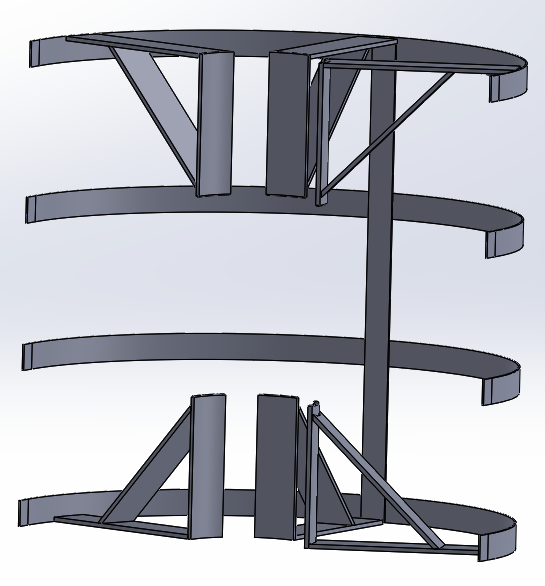

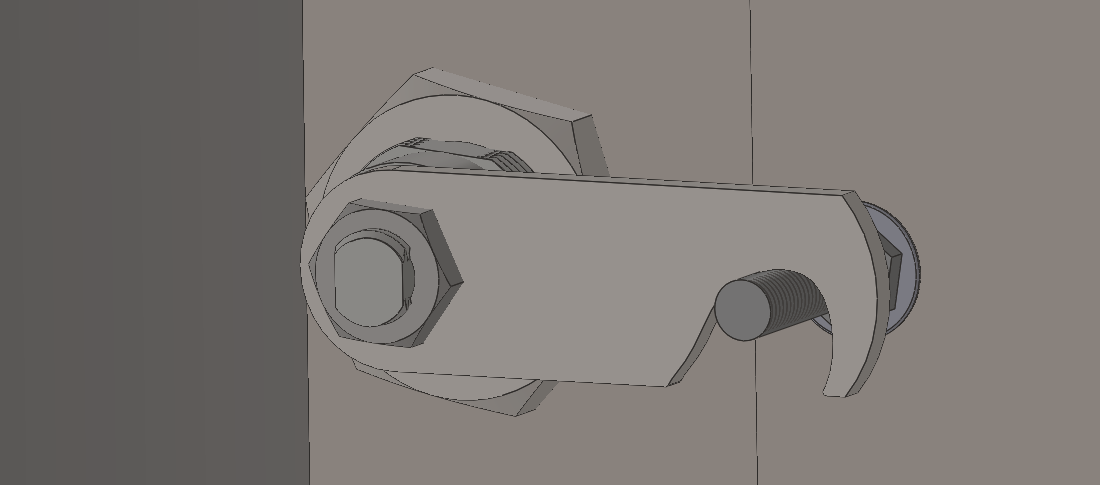
The following Figure 60 displays an exploded view of the simplified structure of SMASHY, to deliver a better idea about its components and subassemblies. In Figure 61 those parts and subassemblies are put in order regarding their position in the exploded view and equipped with numbers, giving information about the certain assemblies. The quantity of parts is given aswell, but not all components are included, as this only serves to give a better idea about the individual parts and subassembly of the structure.
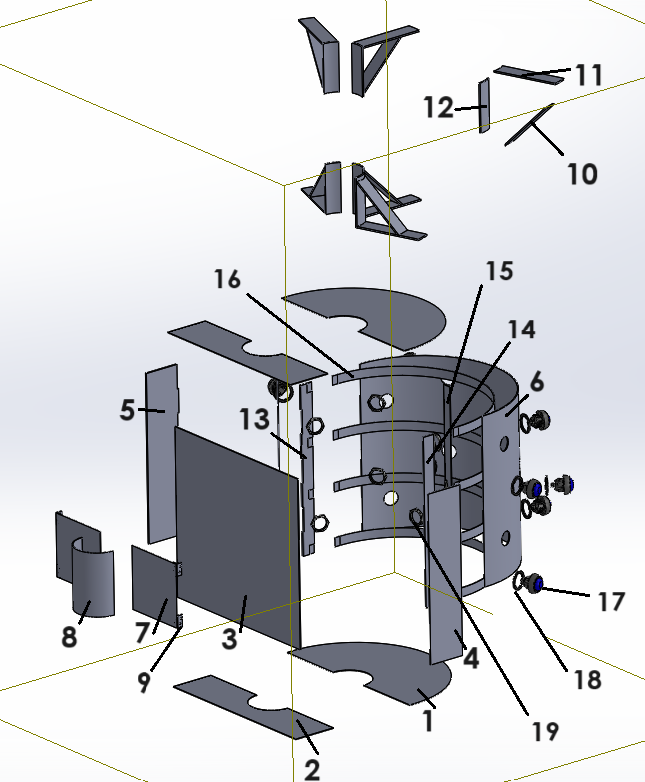
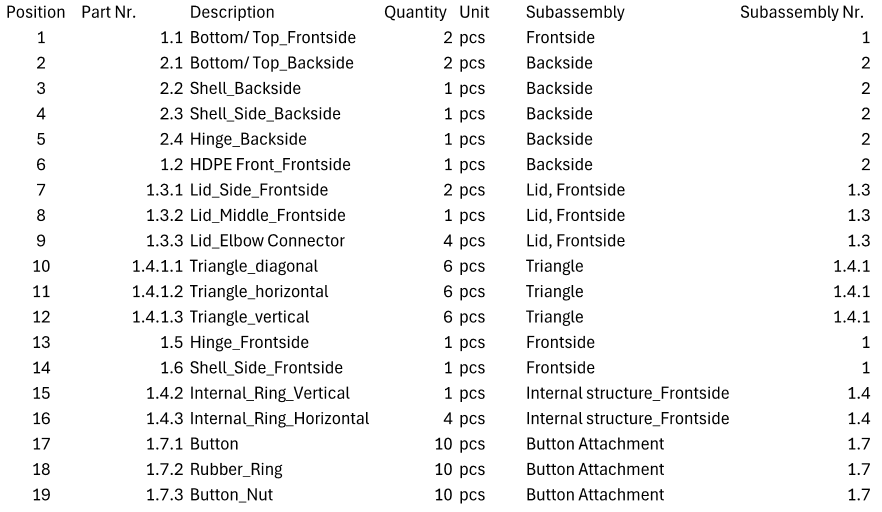
7.3.1.1 Initial structural draft
These drafts were made to give a first technical look at the module for the team and supervisors. From the drawing, the Stempe Safety team could start making some changes to improve the look and the stability. In Figure 62 there is an inside structure to wrap the module around the traffic light pole. As well as a cutout in the back to fit the screen in.
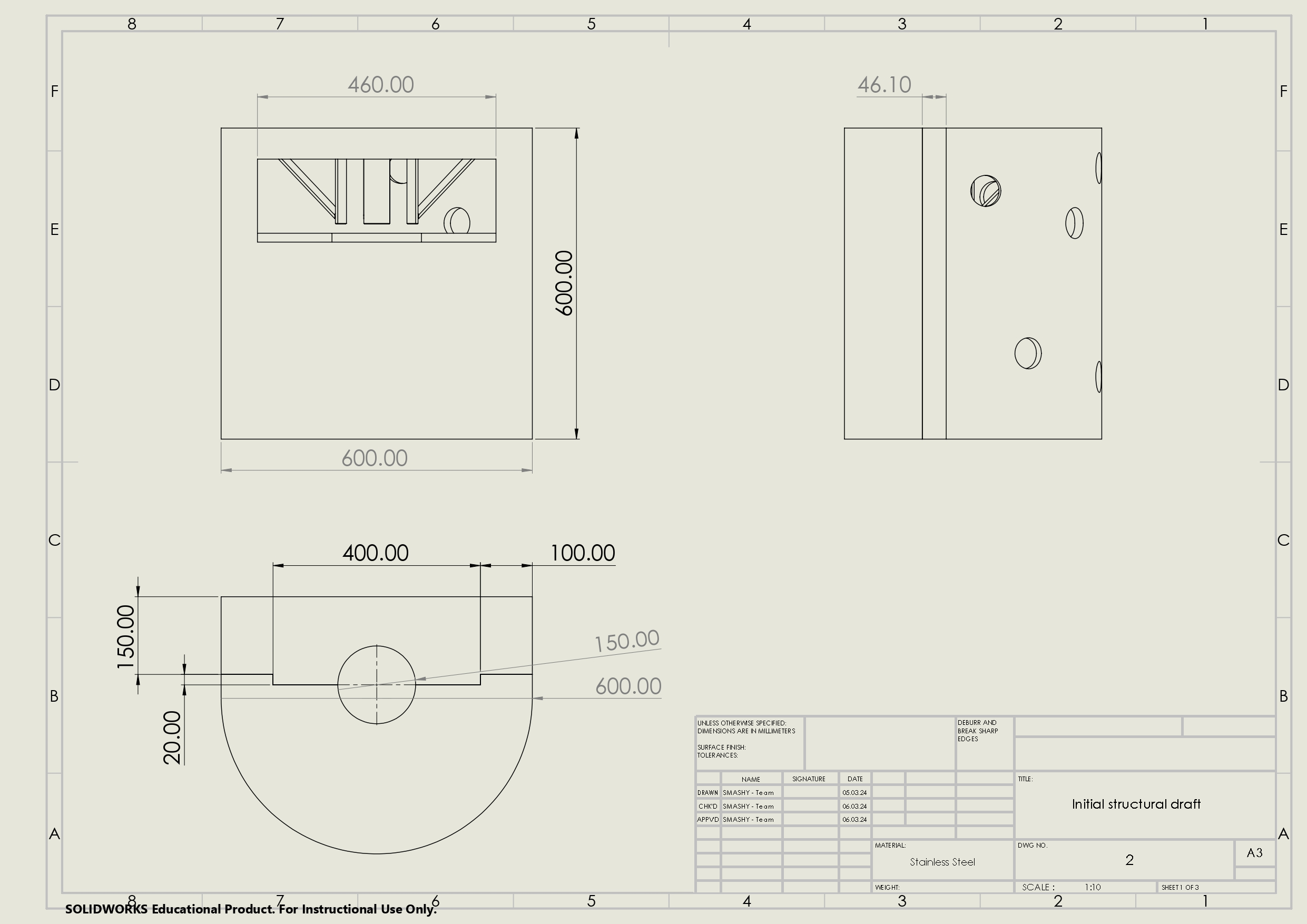
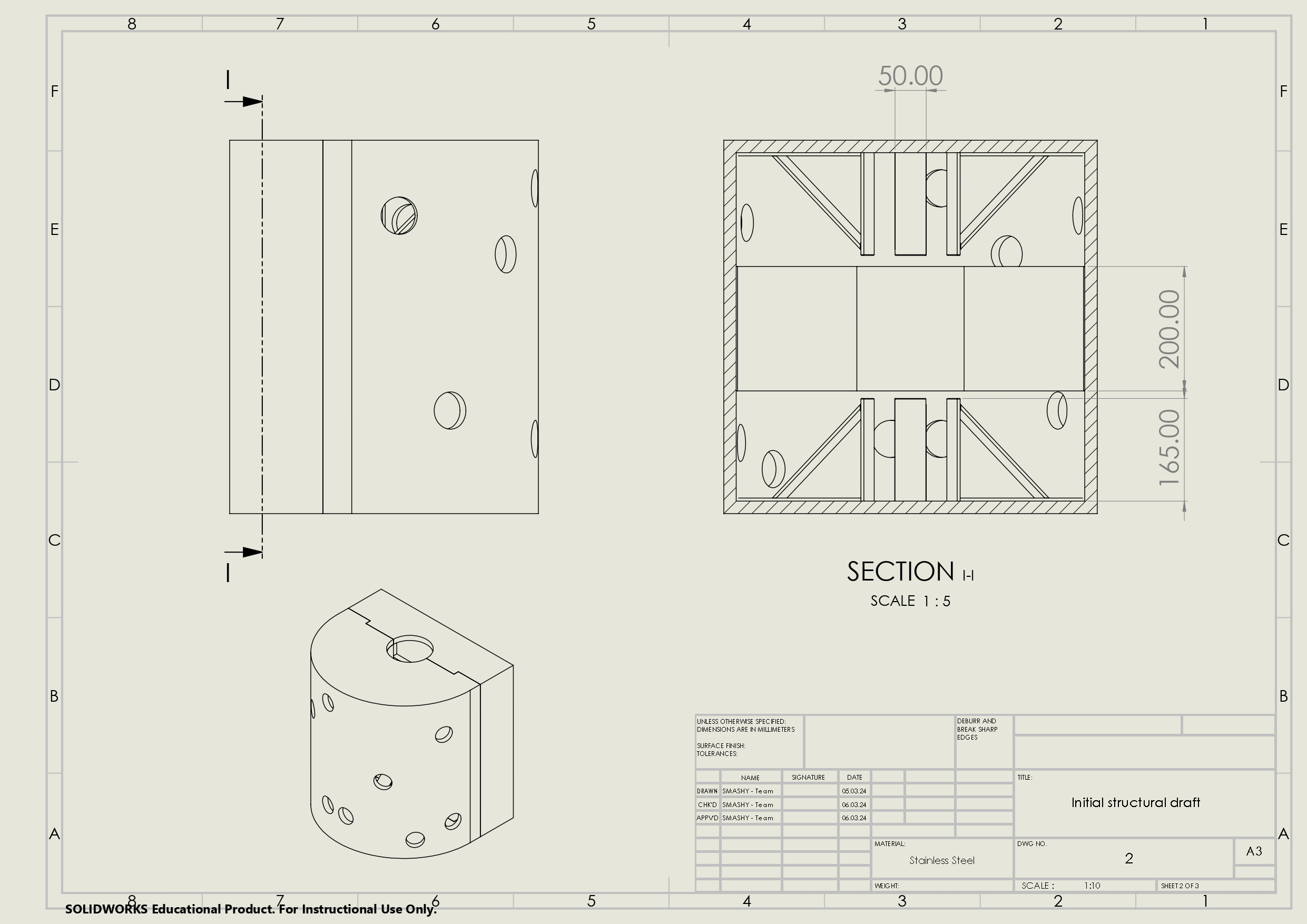

7.3.1.2 Material selection
For the design of the product, a variety of materials and components will be used. The main shape is a half-circle design with buttons that have an integrated LED light and light up when they should be smashed. On the flat side of the module, there will be an LED panel matrix which will give people waiting on the other side of the crossing information such as time, temperature, heat index and how many people already crossed the red light. Some material for the structure of the module and the parts to connect them to each other will be needed.
| Material | Description | Pros | Cons |
|---|---|---|---|
| Wood | It's a natural product | Cheap, good workability, good looking | It's a hard product to be sustainable with outside use, in contact with a lot of rain the strength will go down. |
| HDPE | Is a high strength plastic material | Easy maintenance, customisable (color and shape), Recyclable, durable and high density | flammable, high thermal expansion |
| Aluminium | Silvery-white metal | Corrosive resistance, very light, durable, recyclable and cheap | low hardness, temperature will be high when placed in sun for long time. |
| Steel | An alloy of iron and (max 2%) carbon | Strength, recyclable and durability | Rust and corrosion possible when placed outside. |
| Stainless steel | An alloy of different metals to have the best characteristics | High resistance to corrosion and rust, durable and long lasting | More expensive, workability lower |
The utilization of diverse materials arises from the varied requirements imposed on the module. Stainless steel is selected for the rear and top sections, housing the LED matrix and electrical components owing to its advantageous properties explained in Table 19. For the internal structure and the attachment structure, stainless steel will be welded. For the curved segment of SMASHY, HDPE is chosen due to its robust mechanical strength, essential during gameplay, as well as its formability conducive to shaping, according to design specifications.
Other materials that are used in SMASHY are displayed and explained in Table 20.
| Component | Description | Why use this? |
|---|---|---|
| Acrylic | Transparent plastic material | It's a very strong and stiff material. Also the optical clearness is high. It will be used to protect the screen. |
| Ratchet Strap | It´s a ratchet, which stretches a strap around an object and thereby fixates it. Its easy to install and detach. | We'll use it to strap the module around the traffic light pole. |
| Bolt clamp band | It's a strong stainless steel band that can handle a lot of tension while being fixed. It's also easy to install and remove around poles. | This is another possibility to fixate the module around the traffic light pole. |
| Rubber strip | It's an elastomeric material. | When fixing the module, this can isolate the vibrations and make sure it has some more friction so that it doesn't slide down the pole. |
| Piano hinge | It's a hinge that continues over the entire length of the “door”. | It provides extra stability, strength and support, especially for heavier parts. This will be used to open the module to fixate it around the pole. |
| Radial pin tumbler lock | The lock is pick resistance and needs a special key to open it. | Because it's lock pick resistant, it's not as attractive to vandals as a normal lock. The lock is used to secure the internal components and structure. |
7.3.1.3 Detailed drawings
After the first initial drawings, some structural changes were made. The structure to hold up the model had some changes like the fixtures for the module. Some buttons are added to give a better idea of how it would eventually look. A padlock from the outside was replaced by a cam lock in order to make it less appealing for possible vandalism. Besides this, a NFC reader and other electrical components were added to the drawing to display their position. All these changes can be seen in Figure 63.
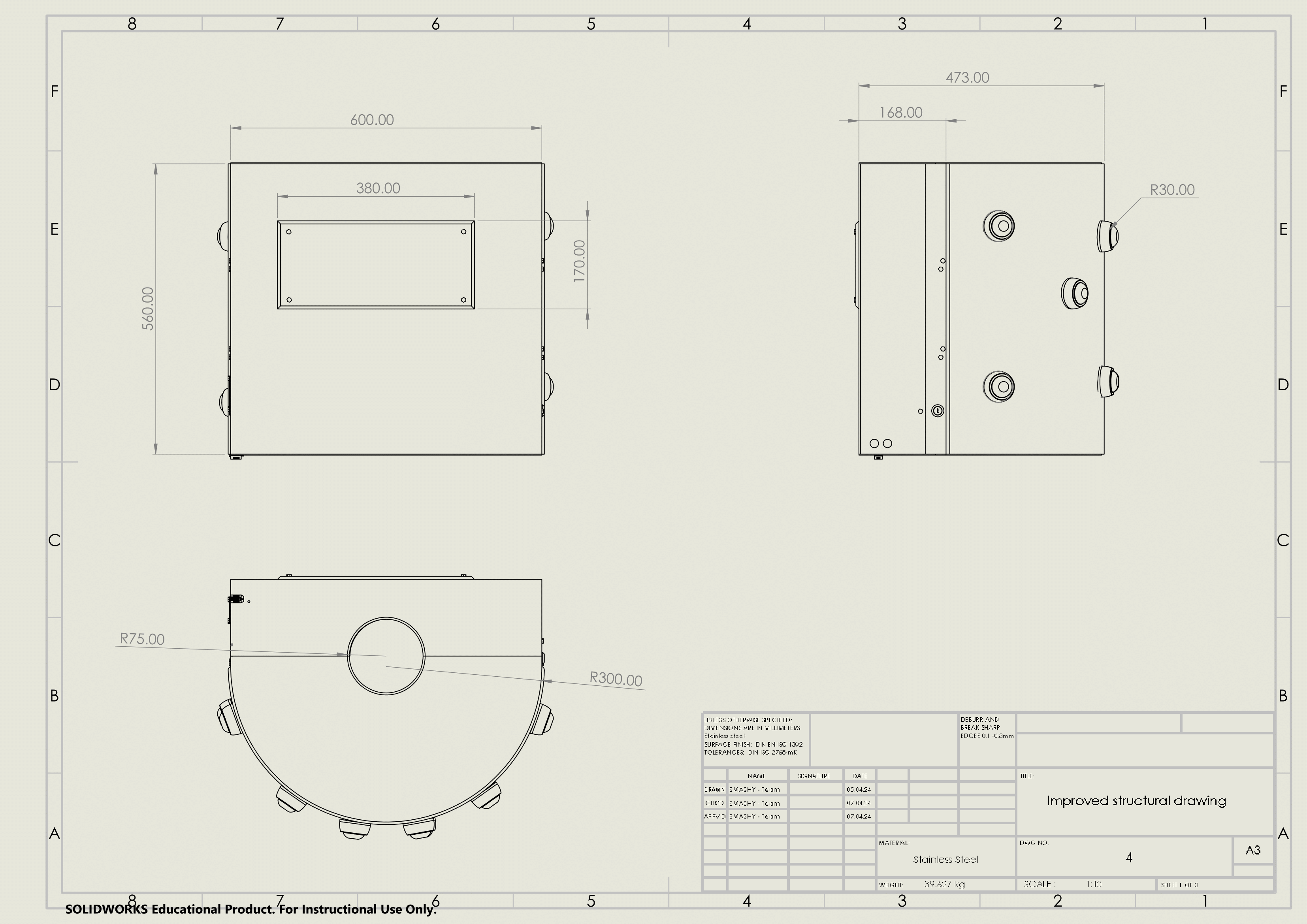
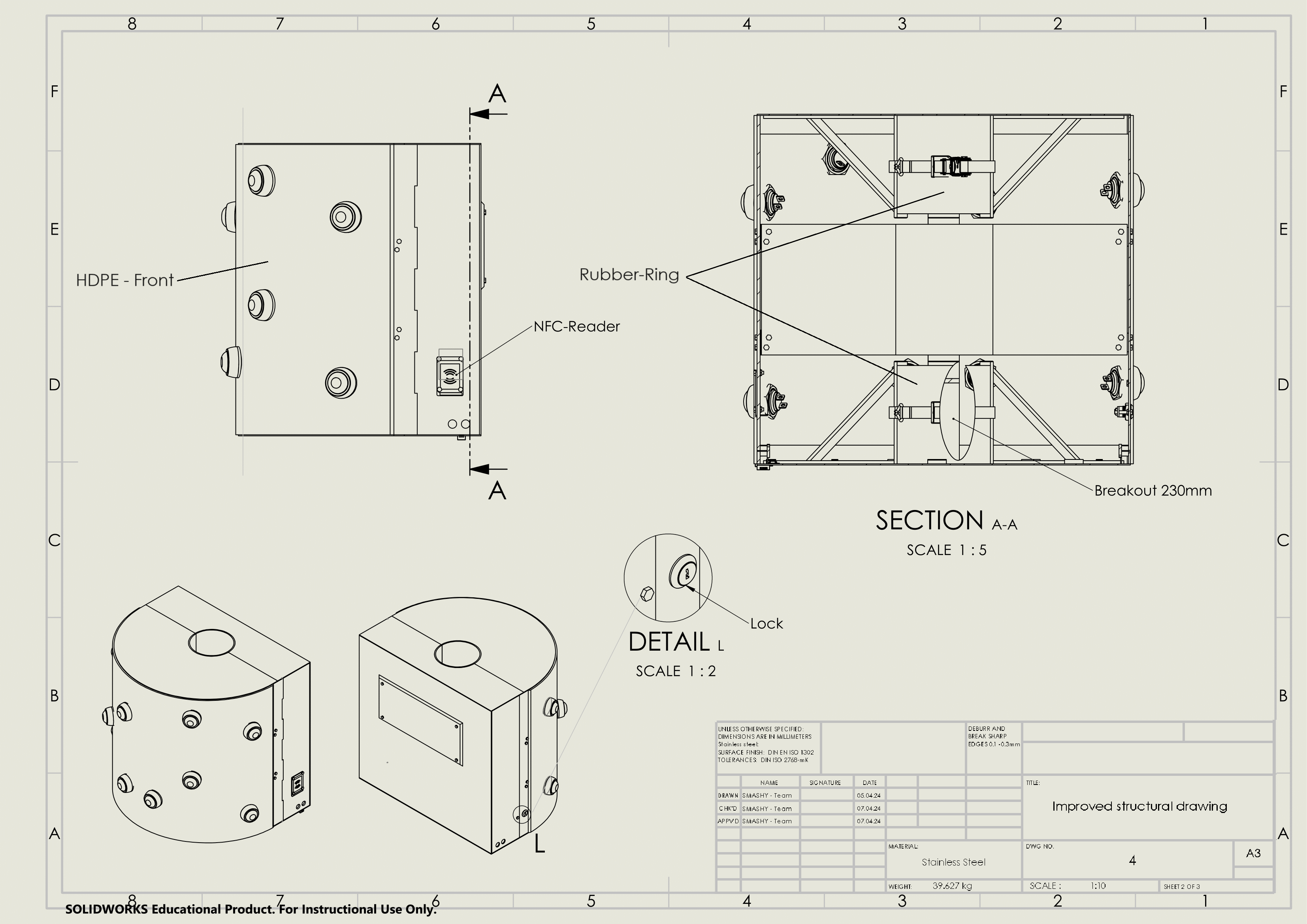
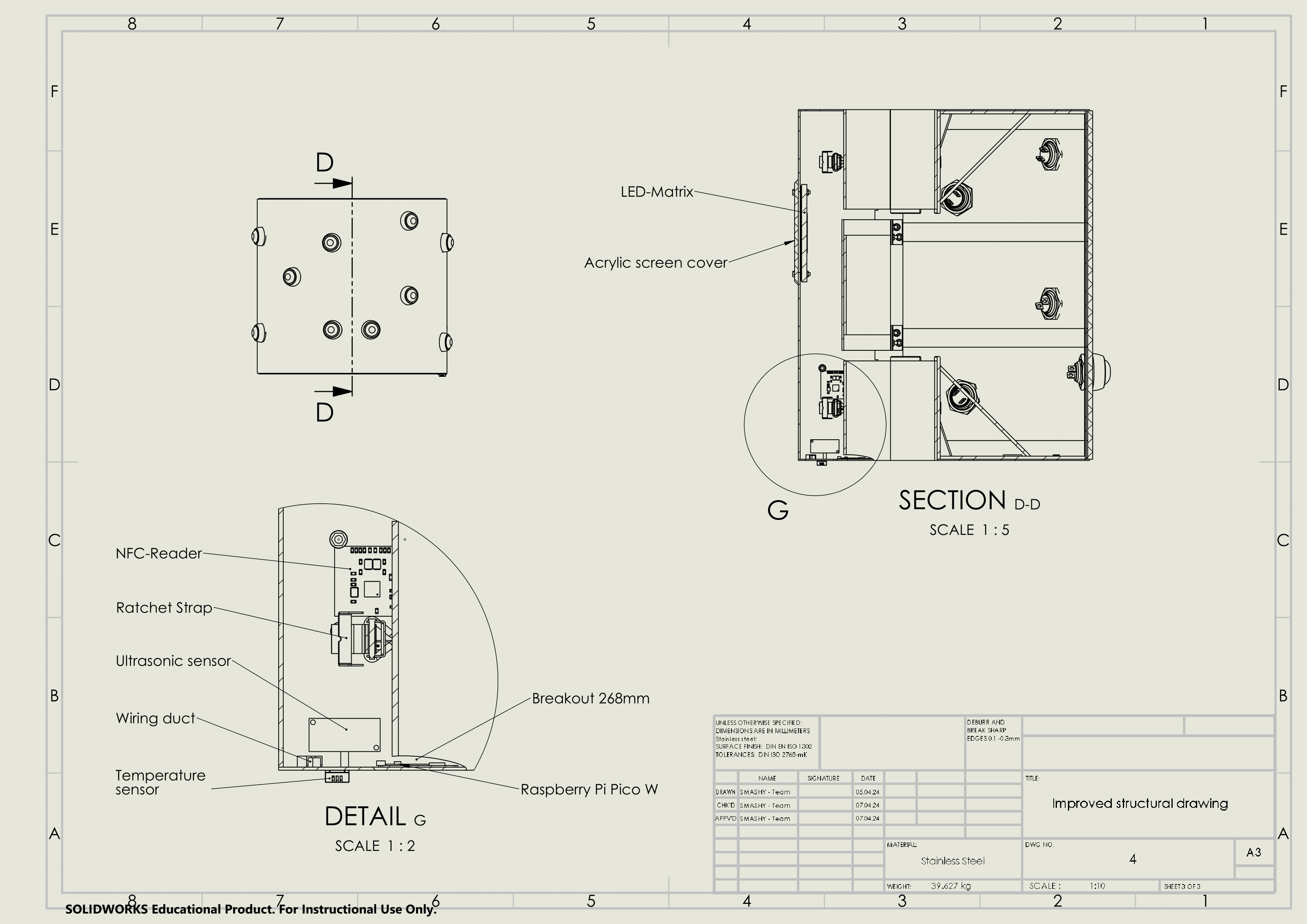
7.3.1.4 3D model and analysis
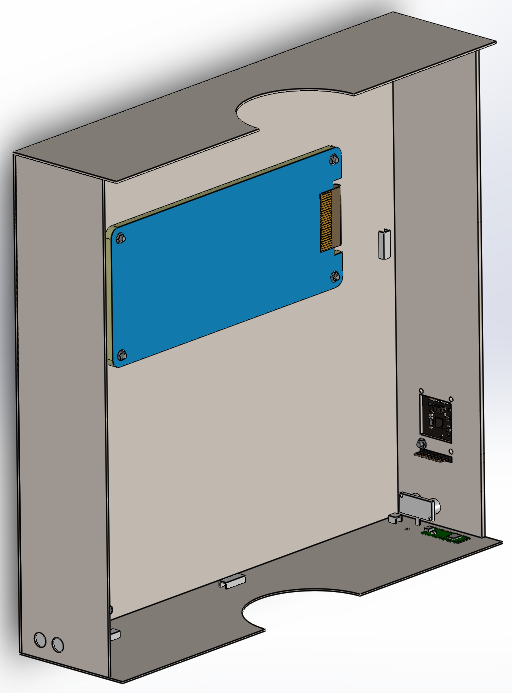
While constructing the 3d Model of SMASHY, several obstacles on the way were faced and some logical mistakes were discovered. As the construction in SolidWorks was started in an early stage of development, at which point only rough sketches and thoughts of the design existed, this was to be expected and used as a step in the development of the final product. Therefore, occurring problems in the design like constructural faults or wrong dimensions were then detected and new solutions were designed. An example for this was the fact that a cut out in the internal structure was necessary in order to fit the button on the traffic light into our model as displayed in Figure 58. This had not been implemented in the first sketches but had to be respected, which led to a slight change in the design, resulting in 6 smaller triangles connected with an outer ring. At first, those triangles where just supposed to be welded onto the top and bottom part, but as these were then designed smaller in order to save weight, the design was changed to them now being connected with the outer rings. This way, it now serves as a whole internal structure with great stability and sturdiness. Together with the attachment parts, the HDPE front, the top and bottom and the lid, which adds extra stability from the other side when attached to the pole, the whole structure is stable by itself, as to be seen in Figure 65 . The backside part that can be opened contains less structural parts and serves as a place to store the technical elements, like the microcontroller, the screen and the different sensors. To gain stability for the whole module when it’s closed, the backside overlaps onto the front part ensuring a stable connection of both of these parts (Figure 64).
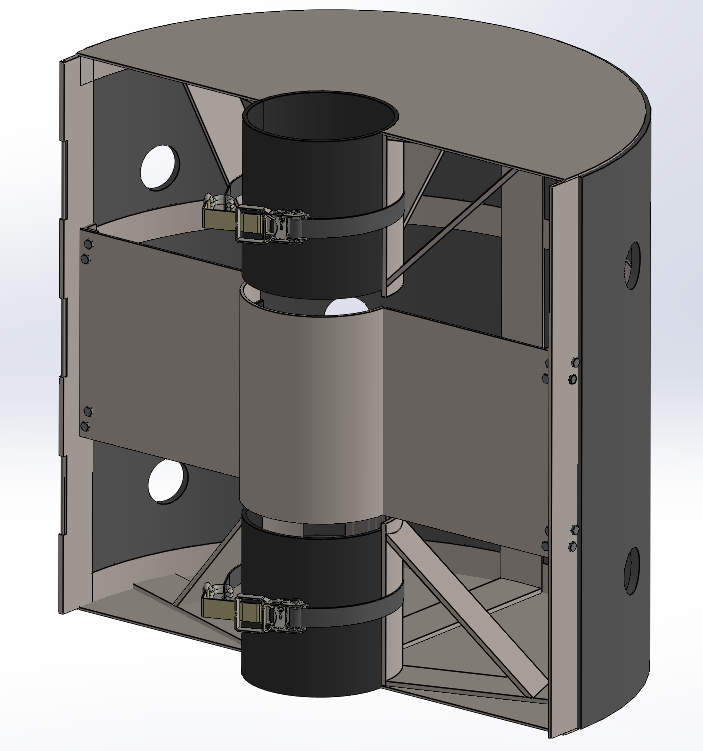
In the following, simulations regarding the functionality of the Smashy module are going to be conducted. It consists of FEM simulations, that were generated in Solidworks to determine the displacement, the stress, and the compliance with the factor of safety, equaling 2. In the simulations, only the front part of the module is going to observed, as this is the part where external forces are going to be applied. Apart from that, the rest of the structure just gives an extra support from the other side and therefore only improves the overall sturdyness, which means that a successful simulation like this gives evidence, that the module is also functional as a whole. Apart from that, all unnecessary parts that are not structural and do not contribute to the stability were removed (Figure 65).
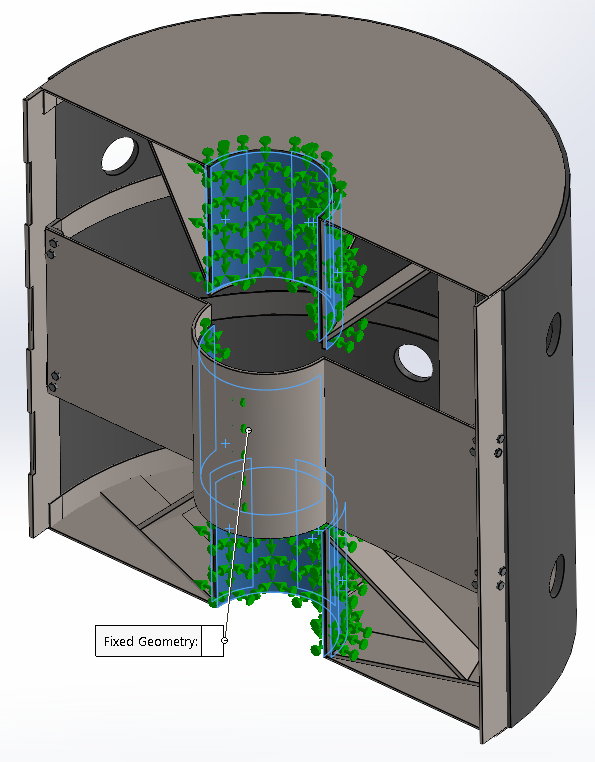
Used fix points are the rubber-rings that have contact with the traffic light pole, as well as the vertical component of the triangles which are strapped on, as displayed in Figure 66 below. This can be done, because the strap generates sufficient friction to hold those parts in place with the simulated loads applied. For the simulation, the ratchet straps and outer rubber-rings were removed as shown.
The forces that were applied in the simulations are 1000 N from the top, a torque of 500 Nm applied around the vertical axis in the center and a force of 350 N in each of the three button positions that were selected. This equals a person standing on top of the module with his bodyweight evenly distributed, another or multiple persons hitting 3 buttons at the same time with a lot of power and someone pulling it back on the side, also with a force equal to his complete weight. These 3 buttons were selected as they display the region with the biggest risk of high displacement and stress, regarding their position relative to the framework.
The simulations were also performed with each load only by itself, aswell as in combinations with multiple loads at the same time as it’s possible that they influence themselves and result in a decrease of displacement or stress. In the following, the highest simulated deformations and stresses that resulted are presented, which occurs with all loads applied simultaneously.
As to be seen in the simulation shown in Figure 67, the maximum stress does not surpass 15.02 N/mm^2 , which applies to the annotated point. The main internal structure is made of stainless steel with a yield strength of 172.34 N/mm^2. This shows that it's going to withstand the applied forces with a high factor of safety (Figure 68).
In Figure 69, the maximum displacement is visible, which occurs on the side of the HDPE plate, equaling 0.4909 mm. Regarding the fact that the forces in this simulation were applied to the edges where the buttons sit, a lower displacement can be expected in the actual model. This is because the force will be applied on the button and then to a rubber ring, which distributes the force of hitting the button on to a bigger surface area. Therefore this displacement is still acceptable.
The factor of safety (FoS), is displayed in Figure 70, with the FoS of above 50 being shown in red. The minimal factor of safety values 11, which exceeds the minimum value of 2 we set. In this case it would be possible to use different materials with a lower yield strength or design the parts to be thinner, so less material is used. But because this is only a static simulation, dynamic and continuous loads and stresses over a long period of time are not simulated but occur in the real use case. That’s why the structure like this is acceptable and reasonable and due to fact that the other simulations were successful too, no changes to the structure must be made.
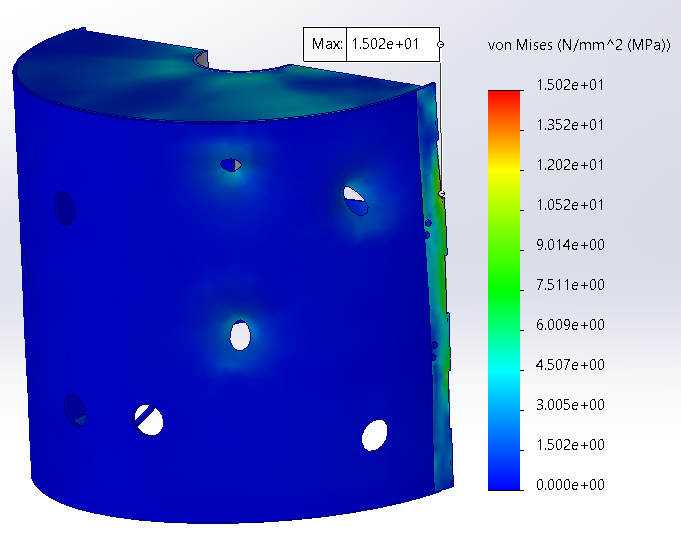
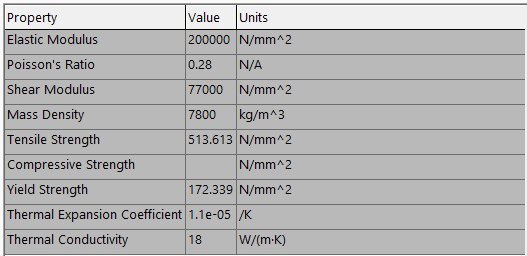
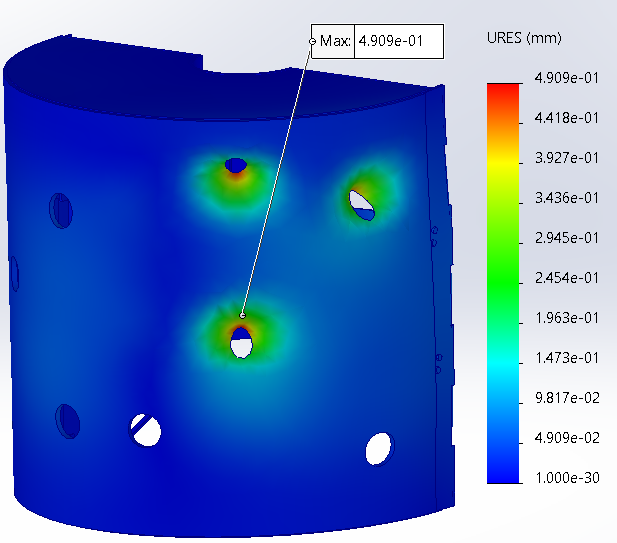
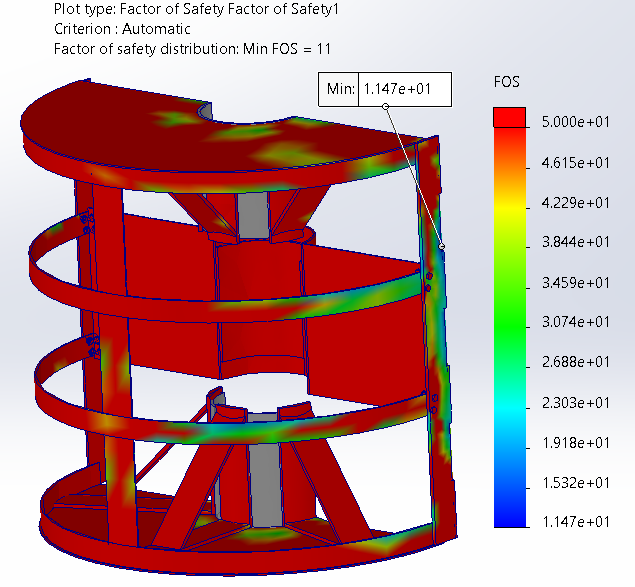
7.3.2 Smart System
Hardware
A first overview of the microprocessors that can be used are shown in Table 21. This gives the team a good overview of the opportunities of each processor.
| Name | Wireless Connection | Main Characteristics | Dimensions |
|---|---|---|---|
| Arduino Uno Rev3 SMD | None | Microcontroller: ATmega328P / USB connector/ Pins: 13 built-in LEDs, 14 digital I/O Pins, 6 analog input pins, 6 PWM input pins/ POWER: Input: 3.3 V; I/O Voltage recommended: 7-12 V; Input Voltage limit: 6-20 V; DC Current per I/O Pin: 20 mA / Clock speed 13 MHz/ Memory: 2 kB SRAM, 32 kB flash | 68.6 x 53.4 mm |
| Raspberry Pi pico W | Wifi & Bluetooth | Microcontroller: RP2040 with Dual-core Arm Cortex-M0+ processor / USB connector / Pins: 26 GPIO's, 3 analog input pins / POWER: Input: 3.3 V; supported input power: 1.8-5.5 V / Clock speed: flexible running up to 133 MHz/ Memory: 264 kB on-chip SRAM; 2 MB on-board QSPI Flash | 21 x 51 mm |
| SparkFun RedBoard Artemis | BLE radio | USB-C connector / Pins: 24 GPIO's; 21 PWM / POWER: Input: 3.3 V; supported input power:2-5 V / Clock speed: 48 MHz / Memory: 384 kB RAM, 1MB flash | 49 x 21 mm |
| Wemos D1 R32 C/ESP32 | Wi-Fi and Bluetooth | micro-USB connector / / POWER: Input: 3.3 V; supported input power: 5-12 V / Memory: 520 kB RAM, 32 MB flash | 68.5 x 53.7 mm |
For the choice of microcontroller, the team has opted for the Raspberry Pi Pico W, as it has many pins which is convenient for connecting various sensors. This microcontroller also has the advantage of having WiFi and Bluetooth, allowing adjustments to the system as well as obtaining information from the system to be done remotely.
The senors that will be used in SMASHY are shown in Table 22, together with an explanation on what it is and why it will be used for the product.
| Component | Description | Why use this? |
|---|---|---|
| Temperature and humidity | Measures the actual temperature and humidity at the moment | To give the people passing by some information on the weather |
| Ultrasonic distance sensor | It's a non-contact type of sensor used to measure an object's distance and velocity | In this way, there can be a count of how many people are passing by or how many people passed the red light that day. |
| Arcade buttons | A button with lights. | The button has to light up when it has to be pushed. |
| Light-dependent sensor | A phototransistor that is used to detect light levels and respond to light. | The sensor will be used to track if the traffic light is green or red. |
| RFID/NFC transponder | Enables devices to read information stored in the NFC tag. | Enables app users to communicate with their device to the module to exchange information. |
The module is in the open air and thus exposed to the sun and other natural influences. Because of this the decision of the screen has to be well-considered. The possibilities are compared in Table 23.
| Component | Description | Pro's | Con's |
|---|---|---|---|
| Liquid Crystal Display (LCD) screen | A type of flat panel display that uses liquid crystal to display information | Energy efficient, very high resolution, no burn-in | Expensive, viewing angle limited, usual size is small so harder to find bigger displays, limited character |
| LED matrix | Is a display that uses light-emitting diodes as pixels | Easy to use, durable, highly visible | Not for close viewing, uses more energy |
| RGB display | Representing the colors used on a digital display screen | Energy efficient | Complexity, not as durable |
For SMASHY the use of a LED matrix is chosen, because it's easier to put a lot of text on a small screen by letting the information roll by. Also, it has good visibility in bright light.
List of materials and components
Table 24 has all the materials and components that would be needed to make SMASHY. The price calculation is for the materials only, not for the labor cost, cost of production, or shipping.
| Nr. | Item | Item of SMASHY | Provider | Quantity | Unit Price [€] | Item Cost [€] | |||||||
|---|---|---|---|---|---|---|---|---|---|---|---|---|---|
| Components | |||||||||||||
| 1 | Raspberry Pi pico W | Electronics | Mauser | 1 | 5.58 | 5.58 | |||||||
| 2 | Temperature and humidity sensor (SEN0527) | Electronics | Mauser | 1 | 3.63 | 3.63 | |||||||
| 3 | I/O expander (MCP23017-E/SP) | Electronics | Mauser | 1 | 1.57 | 1.57 | |||||||
| 4 | Ultrasonic sensor (4007 HC-SR04) | Electronics | Mauser | 2 | 3.67 | 7.34 | |||||||
| 5 | Resistor 220 Ohm () | Electronics | Mauser | 10 | 0.256 | 2.56 | |||||||
| 7 | LED matrix | Electronics | Bottnroll | 1 | 28.6 | 28.6 | |||||||
| 8 | Breadboard Adafruit (4539) | Electronics | Mauser | 1 | 4.65 | 4.65 | |||||||
| 9 | Cables 200mm (ZW-MF-20) | Electronics | Mauser | 2 (20 pcs.) | 5.23 | 10.46 | |||||||
| 10 | Cables 100mm (ZW-MF-10) | Electronics | Mauser | 1 (20 pcs.) | 4.43 | 4.43 | |||||||
| 11 | Arcade button | Electronics | Botnroll | 10 | 3.95 | 39.5 | |||||||
| 13 | RFID/NFC Module (ANT7-T-M24SR64) | Electronics | Mauser | 1 | 4.58 | 4.58 | |||||||
| 14 | Hinge piano (steel) | Material | - | 2 (x 0.45 kg) | 2.55 / kg | 2.30 | |||||||
| 15 | Radial pin tumbler lock | Material | Leroy merlin | 1 | 6.19 | 6.19 | |||||||
| 16 | Bolt clamp band | Material | Leroy merlin | 2 | 16.50 | 33.00 | |||||||
| Materials | |||||||||||||
| 1 | Stainless steel | Material | - | 37.811 kg | 2.55 / kg | 96.42 | |||||||
| 2 | Recycled HDPE (0,97 g/cm3) | Material | - | 5277 cm3 | 1.11 / kg | 5.12 | |||||||
| 3 | Acrylic glass 500x250x4 mm | Material | Leroy merlin | 1 | 8.99 | 8.99 | |||||||
| 4 | Rubber strip | Material | Leroy merlin | 1 m | 8,695 / m | 8.70 | |||||||
| Total | 273.62 | ||||||||||||
Electrical schematics
At the start of the project, a general Blackbox was developed as seen in Figure 71. Depending on the type of specific features of the module the exact components cannot be defined yet. For example the display may become an LED display, but other displays are not yet excluded. The display will show information to pedestrians across the street. For the Buttons, feedback is created with light after pressing a button which is why the different components are grouped. The needed sensors are temperature, humidity, ultrasonic, and an NFC reader/writer to collect data. These values will be processed by the module and displayed on the module. At the edge of the box there is a converter to convert the power used in the traffic light control system to the operating voltage the game will be played on. After the converter, it is connected to the power supply and the power grid. Also, a connection out of the box is the connection with the traffic light to communicate the state of the light.

After analysing the components a schematics has been drawn up as seen in Figure 72.

Power budget
The following table presents the total power budget for SMASHY. A power budget is essential for effectively managing the available power resources within the system or network. By estimating the power consumption of individual components and ensuring it does not exceed the total power supply, it's easier to prevent power failures and maintain optimal performance of the product. Table 25 provides a clear overview of the power consumption of various components.
| Component | Amount | Operating voltage (V) | Current usage (mA) | Power consumption per component (mW) |
|---|---|---|---|---|
| Raspberry Pi Pico W | 1 | 5.0 | 93.000 | 465.0000 |
| Ultrasonic sensor | 2 | 3.3 | 15.000 | 49.5000 |
| Temp. & humidity sensor | 1 | 3.3 | 0.023 | 0.0759 |
| LED Matrix Display | 1 | 5.0 | 4000.000 | 20000.0000 |
| Arcade Button Light | 10 | 12.0 | 100.000 | 1200.0000 |
| RFID/NFC Module | 1 | 3.3 | 0.500 | 1.6500 |
| Total power consumption (mW) | 32565.7300 | |||
Software
User cases
Two primary use cases can be identified for the software: one for the smart device and another for the app.

In Figure 73, the different user roles are the player, passerby, and installer. The player is the only one actively engaged in the game. The passerby simply walks or drives by the smart device. The installer is responsible for setting up the game at the designated location. It is important to note that the data read by the system is crucial as it involves interactions from all user types. The app has a simpler use case, involving only one user.

Data can be stored and accessed either locally or, preferably, in the cloud, as illustrated in Figure 74. Even in the latter case, it is essential that the user can temporarily store scores without a cloud connection.
Development language choice
Based on different criteria, the different development languages that could be used for the smart device are compared to know which one would be the best to use, see Table 26.
| Component | MicroPython | C++ |
|---|---|---|
| Ease of use | Easy | Medium |
| Complexity | Low | Moderate |
| Library availability | Moderate | Extensive |
| Community support | Growing | Extensive |
| Compatibility | Extremely | Moderate |
As the microcontroller chosen works well with MicroPython, it will be chosen as the development language of the smart device. It will be developed using Thonny. Another alternative language that could be used is C++. C++ is a good alternative but the Raspberry Pi Pico W is focused on MicroPython.
Another comparison is made to decide the development language that can be used to create the application, see Table 27. This was mainly done to pick the easiest language to use/learn, because Stempe Safety has little experience in app development.
| Component | Python | JavaScript |
|---|---|---|
| Ease of use | Easy | Medium |
| Complexity | Low | Moderate |
| Library availability | Low | Extensive |
| Community support | Low | Extensive |
| Compatibility | Moderate | Extensive |
| Experience | Moderate | None |
In most cases, JavaScript is the preferred language for app development, but as our team has some experience in Python and Python language, this will be the chosen language. This decision has been made for the prototype as there is not enough time to learn a new programming language in the span of this project.
Component diagram
Figure 75 illustrates the general communication between the different parts of the system. Data storage will be handled using JavaScript Object Notation (JSON) format. Communication between the microcontroller and the app will be done through an NFC Data Exchange Format (NDEF) message that contains the achieved score. Communication with the storage will involve straightforward reading and writing operations.

7.3.3 Packaging
As SMASHY isn't marketed to individual consumers, the primary aim of its packaging is to safeguard the product during transit. Prioritizing sustainability and practicality over aesthetics, this packaging solution presents an eco-friendly and functional approach.
The outer packaging is a foldable wooden box with wheels, facilitating easy transportation and minimizing carbon dioxide (CO2) emissions during return shipping. Crafted from wood sourced from European forests with Programme for the Endorsement of Forest Certification (PEFC) and the Forest Stewardship Council (FSC) certifications [PEFC UK, 2021], it aligns with sustainability principles by promoting forest preservation and utilizing European wood. Aluminum edging and connections render the box lightweight and manageable, with the foldable corners reducing its volume by 80% during return shipment. Embracing a reusable and collapsible packaging solution, the Stempe Safety team minimises waste, supports sustainability, and decreases CO2 emissions.
Down below attached in Figure 76 is shown how the product looks assembled and disassembled, without wheels. The final packaging with wheels can be seen in Figure 77.
The inner packaging consists of foam inside the wooden box as shown in Figure 78, crafted from polyurethane foam offcuts to cushion the game module against shocks during transit [Zouch, 2024]. This choice of materials not only ensures the recyclability and reusability of the packaging but also promotes the use of sustainable resources. By utilizing waste materials and renewable sources, Stempe Safety’s ecological footprint and contributes to a circular economy.
Given the game module's dimensions (600 mm width, 560 mm height, and 470 mm depth) and weight (approximately 40 kg), a robust packaging solution is essential. The combination of the strong wooden box and foam interior effectively supports and shields SMASHY throughout transportation, guaranteeing the package's integrity and reusability.
The box features a solid bottom, with the wood measuring around 20 mm thick in this area, while the walls and top can be thinner (approximately 10 mm thick) since their primary function is protection. With dimensions of 800 mm width, 660 mm depth, and 670 mm height, the box provides enough space for foam protection while remaining collapsible for the return shipment. Aluminum corner pieces enable the folding of the walls into a flat piece for transport ease, while the wheels make sure the maneuverability on the ground stays easy without requiring a forklift.
Additionally, the module will be strapped down on the inside making sure it stays fixed during transport. The same access points and straps will be used to fixate the disassembled box down so that everything stays together on the way back.
In summary, SMASHY's packaging prioritizes functionality and sustainability over aesthetics. The foldable wooden box with wheels, made from sustainably sourced wood and aluminum, ensures easy transportation and reduces CO2 emissions during return shipping. The foam inner packaging, crafted from recycled polyurethane foam offcuts, cushions the game module and promotes recyclability and reusability. This packaging supports Stempe Safety's commitment to sustainability and a circular economy.
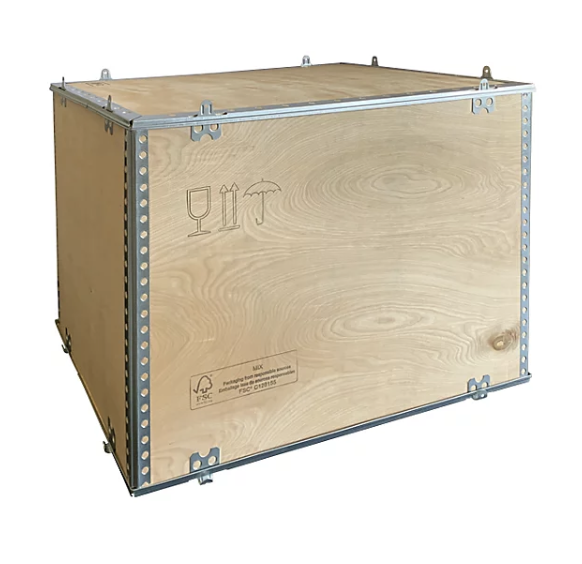
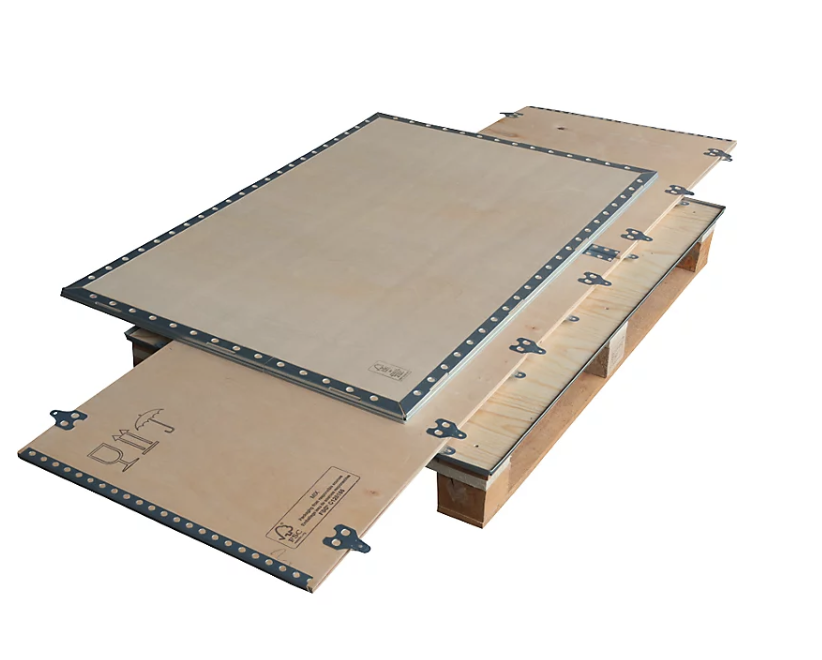
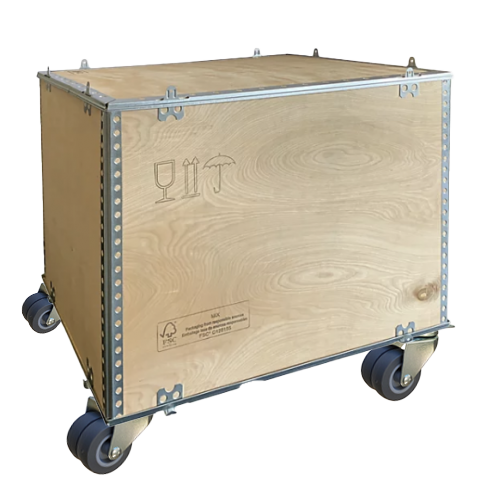

7.4 Prototype
The main changes seen in the prototype compared to the final design are the materials, components and dimensions used and some differences in features that might not be the same as the final product, but it works as proof of concept.
7.4.1 Structure
To produce a SMASHY prototype, the structure had to go through certain modifications. The stainless steel is replaced with wood for both the structural part and the outside part. The internal structure is replaced with 3 wooden beams, the outer part is made by MDF. The HDPE is replaced by a acrylic glass plate, which is bent by using a heat gun to create the curve. A downscale of approximately 45 % in comparison to the final product is done, because of the dimensions of a material from school that was available.
The preparations for the making of the prototype contain the making of a parts plan. In the plan seen in Figure 79 all separate pieces are drawn with measurements and other useful information. The MDF plate is drawn with all the needed pieces as efficiently as possible, see Figure 80. In that way, the team wants to reduce the unuseful leftovers.
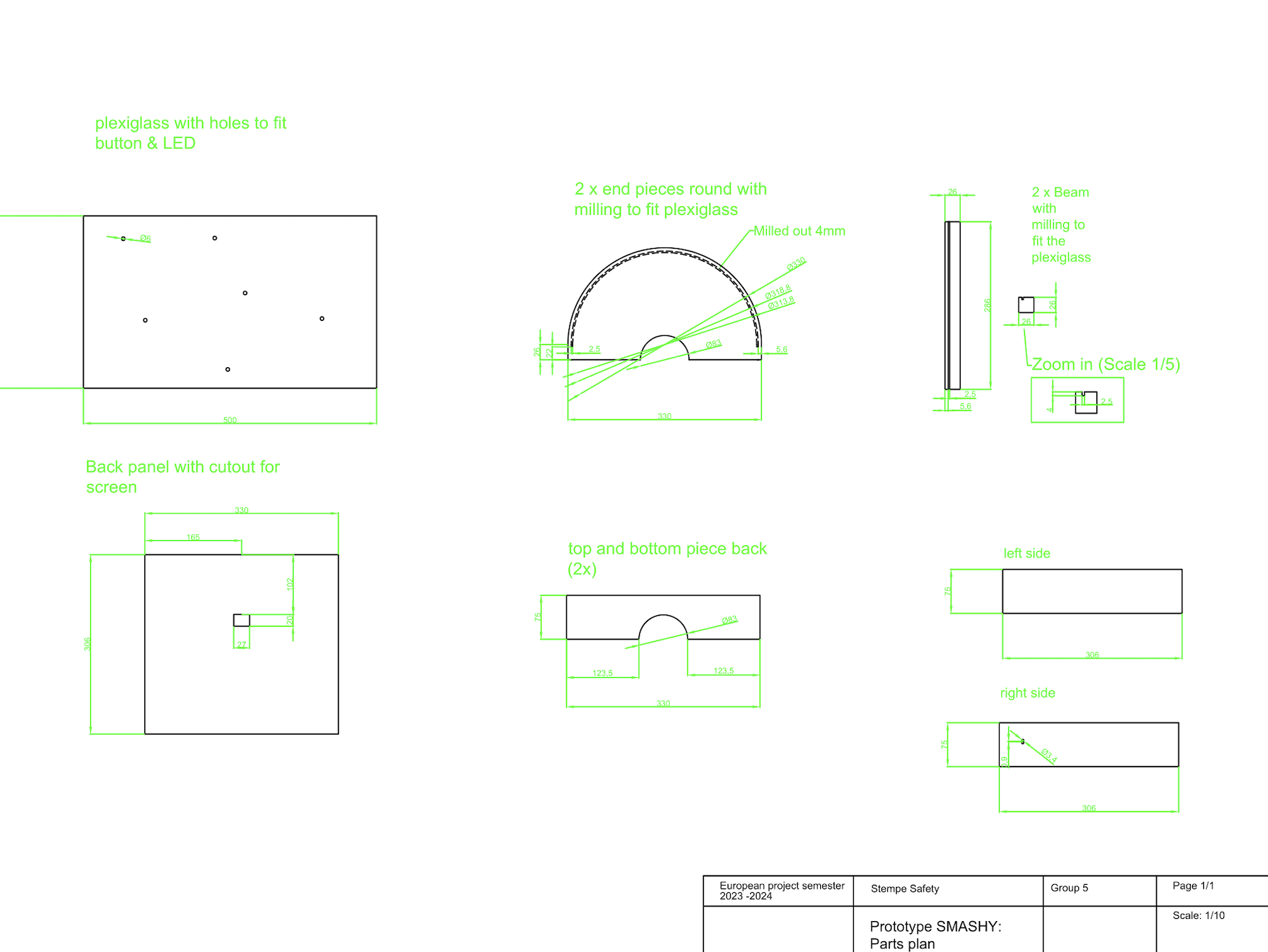
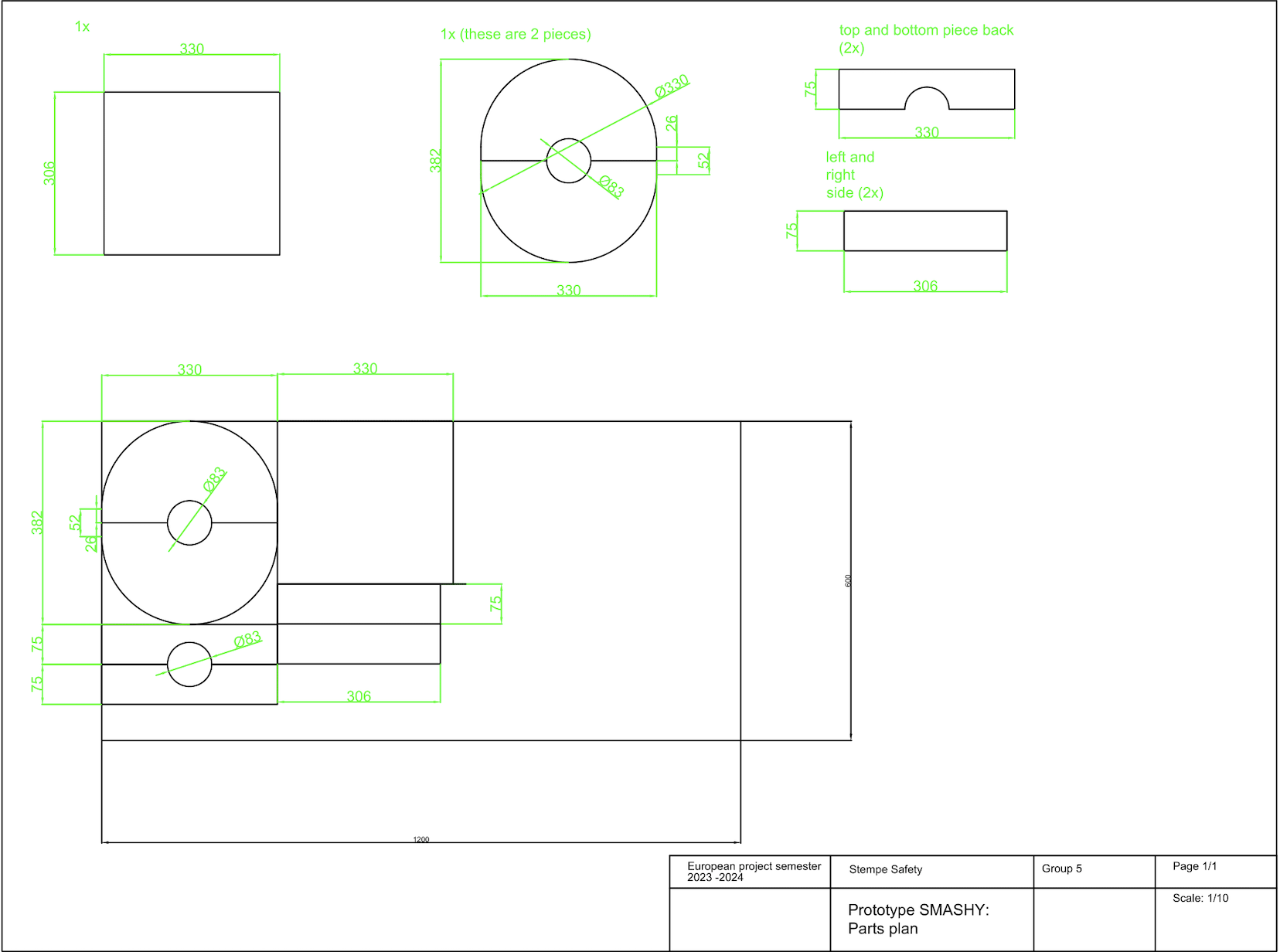
back part
The back/box parts are 5 wooden plates put together, on the inside corners a beam is used to reinforce the structure. The cutout is used to fit the screen in, see Figure 81. On the side, there are two holes to fit the ultrasonic sensor.
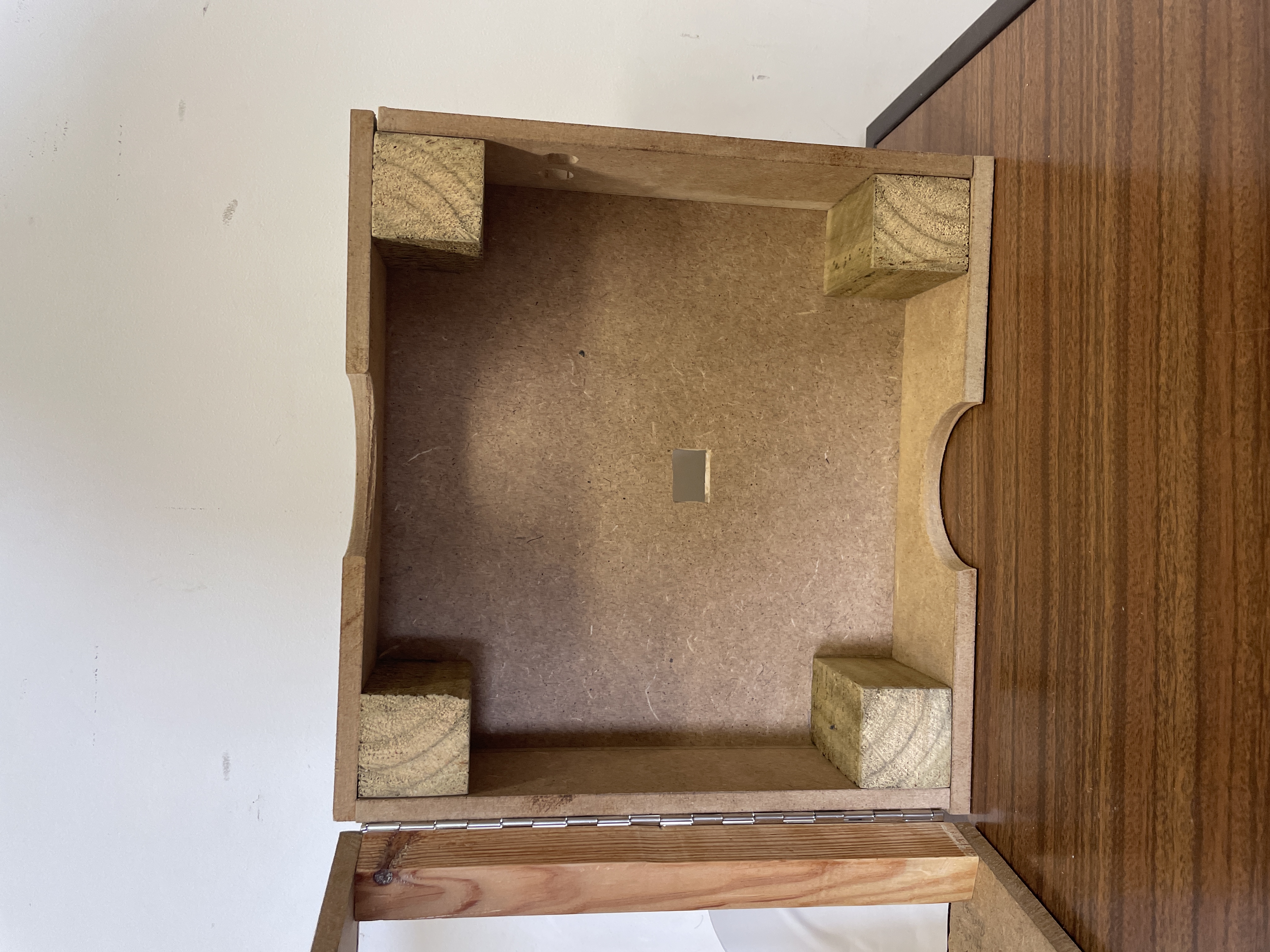
Front part
The front part is constructed with both wood and acrylic glass. There are again 2 beams used to have a good structure and to fit in the end sides of the glass plate. On the top and bottom, there are 2 D-shaped wooden panels, these are also used to fit in the glass plate, see Figure 82. The acrylic glass is bent and fitted into the slots on the top, bottom and endings, see Figure 83.
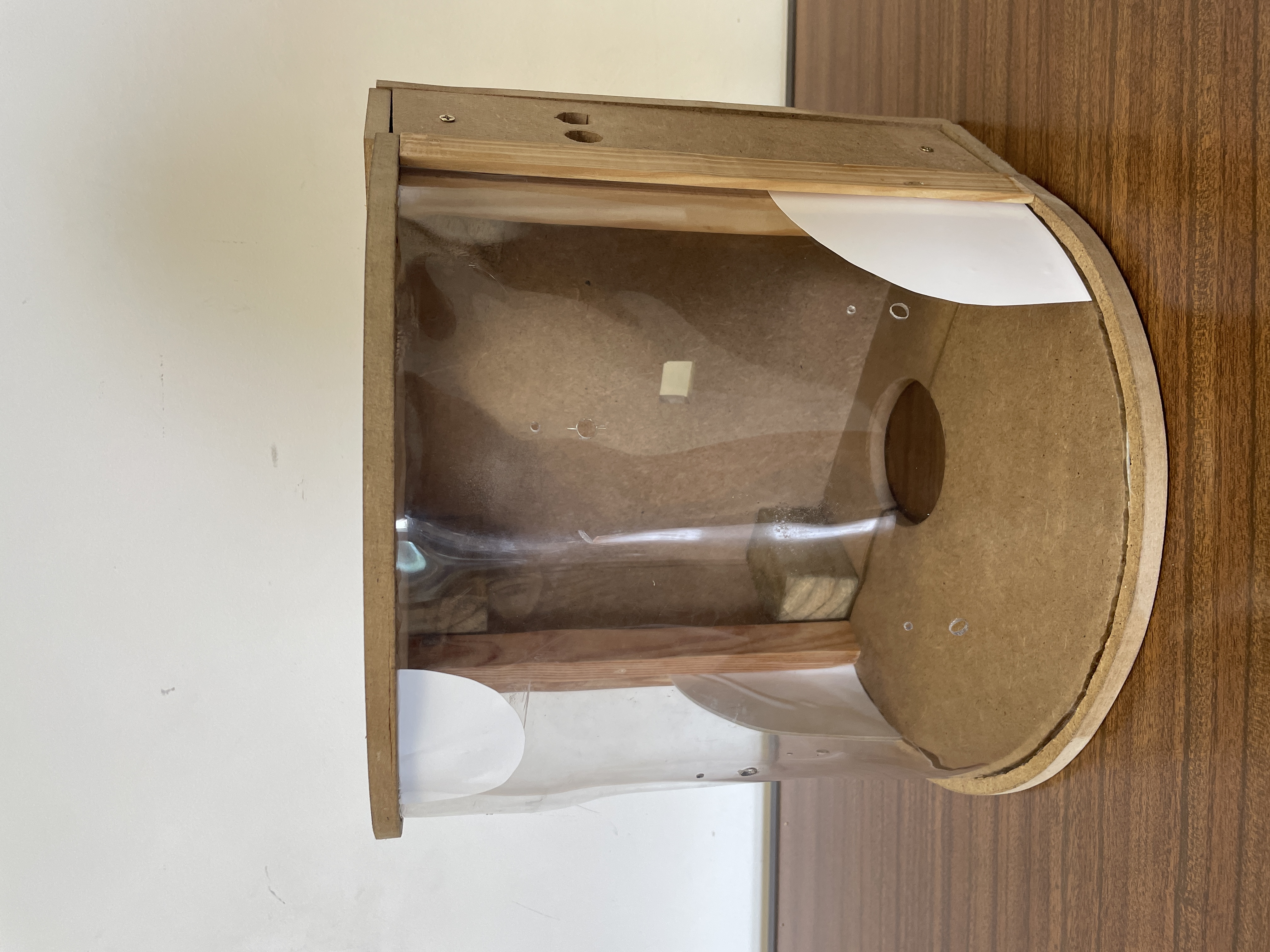
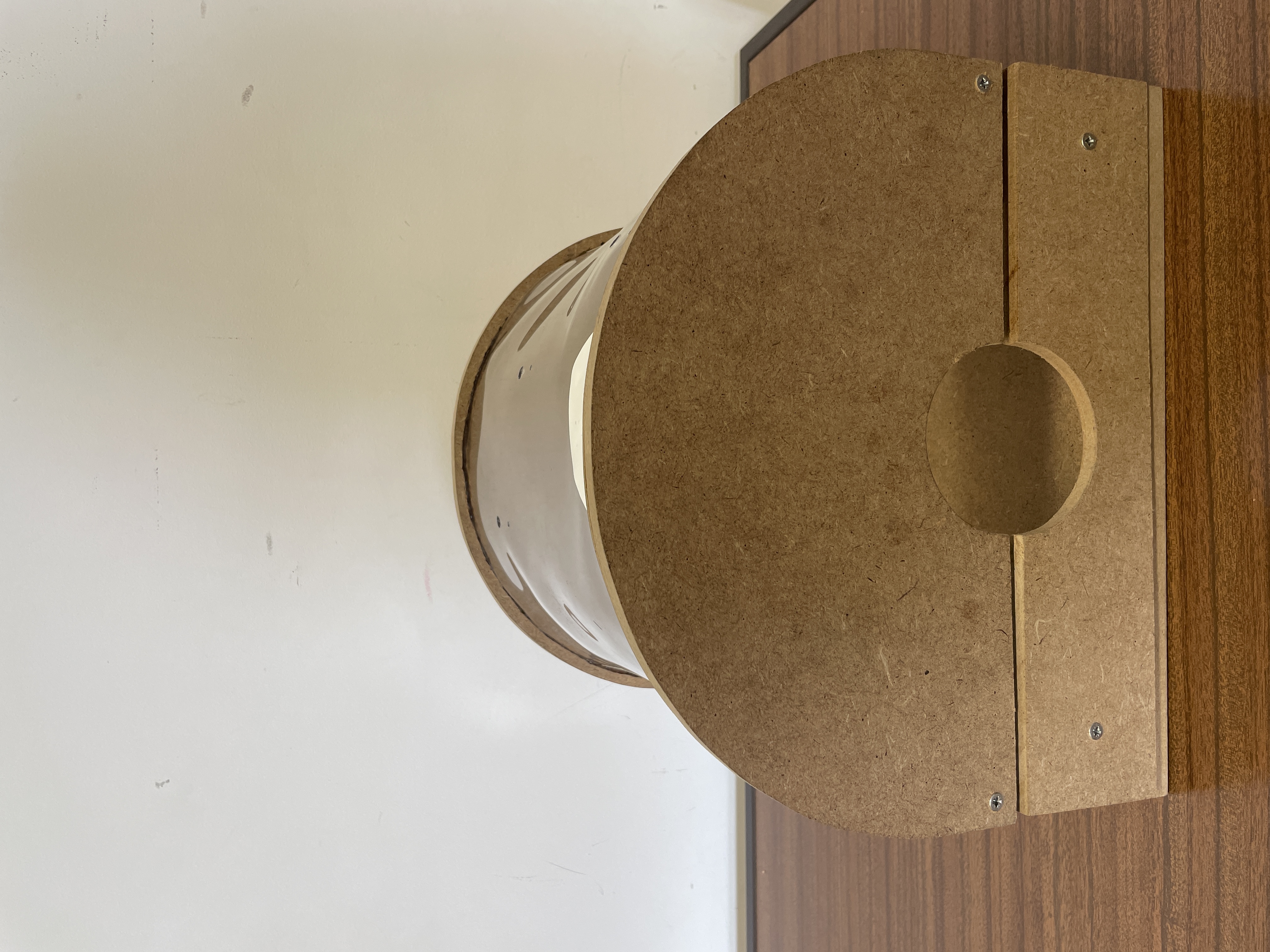
7.4.2 Hardware
7.4.2.1 list of materials and components
Stempe Safety made a list for the supervisors to order components and materials that will be needed for the making of the prototype, the needed products can be seen in Table 28.
| Nr. | Item | Item of SMASHY | Provider | Quantity | Unit Price [€] | Item Cost [€] | |||||||
|---|---|---|---|---|---|---|---|---|---|---|---|---|---|
| Components | |||||||||||||
| 1 | Raspberry Pi pico W | Electronics | Mauser | 1 | 5.58 | 5.58 | |||||||
| 2 | Temperature and humidity sensor (SEN0527) | Electronics | Mauser | 1 | 3.63 | 3.63 | |||||||
| 3 | I/O expander (MCP23017-E/SP) | Electronics | Mauser | 1 | 1.57 | 1.57 | |||||||
| 4 | Ultrasonic sensor (4007 HC-SR04) | Electronics | Mauser | 1 | 3.67 | 3.67 | |||||||
| 5 | Resistor 220 Ohm () | Electronics | Mauser | 10 | 0.256 | 2.56 | |||||||
| 6 | Light dependent resistor (PDV-P8103) | Electronics | Mauser | 1 | 0.96 | 0.96 | |||||||
| 7 | OLED display (DFR0648) | Electronics | Mauser | 1 | 9.21 | 9.21 | |||||||
| 8 | Breadboard Adafruit (4539) | Electronics | Mauser | 1 | 4.65 | 4.65 | |||||||
| 9 | Cables 200mm (ZW-MF-20) | Electronics | Mauser | 2 (20 pcs.) | 5.23 | 10.46 | |||||||
| 10 | Cables 100mm (ZW-MF-10) | Electronics | Mauser | 1 (20 pcs.) | 4.43 | 4.43 | |||||||
| 11 | Tactile Switch (TS02-66-170-BK-160-SCR-D) | Electronics | Mauser | 6 | 0.10 | 0.60 | |||||||
| 12 | LED light (LTL-1CHG) | Electronics | Mauser | 6 | 0.09 | 0.54 | |||||||
| 13 | RFID/NFC Module (ANT7-T-M24SR64) | Electronics | Mauser | 1 | 4.58 | 4.58 | |||||||
| 14 | RFID card (RFID1356-ISO) | Electronics | Mauser | 3 | 1.11 | 3.33 | |||||||
| 15 | Hinge piano (500 mm) | Material | Leroy Merlin | 1 | 3.29 | 3.29 | |||||||
| 16 | Screws 2.5×10 mm | Material | Leroy Merlin | 1 | 4.19 | 4.19 | |||||||
| 17 | Screws 4×25 mm | Material | Leroy Merlin | 1 | 1.69 | 1.69 | |||||||
| 18 | Wood beam 22x22x2600 mm | Material | Leroy Merlin | 1 | 2.59 | 2.59 | |||||||
| shipping | 0 | ||||||||||||
| Materials | |||||||||||||
| 1 | MDF Plate (1200x600x10 mm) | Material | Leroy Merlin | 1 | 9.99 | 9.99 | |||||||
| 2 | Acrylic glass plate (1000x500x2.5 mm) | Material | Leroy Merlin | 1 | 14.99 | 14.99 | |||||||
| shipping | 3.90 | ||||||||||||
| Total | 96,68 | ||||||||||||
The team asked for the materials and components in Table 28, but some leftover materials could be recycled. Because of that, the foreseen downscale of 2/3 became impossible. Instead, the dimensions of the product were adjusted according to the leftover acrylic glass piece. That means there was a downscale of approximately 45 % in comparison to the final product. There was a beam available with other dimensions that we used as well. Materials recovered from school are: wooden beam, acrylic glass plate, screws and cables.
In general the stainless steel was replaced by MDF, and the HDPE was replaced by acrylic glass so that it was possible to bend it. In the prototype, there is no lock and the internal skelet is not created, because this would go out of our scope for the proof of concept. In terms of components, the arcade buttons are replaced by small buttons with separate lights, to give a better idea of the button there is a 3D printed piece to make it bigger. The LED matrix screen is replaced by an OLED screen because an LED matrix is too expensive and too small it down its too hard to read.
7.4.2.2 Detailed schematic for the prototype

For the prototype the electrical schematics had to change a bit to adjust for the different components used, as seen in Figure 84.
7.4.2.3 Power budget
For the power budget, there were only a few changes in comparison with the designed solution. The changes for the prototype are:
- Only one ultrasonic sensor
- OLED display instead of a LED matrix
- LED's not inside the button
The total power consumption for the prototype is in Table 29.
| Component | Amount | Operating voltage (V) | Current usage (mA) | Power consumption per component (mW) |
|---|---|---|---|---|
| Raspberry Pi Pico W | 1 | 5.0 | 93.000 | 465.0000 |
| Ultrasonic sensor | 1 | 3.3 | 15.000 | 49.5000 |
| Temp. & humidity sensor | 1 | 3.3 | 0.023 | 0.0759 |
| OLED Matrix Display | 1 | 3.3 | 12.800 | 42.2400 |
| LED | 10 | 3.3 | 30.000 | 990.0000 |
| RFID/NFC Module | 1 | 3.3 | 0.500 | 1.6500 |
| Total power consumption (mW) | 1548.47 |
7.4.3 Software
In the following chapter, the software of the prototype, smart control and app are explained.
7.4.3.1 Smart Control
The chosen development language is C++, because it has enough libraries for all the components. Initially, MicroPython was selected, but due to the lack of libraries for the components the decision was made to switch to C++. The Arduino IDE was used for development because it makes installing the required libraries easy. The program for the smart system on the module has been adjusted and limited to prove the concept of the SMASHY module.

The program for the smart system on the SMASHY module is outlined in the flowchart shown in Figure 85. First, it sets up the screen, NFC module, and necessary variables. Then, it measures the temperature and humidity and displays this data along with the number of passersby, total points, temperature, and humidity.
Next, the system lights up a random light next to a button and checks if the correct button is pressed. If the correct button is pressed, the score is updated. If not, the system skips the update and checks the status of the traffic light. If the traffic light is red, the process loops back to lighting up a random button. If the traffic light is not red, the system turns off all button lights, re-measures the temperature and humidity, and displays the new data.
After that, the system sends the NDEF message and checks if the message has been received by an Android device. If no device is detected, the system stops sending the message after 15 seconds. Finally, the program enters a loop to check if the traffic light is red. Eventually, it loops back to the beginning to measure and display the updated temperature and humidity data again.
7.4.3.2 App
For the development of the mobile application, the Kivy framework is chosen, this is an open-source Python app development framework. This framework was chosen because a group member had some previous experience using this framework. To add, it's open source which is one of the requirements. Furthermore, the application has only been developed for Android as Android allows easy development using developer mode. For the prototype, the app has limited functions and is used to show the concept of SMASHY.

The flowchart in Figure 86 explains how the developed application works. First, the screens are initialized and the system checks if the user has already signed up. If so, they go directly to the NFC screen. If not, they stay on the sign-up screen. On the sign-up screen, users enter their credentials to be added to the player list. Once they sign up, the app switches to the NFC screen and scans for an NDEF message. If a message is received, it reads and updates the player's score. If the user swipes right, the app switches to the score list screen and updates the scores of all players. The score of the user and player list will be displayed. Not shown in the flowchart is the ability to scroll the player list. The user can swipe left to go back to the NFC screen.


In Figure 87 , 88 and 89 the screens of the application can be seen. The decision was made to keep the design simple for the prototype. On the score screen, the user can see their score at the top of the screen and can scroll the list at the bottom of the screen.
While the app is still loading the screen will look like Figure 90.

7.4.4 Tests & Results
The prototype has been tested as outlined in Chapter 1.6, "Functional Tests.", see Table 30. These tests were conducted manually to verify if the program operates as intended.
| Hardware | ||
|---|---|---|
| Item | Result | |
| Buttons | Pass | |
| LED light | Pass | |
| Light reading sensor | Pass | |
| Display | Not applicable | |
| NFC tag | Work in progress | |
| Module | Not applicable | |
| Software | |||
|---|---|---|---|
| User Story | Description | Result | |
| 1 | The user is able to scan the NFC tag. | Pass | |
| 2 | The user is able to hit the buttons and play the game. | Pass | |
| 3 | When the user hits a button, another light turns on. | Pass | |
| 4 | The user is able to start the game when the light turns red. | Pass | |
| 5 | The game should stop when the light turns green. | Pass | |
| 6 | The user is able to read information on the display. | Pass | |
| 7 | The user can see his progress on the app. | Pass | |
After completing the tests for the smart control, the results indicate that all functionalities of the module work as expected, except for the NFC module, which is still a work in progress. The structural stability of the module and display have not been made as part of the prototype, so they are not applicable. To read more about the tests drawn up read Chapter 1.6, "Functional Tests.".
| Use Case | Result |
|---|---|
| Create user | Pass |
| Read NFC | Pass |
| Update user score | Pass |
| Get score list | Pass |
| Open app automatically | Pass |
Some extra tests for the functionality of the app have been done, see Table 31. All these tests returned with a positive result. This successful testing validates the concept of SMASHY. However, since the prototype relies on a local JSON file, it only remains suitable as a prototype and not as a full product.
7.5 Conclusion
Developing this project has been an exciting journey towards making pedestrian crossings safer and more user-friendly. The goal was to tackle the jaywalking problem and, through a lot of research and creativity, the team came up with a unique solution.
A deep dive into existing jaywalking prevention methods showed that there was a big gap in the market. Most solutions out there were either too simple or just not effective enough. This opened up an opportunity for Stempe Safety to create something new and engaging: a game and screen display that would keep people entertained while they wait to cross the street safely. By adding gamification elements such as score tracking and rewards, the aim is encourage safer behavior. The mobile app, with its NFC reader, will make it easy for users to check their scores, see how they rank, and earn rewards.
Working closely with urban planners, transportation authorities, and community members, made sure the solution met the real needs of people who use these crossings every day. Their feedback has been invaluable in shaping this project.
Looking ahead, there’s exciting potential to incorporate smart technology and machine learning to make our solution even better. The team is committed to continuously improve and set new standards for pedestrian safety.
In conclusion, this product marks a significant step towards making pedestrian crossings safer and more enjoyable. Through innovative design, thorough analysis, and community collaboration, we've developed a solution that addresses jaywalking effectively and enhances the pedestrian experience in urban areas.
8. Conclusions
8.1 Discussion
In conclusion, starting the product ideation by conducting a thorough analysis of the state of the art allowed the team to quickly identify the competition and understand how to project the initial direction for the product development. The team worked on developing a solution for pedestrians, looking for innovative ways to ensure a safe way to travel the streets. The goal was to find a way to hold the pedestrians' attention while also being engaging and satisfying the needs and demands of the city's authorities, who are seeking creative approaches to ensure safety on the streets.
Defining the project management strategy helped clarify the process to be followed by the team. SMASHY also ensures ethical and deontological principles are respected. The marketing plan outlines a comprehensive strategy for introducing this innovative pedestrian safety module to government customers. By creating this product, the team has achieved a sustainable module that is environmentally friendly through careful choice of materials and fabrication methods.
By leveraging the module's unique ability to transform waiting at red lights into an engaging game, the team has achieved the initial objective of significantly reducing jaywalking accidents and enhancing the overall pedestrian experience in urban environments. This project sets a precedent for integrating gamification into public safety measures, with potential applications in various urban settings worldwide.
While it can be considered that the product was a success, the project did have some challenges the team had to overcome. Adding the app feature took a turn on the process and programming the app so quickly was a challenge. Also, integrating different technologies was something to be deeply studied and understood to a very high degree. Most importantly, the project tackles an extremely strict and complicated problem which is road safety. The rules, distances, ergonomics and special permissions had to be very detailed and studied to ensure complete safety for users.
8.2 Future Development
Our prototype has proven to be successful, and the next step is to develop a market-ready product. Additionally, promoting SMASHY to local governments will be essential. Here are some future developments for SMASHY:
- Energy Efficiency: Explore energy-efficient technologies, such as solar power, to reduce the environmental impact and operational costs of the modules.
- Local Business Partnerships: Partner with local businesses to display ads on the screen. This could serve as a sustainable revenue model, allowing SMASHY to pay for itself over time.
- Community Engagement: Organize community events or challenges where neighborhoods compete for the highest scores, fostering community engagement and local pride.
- App Enhancements: Introduce new app features such as power-ups, daily or weekly challenges, achievements, and badges to keep the gameplay exciting and engaging.
- Global Expansion: Deploy multiple SMASHY modules across cities, countries, or even worldwide. Customize each module with unique themes tailored to each location.
These developments will not only enhance the user experience but also ensure the long-term sustainability and success of SMASHY.